Senegal faces soaring Tabaski sheep prices and debt crisis
Senegal faces soaring Tabaski sheep prices and debt crisis
Every year, millions of Senegalese plunge into debt to buy a sheep for Tabaski, transforming a religious observance into a social and financial burden. While Morocco implemented a solution decades ago, Senegal continues to struggle with rising costs and crippling debt cycles.
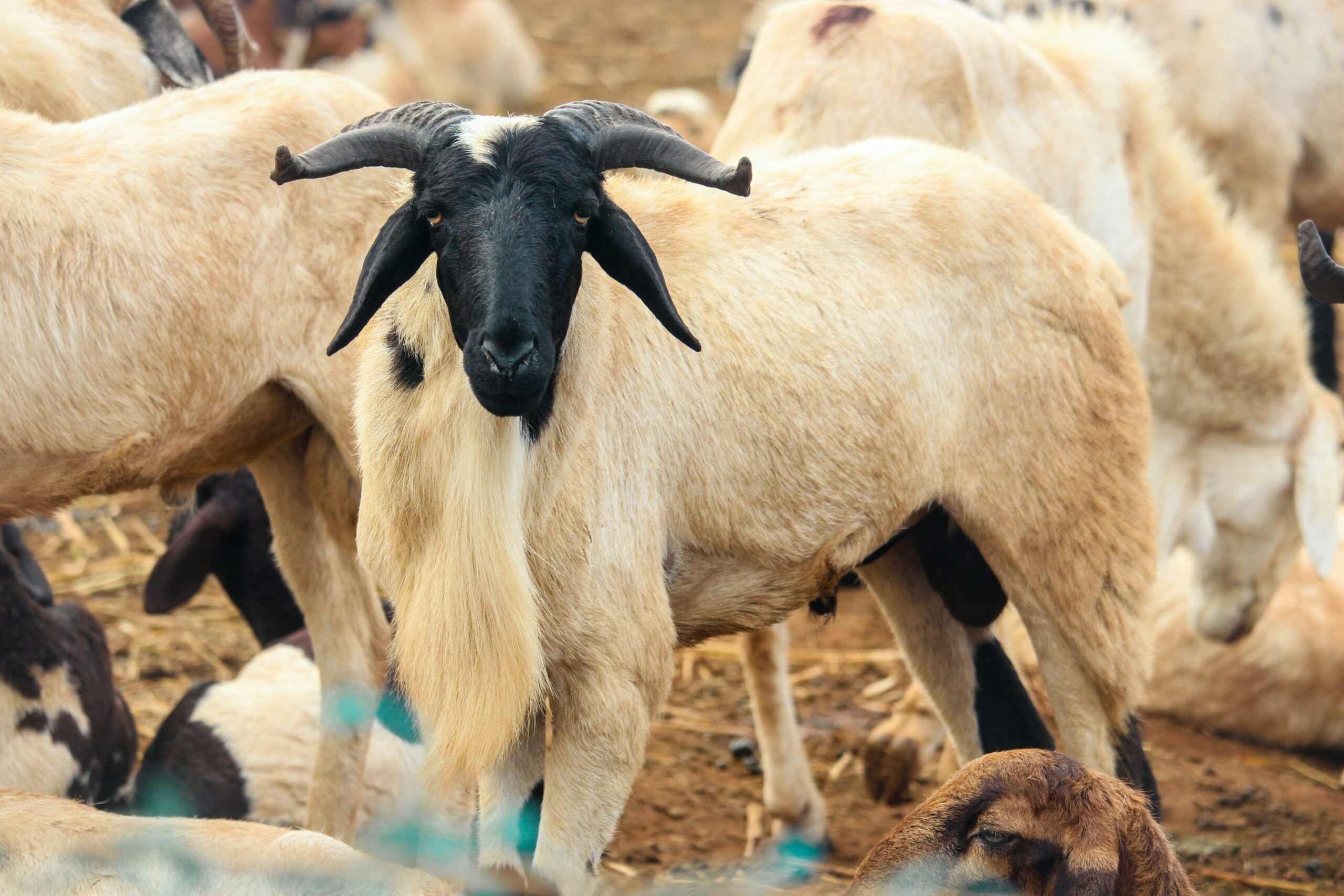
Two weeks before Tabaski, a wave of anxiety sweeps through Dakar’s neighborhoods, from the bustling Almadies district to the modest Sacré-Cœur area. The price of sheep has surged yet again. A decent animal now costs 150,000 FCFA, while “prestige” sheep—those paraded on WhatsApp—fetch up to 300,000 FCFA or more.
For fathers like Mamadou Sall, a Sacré-Cœur resident earning just 60,000 FCFA a month, the question looms large: How will I ever afford this? Tabaski has morphed from a spiritual obligation into a status symbol, where the size of the sheep determines social standing.
The sheep is no longer about faith, but about money
Mamadou, like many Senegalese workers, cannot rely on traditional banks—none offer loans for Tabaski sheep. Instead, he turns to local tontines, where interest rates spiral to 30-50% annually. A 150,000 FCFA loan could cost him an additional 3,750 to 6,250 FCFA in fees, with monthly repayments stretching over a year.
His case is far from unique. Between 35% and 45% of all microfinance loans in Senegal during Tabaski season are for sheep purchases. Nearly one in two credit requests in these weeks is for an animal that will be consumed within months.
Soaring sheep prices over the past decade
In 2010, a sheep cost between 60,000 and 80,000 FCFA. Today, prices range from 150,000 to 250,000 FCFA—an increase of 87% to 275% in under 15 years. This inflation stems from concentrated demand over two months, where sellers exploit the inelasticity of the market. When people must buy, prices rise without restraint.
The Senegalese minimum wage (SMIG) stands at 60,239 FCFA monthly. To buy a 150,000 FCFA sheep, a worker must dedicate two and a half months’ salary—before accounting for Tabaski’s other expenses: clothing, food, gifts. For the 60% of Senegalese living below the poverty line, debt is the only option.
Who borrows for Tabaski—and how much?
In 2024, Senegalese microfinance institutions saw a 62% surge in loan applications compared to non-Tabaski periods, with average requests ranging from 120,000 to 200,000 FCFA. This deluge of debt concentrates within a single quarter, leaving families scrambling to repay by year’s end.
The hidden architecture of informal debt
With traditional banks inaccessible, Senegalese households rely on an intricate web of informal credit: tontines, microfinance lenders, and private loan sharks. Each sector ramps up rates during Tabaski.
| Credit source | Non-Tabaski period | Tabaski period |
|---|---|---|
| Local tontines | 15-30% annually | 30-50% annually |
| Formal microfinance | 24-36% annually | 36-48% (short-term loans) |
| Private informal lenders | 30-40% annually | 50-60%+ annually |
| Commercial banks | Nearly inaccessible | Nearly inaccessible |
Tontines, in particular, accelerate their loan cycles during Tabaski. Informal interest rates climb to 30-50% annually, turning a 150,000 FCFA loan into a repayment burden of 172,500 to 225,000 FCFA over 12 months. Microfinance institutions, while slightly more affordable, still charge 24-36% annually—rising to 48% for short-term loans. A family borrowing in July for August’s Tabaski faces immediate fees of 3,000 to 6,000 FCFA on a 150,000 FCFA loan.
Social media intensifies the Tabaski pressure
Yet the most insidious change lies in the digital realm. Tabaski celebrations, once private family affairs, now play out on WhatsApp and Instagram. A sheep is no longer just a sheep—it’s a social media asset. 67% of young Dakar residents report feeling pressure to buy a sheep, with 48% citing social media as the primary source of that pressure.
In Senegalese culture, the burden of buying the sheep falls squarely on men. Failure to do so is often seen as a sign of inadequacy—a man who cannot provide for his family. This stigma fuels reckless borrowing, pushing families deeper into debt.
The hidden cost: reduced household spending
Households that borrow for Tabaski slash their food and healthcare spending by 18-25% in the three months that follow. Children’s school fees go unpaid. Essential medications are skipped. The true cost of Tabaski’s social expectations extends far beyond the sheep’s price tag.
Even worse, some farmers divert agricultural loans—meant for seeds and fertilizer—toward sheep purchases. Between 8% and 12% of Senegalese agricultural loans are misused for Tabaski consumption. A farmer who could have boosted his harvest by 30% instead sacrifices next year’s income for temporary social prestige.
Morocco’s solution: a model for Senegal
Twenty-five years ago, Morocco’s leadership took a bold step. Recognizing that Tabaski should not hinge on wealth, the government guaranteed every poor Moroccan the right to a sheep—not as charity, but as a right. This policy, implemented through the Zakat Al-Fitr program, has since distributed millions of sheep annually.
In 2023 alone, Morocco distributed over 2.8 million sheep via the royal Zakat fund, at a cost of 450 million Moroccan dirhams (43 billion FCFA). To put this in perspective, this represents less than 0.1% of Morocco’s national budget. The message is clear: ensuring access to Tabaski for the poor is not just a moral duty—it’s a fiscal reality.
Morocco acknowledged a fundamental truth: a religious festival that excludes the poor is no longer a religious observance—it’s a tool for social division. By treating Tabaski as a public good rather than a private commodity, Morocco dismantled the cycle of debt and shame. Senegal has the opportunity to follow this example.
Senegal’s struggle: debt, despair, and no solution
Senegal, by contrast, has no national program. A handful of municipalities and religious organizations offer limited assistance, but the vast majority of the country is left to navigate predatory lending and the crushing weight of social expectations. Debt collection agencies report that household over-indebtedness peaks three months after Tabaski, as families grapple with repayments while trying to survive.
The mental health toll is equally stark. A 2022 study by the Dakar Center for Mental Health Research revealed a doubling in calls to helplines three weeks before Tabaski, particularly among men aged 30-55. The anxiety of not affording a sheep, the shame of perceived failure, and the fear of social judgment weigh heavily on households.
How did we get here?
Two forces have driven this crisis. First, Tabaski has been co-opted by consumerism. What was once a spiritual tradition has become a spectacle of wealth and status, amplified by social media. Second, the Senegalese government has failed to address Tabaski as a social issue. There is no national debate, no policy framework, no recognition of the human cost.
As Mamadou Sall braces for Tabaski 2025, the cycle repeats. Prices rise. Interest rates climb. And the debt trap tightens. Without intervention, millions of Senegalese will once again face the impossible choice: sacrifice dignity or face crippling debt.