Russian mercenaries face setbacks in Mali as jihadist offensives intensify
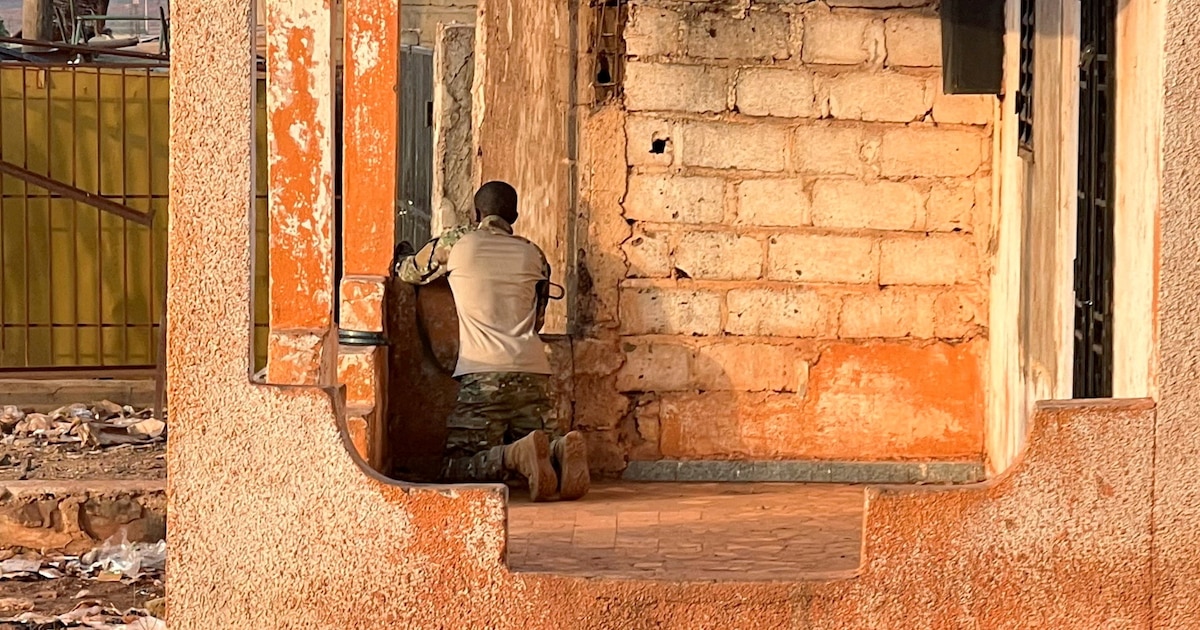
In a major setback for regional security, the Africa Corps—Russia’s state-backed military contingent deployed in Mali—suffered a humiliating withdrawal from the northern city of Kidal on April 26. Graphic footage shared across social media platforms revealed the mercenaries fleeing in disarray, abandoning armored vehicles and helicopters as they were outmaneuvered by the Group for the Support of Islam and Muslims (GSIM), an Al-Qaeda affiliate, and their Tuareg rebel allies from the Azawad Liberation Front (FLA).
The collapse came amid a surge of coordinated assaults by jihadist forces, which targeted key military positions across Mali, including the capital Bamako, the strategic town of Kati—home to the junta’s primary military base—and Gao, a former UN stronghold. At least six urban centers fell under attack, signaling a critical escalation in the conflict that has gripped the West African nation since the 2020 coup d’état.
military setbacks and strategic reversals for Moscow’s allies
The loss of Kidal marks a stark reversal for the Africa Corps, which had previously secured the city in late 2023 under the Wagner Group banner—a victory that once symbolized Russian influence in the region. Analysts note that the fall of Kidal represents a significant blow to Moscow’s military prestige in the Sahel, particularly as it coincides with a broader jihadist campaign to encircle and isolate Bamako. “The capture of Kidal was Moscow’s only tangible strategic success in Mali since 2021,” observed Djenabou Cissé, a researcher with the Foundation for Strategic Research. “Its loss underscores the fragility of Russia’s military footprint in the region.”
rising civilian toll amid deteriorating security
The Africa Corps’ failure comes as Mali’s already beleaguered junta faces mounting criticism over its reliance on foreign fighters amid a surge in civilian casualties. Reports by Le Monde and the Washington Post have documented a disturbing rise in sexual violence and extrajudicial abuses linked to Malian security forces and their Russian allies over the past five years. Human rights monitors warn that such patterns of violence have only fueled recruitment for jihadist groups like the GSIM.
Security analysts, including jihadism expert Wassim Nasr, have long argued that Russian mercenaries—whether under Wagner or the Africa Corps—have proven ineffective in counter-terrorism operations. “The failures of Saturday’s attacks only confirmed what was already evident: Moscow’s forces are neither equipped nor motivated to combat militant Islamism in the Sahel,” Nasr told the Washington Post.
junta scrambles for survival as jihadists tighten grip
In the wake of the attacks, Malian Prime Minister Abdoulaye Maïga paid tribute to Defense Minister Sadio Camara, who was killed during the offensive on his residence in Kati. Meanwhile, junta leader Assimi Goïta sought to project confidence, claiming in a televised address that the situation was “under control” and vowing to pursue a “total neutralization” of the attackers. However, local military sources have cast doubt on these assurances, alleging that Russian forces had been forewarned of the assault days in advance but failed to respond, with some suggesting a prearranged withdrawal.
As the Africa Corps reportedly prepares to abandon additional northern strongholds, the Malian army’s capacity to resist the jihadist advance appears increasingly precarious. Kremlin spokesperson Dmitri Peskov declined to comment on the Africa Corps’ future viability, though Russian state media claimed the group had thwarted an attempted coup by the FLA and GSIM. With Bamako now encircled and food supplies dwindling, the junta’s survival hinges on securing international support—or facing an unprecedented collapse.