Press freedom in Niger faces severe threats amid journalist arrests
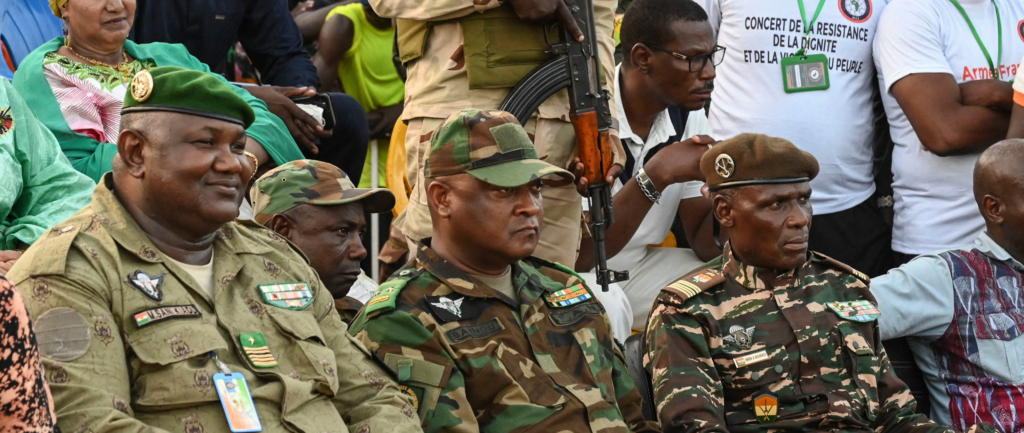
Press freedom in Niger is facing severe threats as transitional authorities intensify intimidation and arbitrary arrests of journalists covering the country’s conflict and security issues, warns Amnesty International.
Since the July 26, 2023 military takeover, where presidential guard commander Abdourahamane Tchiani ousted President Mohamed Bazoum and declared himself head of the National Council for the Safeguard of the Homeland (CNSP), journalists have faced increasing restrictions and self-censorship due to fear of reprisals.
«The blatant disregard for press freedom and journalists’ rights comes at a critical time when citizens urgently need accurate, unbiased information about the conflict and the transitional authorities’ responses,» stated Samira Daoud, Regional Director of Amnesty International for West and Central Africa. «The Nigerien authorities must immediately release all journalists detained for exercising their right to free expression or reporting on sensitive public interest matters. They must also ensure journalists can work without fear of harassment, intimidation, or unlawful detention.»
Recent arrests highlight growing press crackdown
On April 24, 2024, Soumana Maiga, editor-in-chief of *L’Enquêteur*, was arrested following the publication of an article alleging Russian agents had installed surveillance equipment in official state buildings. He faces charges of «undermining national defense», which carry a potential 10-year prison sentence if convicted.
Days earlier, on April 13, 2024, Ousmane Toudou, a journalist and former communications advisor to the deposed president, was also detained. After the July 2023 coup, Toudou had publicly called for resistance against military rule in a widely shared social media post. Despite the legal 4-day detention limit having expired, he remains in custody without judicial review and faces trial before a military court—a violation of international law, which restricts military tribunals to military offenses only.
Transitional authorities must uphold their legal obligations to respect, protect, promote, and fulfill human rights for all in Niger.
Samira Daoud, Regional Director, Amnesty International (West and Central Africa)
Journalists forced into self-censorship and exile
Tchima Illa Issoufou, a BBC Hausa correspondent, became a target after reporting on the deteriorating security situation in Tillabéri, a hotspot in western Niger. Accused of attempting to «destabilize Niger» and labeled as being under «foreign influence» by pro-government supporters online, she fled the country after facing threats and harassment. Her reporting also led to the arrest of civil society figure Ali Tera, who was interviewed in her segment. Tera was detained on April 26, 2024, and placed in provisional custody in Niamey’s civil prison three days later.
«The media landscape in Niger has grown increasingly hostile. Press freedom principles are under direct assault by the new authorities. Many of us, including myself, are now writing with extreme caution to avoid putting ourselves at risk,» shared an anonymous media director with Amnesty International.
Institutional crackdown on press associations
In January 2024, the Maison de la Presse, an association uniting private and public media outlets, was suspended by transitional authorities and replaced with an ad hoc committee led by the Interior Ministry’s Secretary-General.
«Niger’s constitution and international human rights treaties—including the African Charter on Human and Peoples’ Rights and the International Covenant on Civil and Political Rights, both ratified by Niger—guarantee freedom of expression, access to information, and press freedom. Transitional authorities must act immediately to fulfill their legal obligations and protect these fundamental rights,» emphasized Daoud.