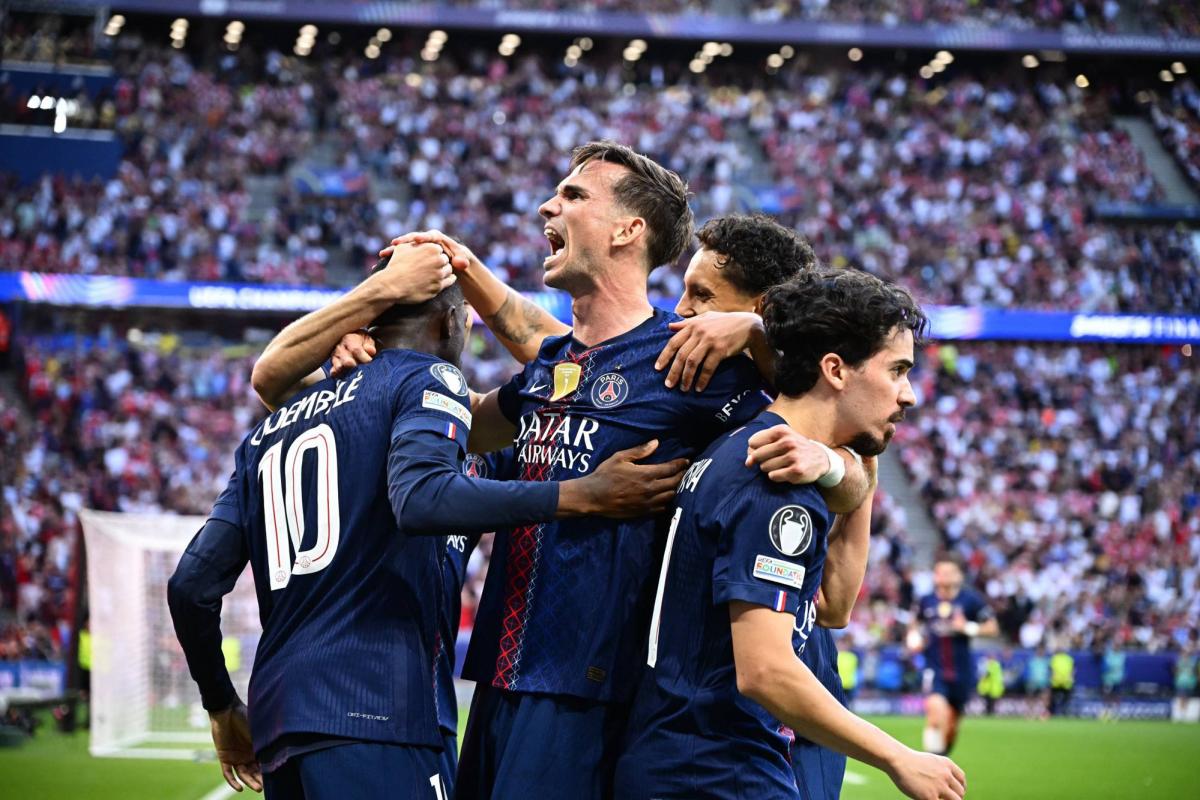
Paris Saint-Germain makes history with second straight Champions League crown
In a dramatic showdown in Budapest, Paris Saint-Germain secured their place in football lore by defeating Arsenal 4-3 on penalties after a 1-1 draw, successfully defending their Champions League title. The victory marked the club’s second consecutive triumph in Europe’s premier competition, joining an elite group of nine teams to achieve this rare feat.
The match unfolded as a tense, tactical battle, far removed from the high-scoring spectacle PSG delivered in last year’s final against Inter Milan. Arsenal, organized and aggressive, struck early through Kai Havertz, who capitalized on a defensive error to open the scoring in the sixth minute. The German forward became the first player in Champions League history to score for two different clubs in finals, adding to his legacy after helping Chelsea win the trophy in 2021.
Arsenal’s early dominance fizzles as PSG fights back
The English side’s high-pressing system stifled PSG’s creative trio throughout the first half, limiting their influence on the game. Despite registering six shots before the interval, David Raya stood firm, and Arsenal’s intensity kept Paris at bay. However, the tide turned shortly after the hour mark when Khvicha Kvaratskhelia was brought down in the box, leading to a penalty.
Ousmane Dembélé, the reigning Ballon d’Or winner, stepped up to convert the spot-kick with a precise right-footed strike, drawing the match level at 65 minutes. The Georgian winger’s composure under pressure showcased the mental resilience that has defined PSG’s recent successes in high-stakes shootouts.
Though PSG pushed hard for a winner in the dying minutes, including a late effort from Vitinha that rattled the crossbar, the final whistle confirmed extra time. The clash of fatigue and ambition led to a penalty shootout, where PSG’s reputation as specialists took over once again.
Penalty mastery secures PSG’s legacy
PSG extended their unbeaten streak in penalty shootouts to six consecutive wins, a testament to their clutch performances in decisive moments. This victory followed their shootout triumphs in the UEFA Super Cup, FIFA Club World Cup, and French Super Cup earlier in the season—each time relying on Matveï Safonov’s heroics or clinical finishing from the spot.
In Budapest, Arsenal’s Eberechi Eze and Gabriel both failed to find the target, sealing PSG’s historic back-to-back. The Parisian side’s ability to thrive in these pressure-cooker scenarios has become a defining characteristic of their modern-era dominance.
Controversial decisions overshadow the final
The match was not without its contentious moments, particularly regarding refereeing decisions. Arsenal’s frustration grew after Bukayo Saka’s handball in the box went unpunished, while PSG felt aggrieved by the awarding of an injury-time goal kick that allowed Arsenal to waste crucial seconds.
Cristhian Mosquera’s reckless challenge on Kvaratskhelia also sparked debate—though he escaped a second yellow card, the tackle’s severity drew sharp criticism. Mikel Arteta’s dismissal of the defender moments later hinted at the simmering tension between tactics and discipline.
The final controversy arose when Noni Madueke went down under minimal contact in the box during extra time, with no penalty awarded. These incidents fueled post-match discussions, though they did little to diminish PSG’s achievement.
Joining football’s most exclusive club
By retaining the Champions League trophy, Paris Saint-Germain has etched their name alongside legends like Real Madrid, Ajax, Bayern Munich, and AC Milan—clubs that have achieved the same back-to-back feat in the competition’s history.
For a club that has spent years chasing this milestone, the victory in Budapest represents more than just silverware; it symbolizes a new era of consistency and dominance in European football. As celebrations erupt in Paris, the focus now shifts to how this triumph will shape the club’s ambitions moving forward.
With this win, PSG has not only defended their title but has also reinforced their status as a global football powerhouse, proving that they belong among Europe’s elite.