Niger faces heightened security after Jnim claims Niamey airport attack
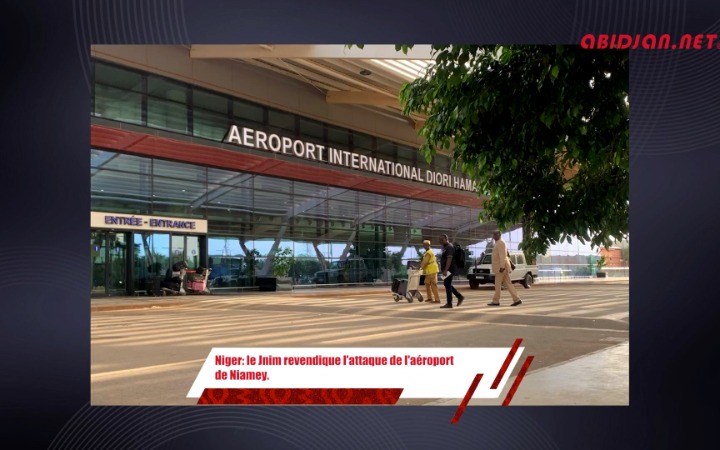
The Niger government confirmed today that an attempted assault on the Niamey International Airport was carried out by the Jnim militant group, marking one of the most brazen attacks on the country’s capital in recent years. Authorities have launched an immediate security review while emergency response teams assess potential damage and casualties.
Jnim’s bold claim raises regional concerns
In a statement attributed to the Jama’at Nusrat al-Islam wal Muslimin (Jnim), the group asserted responsibility for the assault, describing it as retaliation against Niger’s participation in regional counterterrorism operations. The claim, if verified, underscores the escalating threat posed by armed factions along Africa’s Sahel belt, where militant groups have intensified operations in Niger despite government crackdowns.
Security analysts highlight that Niamey—once considered relatively insulated from large-scale attacks—has seen a troubling rise in violent incidents targeting critical infrastructure. The airport, a key transit hub connecting Niger to international aid and commercial routes, remains under heightened surveillance as authorities investigate the incident.
Government response and public reaction
While no official death toll has been released, local reports suggest that the attack was repelled with minimal civilian impact. The Niger Defense Ministry announced the deployment of additional troops to strategic locations across the capital, including the airport perimeter and key government buildings. Public statements urge calm, emphasizing that security measures are being rapidly reinforced to prevent further escalation.
Residents in Niamey describe a tense atmosphere, with heightened police presence and roadblocks disrupting daily commutes. Social media platforms have amplified calls for vigilance, as unverified footage circulating online appears to show armed individuals near the airport during the attack, though the authenticity of these clips remains unverified.
Broader implications for West Africa’s security landscape
The incident has drawn attention from neighboring governments, particularly those grappling with similar threats from militant factions. Observers note that Niger’s strategic position—bordering Burkina Faso, Mali, and Nigeria—makes it a critical player in regional stability efforts. Analysts warn that a sustained campaign of violence could destabilize Africa’s western flank, where fragile governments are already contending with economic hardship and political unrest.
International partners, including regional blocs, have reiterated their commitment to supporting Niger in combating terrorism. However, questions linger about the effectiveness of current counterterrorism strategies amid reports of militant groups regrouping in remote areas.
What’s next for Niger’s security?
With investigations ongoing, the coming days will be pivotal in determining whether the attack was an isolated incident or part of a larger strategy to destabilize the Niger government. For now, citizens and authorities alike remain on high alert, bracing for potential follow-up actions by militant factions.