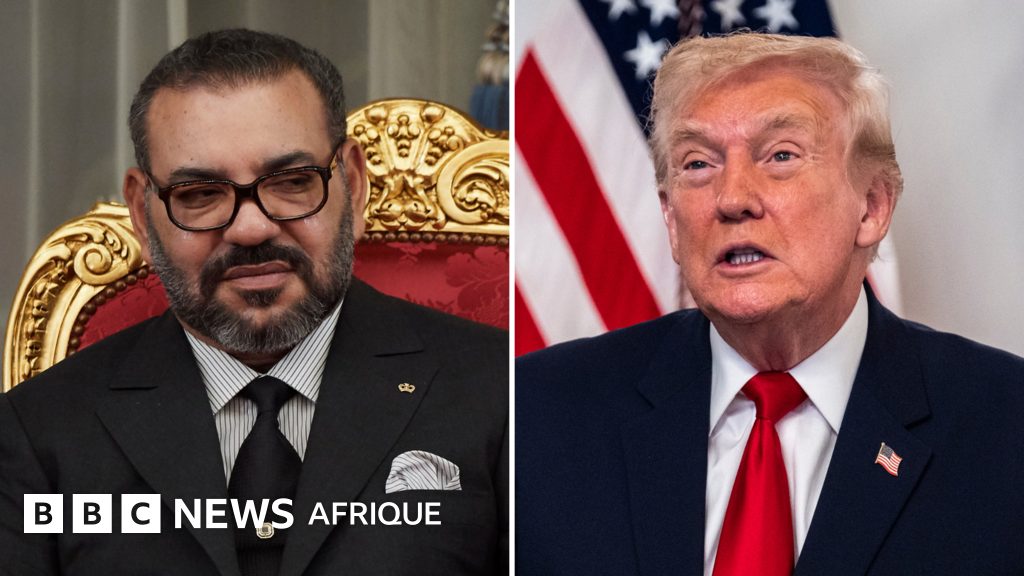
The enduring bond between the United States and Morocco spans centuries, rooted in mutual respect and strategic interests. This alliance, forged in 1786 with the Treaty of Peace and Friendship, remains the oldest unbroken treaty in U.S. history. Beyond diplomacy, it has shaped security, trade, and geopolitical dynamics across North Africa and beyond.
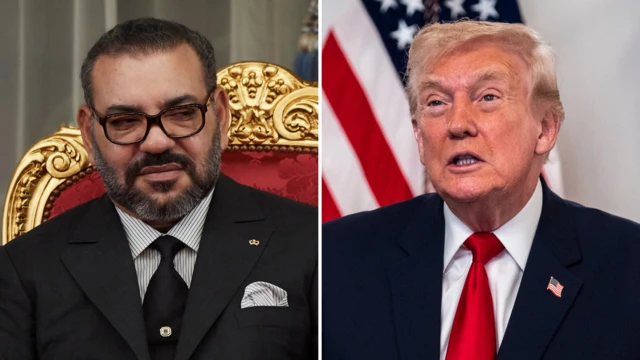
Historical foundations of a lasting partnership
Long before the United States declared independence, Morocco stood as a sovereign nation under the Alaouite dynasty. In 1777, the Moroccan Sultan Mohammed III granted American ships unrestricted access to Moroccan ports, a move Rabat later hailed as the first international recognition of the fledgling nation. Yet, historians note that the formal Treaty of Peace and Friendship signed in Marrakech in 1786 solidified this relationship, addressing critical needs for both sides.
For the U.S.: The treaty provided protection for American merchant vessels navigating Mediterranean waters, which were frequently targeted by corsairs from Morocco and other North African states. It ensured safe passage and opened new commercial opportunities, positioning the U.S. as a global trading partner.
For Morocco: The agreement enhanced the sultanate’s legitimacy on the world stage, particularly as the U.S. sought to establish itself as a sovereign nation. Timothy W. Kneeland, a historian at Nazareth University in New York, emphasizes the treaty’s strategic value: “Morocco’s location at the crossroads of the Mediterranean, Africa, and the Islamic world made it a vital partner for the U.S. in expanding its global influence.”
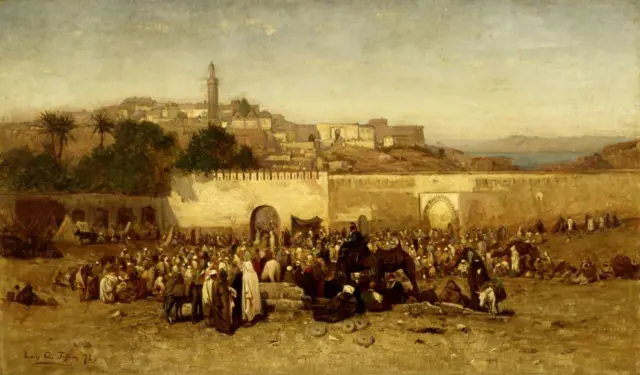
The treaty, renewed in 1836, endures to this day. Sarah Yerkes, a senior fellow at the Carnegie Endowment for International Peace, points out: “Moroccans proudly highlight that the 1786 treaty is America’s oldest still-active agreement.”
Evolution through colonialism and independence
The alliance faced challenges during the colonial era. When Morocco was divided into French and Spanish protectorates in 1912, the U.S. initially hesitated to recognize the new colonial order but eventually did so in 1917. Upon Morocco’s independence in 1956, Washington quickly established diplomatic ties, opening its embassy in Rabat within months. This decision underscored America’s commitment to supporting newly sovereign nations in Africa.
Military cooperation and counterterrorism efforts
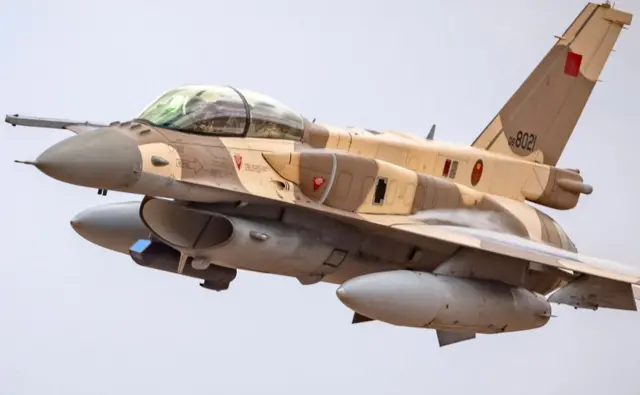
Security ties between the two nations deepened significantly after the 9/11 attacks. In 2004, the U.S. designated Morocco a Major Non-NATO Ally, a status that streamlined military cooperation and arms transfers. This partnership has been instrumental in combating terrorism across the Sahel and North Africa.
Key initiatives include:
- Joint special forces training programs
- Co-leadership of the Africa group within the global coalition against ISIS
- Hosting African Lion, the U.S. Africa Command’s largest annual military exercise
According to the Stockholm International Peace Research Institute (SIPRI), the U.S. accounted for 60% of Morocco’s major arms imports between 2021 and 2025, with Israel and France trailing behind. This cooperation extends to intelligence-sharing and counterterrorism operations across the region.
Economic ties and the Western Sahara question
The U.S.-Morocco Free Trade Agreement, implemented in 2006, marked a turning point in bilateral economic relations. By 2025, bilateral trade had surged to $7.4 billion, nearly eight times the $927 million recorded in 2005. While modest in the context of U.S. global trade—ranking Morocco as its 46th-largest export market—the agreement eliminated tariffs and fostered deeper economic integration.
Diplomatically, the alliance reached its peak in 2020 when the U.S. recognized Morocco’s sovereignty over Western Sahara under the Abraham Accords, which also facilitated Morocco’s normalization of relations with Israel. Washington has consistently backed Rabat’s autonomy plan as the only viable solution to the decades-long conflict. Yerkes notes: “Morocco stands as the most successful participant in the Abraham Accords, with its normalization with Israel surviving the Gaza conflict and solidifying regional stability.”
The Ceuta crisis and shifting alliances
The recent surge of over 70,000 people crossing from Morocco into the Spanish enclave of Ceuta—resulting in at least 140 deaths—has exposed fractures in the transatlantic relationship. The incident has highlighted the strength of U.S.-Morocco ties while straining relations between Washington and Madrid.
Washington’s response to the crisis reflected its unwavering support for Morocco. Despite the unprecedented migration wave, U.S. officials did not question Rabat’s role. Instead, President Trump labeled the events a “disaster akin to a country invasion” and criticized Spain’s immigration policies, going so far as to attack the government of Pedro Sánchez.
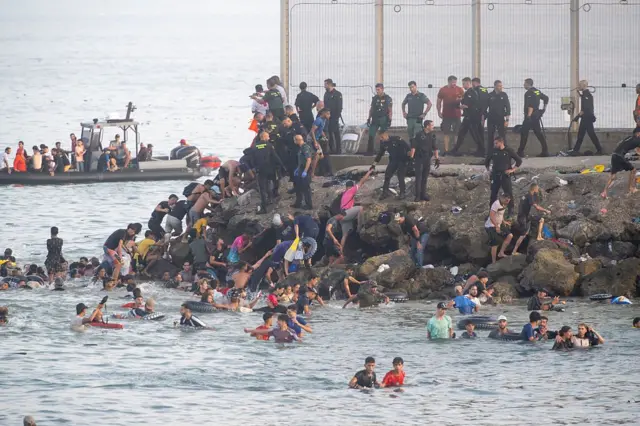
This stance underscored the depth of the U.S.-Morocco partnership, particularly as tensions flared between Washington and Madrid. Spain, a key U.S. ally within NATO, relies on Morocco for border management in North Africa. However, the Ceuta crisis laid bare disagreements over military spending, the use of Spanish bases in operations against Iran, and Spain’s immigration policies.
Yerkes interprets the U.S. reaction as a clear signal: “Washington does not view the Ceuta events as a Moroccan initiative. Instead, it places responsibility on Spain’s immigration management, reflecting deeper strains in the transatlantic alliance.”
Morocco’s strategic importance to the U.S. cannot be overstated. With Spain restricting access to its military bases and airspace for potential strikes against Iran, Rabat emerges as a critical alternative for U.S. logistical and security operations in the region. In a message to King Mohammed VI on the occasion of the Throne Day, Trump reaffirmed the alliance’s strength: “This year, we celebrate 250 years of American-Moroccan friendship, built on trust and mutual respect. Let us look forward to 250 more years of cooperation.”