Mali: journalist Chahana Takiou summoned amid growing press freedom crisis
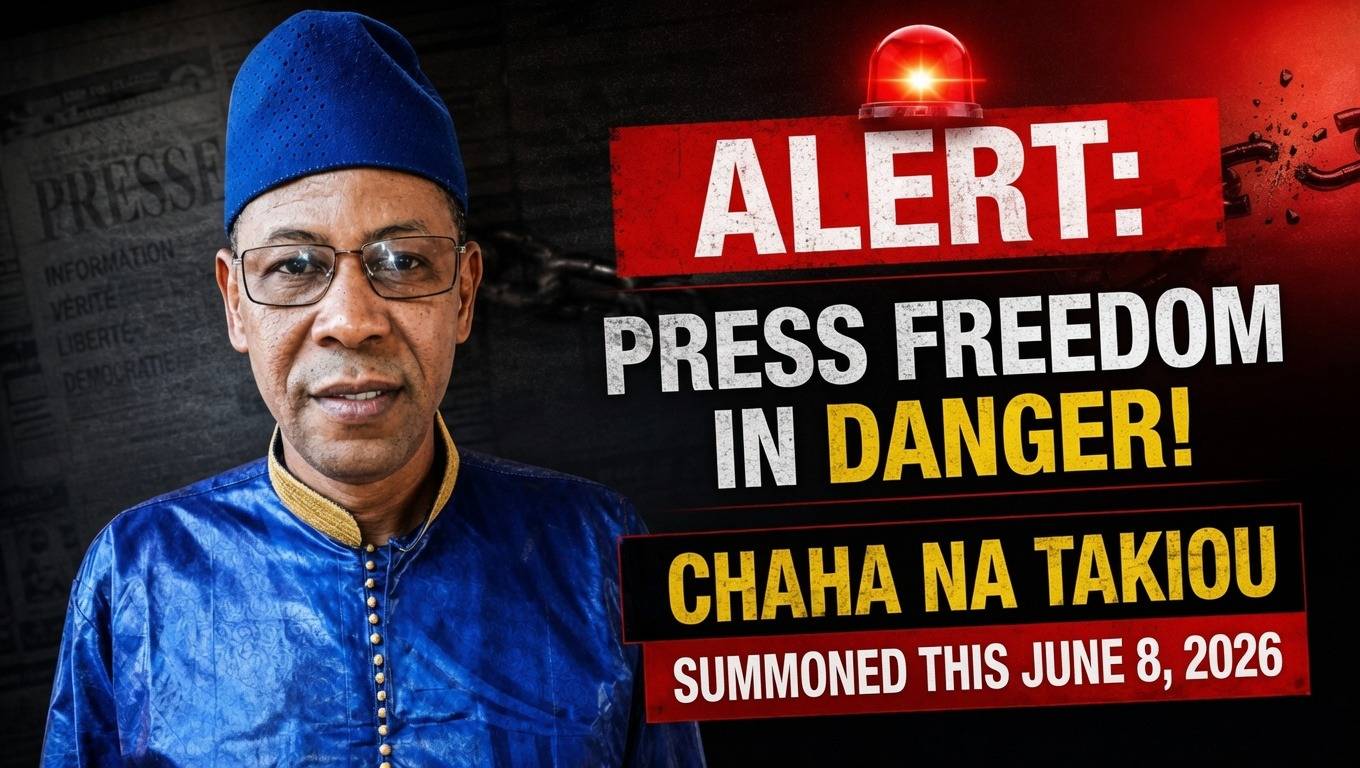
Mali’s press freedom under siege as journalist faces judicial harassment
Chahana Takiou, Editor-in-Chief of the Malian weekly Le 22 Septembre, has been summoned by prosecutors at Bamako’s cybercrime unit for Monday, June 8, 2026, at 1 p.m. His alleged offense? Publicly scrutinizing the military-led transitional government’s policies on governance, security, and economic management. This move underscores the escalating crackdown on dissenting voices and independent journalism in Mali.
Cybercrime courts weaponized to silence criticism
The summons to Takiou’s office is the latest in a series of judicial intimidation tactics deployed by authorities. The cybercrime unit, ostensibly tasked with combating digital crimes, has increasingly been used to target journalists whose reporting challenges the official narrative. For Takiou, appearing before these investigators is no routine inquiry—it is a high-stakes confrontation where his professional duty collides with state repression.
Press freedom eroded in military-led Mali
The once-vibrant Malian media landscape has steadily shrunk under military rule. Independent journalism, once a pillar of the country’s democratic aspirations, now operates under suffocating constraints. Reporting facts without bias is often treated as an act of defiance, while dissent is systematically crushed through suspensions, administrative penalties, and financial strangulation. The transitional authorities demand unquestioning loyalty, treating critical reporting as a threat to national stability rather than a civic duty.
Abductions and enforced disappearances: a widening shadow of fear
The harassment of Takiou is not an isolated incident but part of a broader strategy to eradicate opposition. Public figures, civil society leaders, and even ordinary citizens expressing dissent online risk arrest by unidentified armed groups, widely believed to be state-linked operatives. Many vanish for weeks, held incommunicado in undisclosed locations—a tactic designed to instill terror and dismantle any form of collective resistance.
Journalists unite in solidarity amid tightening repression
In response to Takiou’s summons, press advocacy groups have rallied to condemn the judicial intimidation. Professional unions stress that constructive criticism is vital for a nation facing severe crises, yet the current regime equates dissent with treason. With constitutional protections crumbling and courts serving as extensions of executive power, the space for democratic debate is rapidly vanishing.
Where does Mali’s future lead?
Takiou’s upcoming court date marks another ominous milestone in Mali’s authoritarian drift. By targeting a respected journalist, the military-led government sends a chilling message: no dissent will be tolerated. This forced conformity, achieved through coercion and imprisonment, deepens the country’s isolation and fractures its social fabric. As Mali grapples with escalating security and humanitarian crises, suppressing truth-seekers will not resolve its challenges—it will only delay the inevitable reckoning with justice and accountability.