Mali: GSIM must uphold humanitarian law amid Bamako blockade impacts
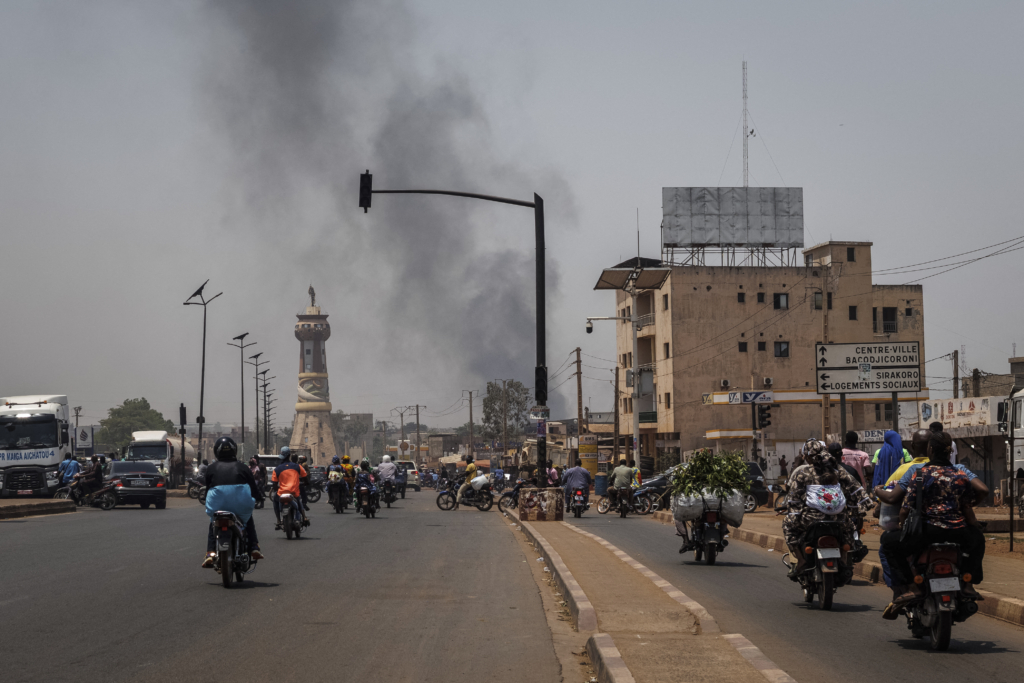
The ongoing blockade of Bamako is inflicting unacceptable hardships on civilians, threatening their fundamental rights to food, health, and safety, declared human rights advocates. They urge the Groupe de soutien à l’islam et aux musulmans (GSIM), an Al-Qaïda-linked armed faction, to comply with international humanitarian law and prioritize civilian protection.
Since April 28, three critical routes leading to Bamako have been sealed off following the GSIM’s declaration of a total blockade on the capital. On May 6, armed assailants ambushed a civilian truck convoy transporting fruits between Bamako and Bougouni, deliberately targeting non-military vehicles. Eyewitness accounts confirm these trucks carried no military personnel or equipment, yet were subjected to violent attacks.
« Attacks on civilian vehicles engaged in legitimate trade violate international humanitarian principles, » stated a regional director at Amnesty International. « All warring parties must distinguish between combatants and civilians at all times. Deliberate strikes against civilians or civilian infrastructure, including essential supply routes, constitute grave breaches of international law. »
Civilian populations must never bear the brunt of warfare. Blockades cannot justify depriving people of food, water, or medical care.
Regional spokesperson, Amnesty International
How the blockade breaches wartime conventions
The GSIM’s April 28 announcement marked a stark escalation from its previous 2025 blockade, which had only targeted fuel tankers. This time, the restriction encompasses all commercial traffic entering Bamako, crippling the city’s lifelines to regional ports. By May 15, half of the six major access roads were rendered impassable, triggering sharp price surges for staple goods as supply chains collapsed.
« No siege should weaponize hunger or deny civilians access to essential services, » warned the same spokesperson. « The GSIM’s obligations under international law are clear: safeguard civilian lives, ensure unobstructed humanitarian access, and refrain from tactics that inflict collective punishment. »
On May 5, the UN High Commissioner for Human Rights echoed these concerns, demanding an immediate halt to hostilities and strict adherence to protections for civilians and civilian infrastructure.
In a nominal concession on May 6, the GSIM pledged to allow medical evacuations into Bamako. However, independent verification of this pledge remains pending.
Unlawful assault on a civilian fuel convoy
In January 2026, a survivor recounted a horrific ambush on a military-escorted fuel convoy near Diboli and Kayes. The attack, carried out by over 200 assailants on motorcycles, resulted in multiple fatalities and the burning of military vehicles. Survivors described being forced to dig graves for fallen attackers before their throats were slit.
The deliberate targeting of civilians and civilian infrastructure demands an immediate end. Perpetrators must be held accountable for potential war crimes.
Regional spokesperson, Amnesty International
This follows the GSIM’s 2025 vow to treat fuel truck drivers as combatants, escalating its campaign to sever Bamako’s fuel supply from Dakar-linked routes.
Escalation of violence in Mali
The blockade announcement coincided with coordinated GSIM and Front de libération de l’Azawad (FLA) attacks on April 25 across Bamako, Kati, Mopti, Sévaré, Gao, and Kidal. Targets included military camps and residences of political and military figures, with Defense Minister Sadio Camara among the fatalities in Kati after an IED detonated outside his home.
On May 6, GSIM fighters raided the villages of Kori Kori and Gomassagou in central Mali, leaving at least 40 dead and several missing, according to local reports. The assault underscores the group’s expanding campaign of violence beyond urban centers.