Lomé trains local leaders to boost financial resources and autonomy
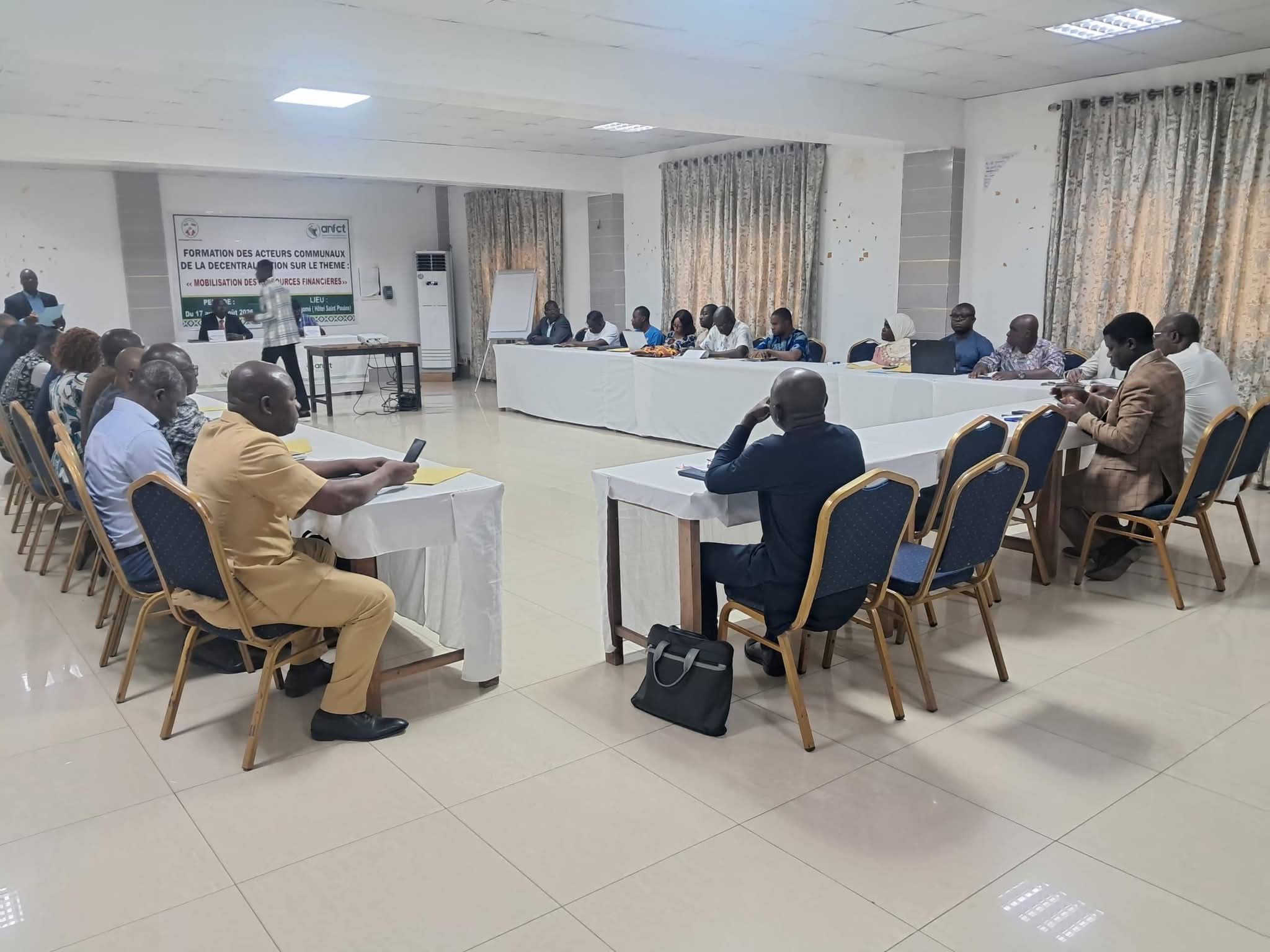
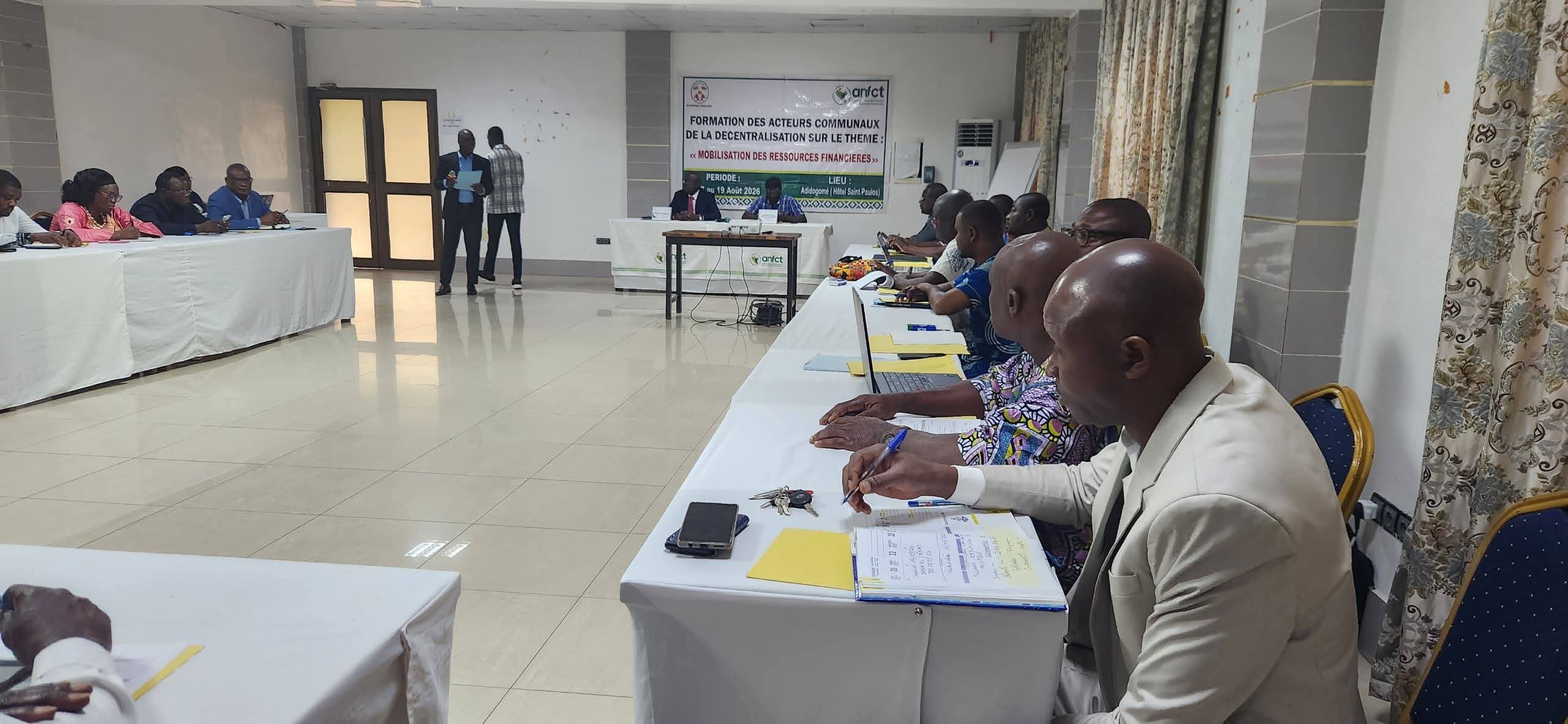
Lomé, August 17, 2026 — Local governments in Togo’s maritime region face a critical challenge: meeting public expectations without adequate, well-managed financial resources. To address this, officials from Golfe 2, Golfe 3, Agoè-Nyivé 5, and Agoè-Nyivé 6 convened in Golfe 7 from August 17 to 19 for a specialized training session focused on resource mobilization and financial governance.
Listen to the article4 min
The workshop, part of the National Training Plan led by the National Agency for Local Government Training (ANFCT), aims to equip municipal leaders with advanced techniques to enhance revenue collection and optimize financial management. By strengthening local financial autonomy, the initiative seeks to improve service delivery for residents.
Financial autonomy: the backbone of local governance
The core of the discussion revolves around more than just securing new funding sources. It encompasses safeguarding existing revenues, improving collection efficiency, and ensuring that mobilized funds translate into tangible public services. Without robust financial capacity, municipalities struggle to maintain infrastructure, provide essential services, and support local economic growth.
This training recognizes that empowering local officials with practical skills and peer learning is essential for effective governance. By fostering collaboration among participants, the program aims to identify actionable solutions tailored to the realities of each commune.
Practical training for real-world challenges
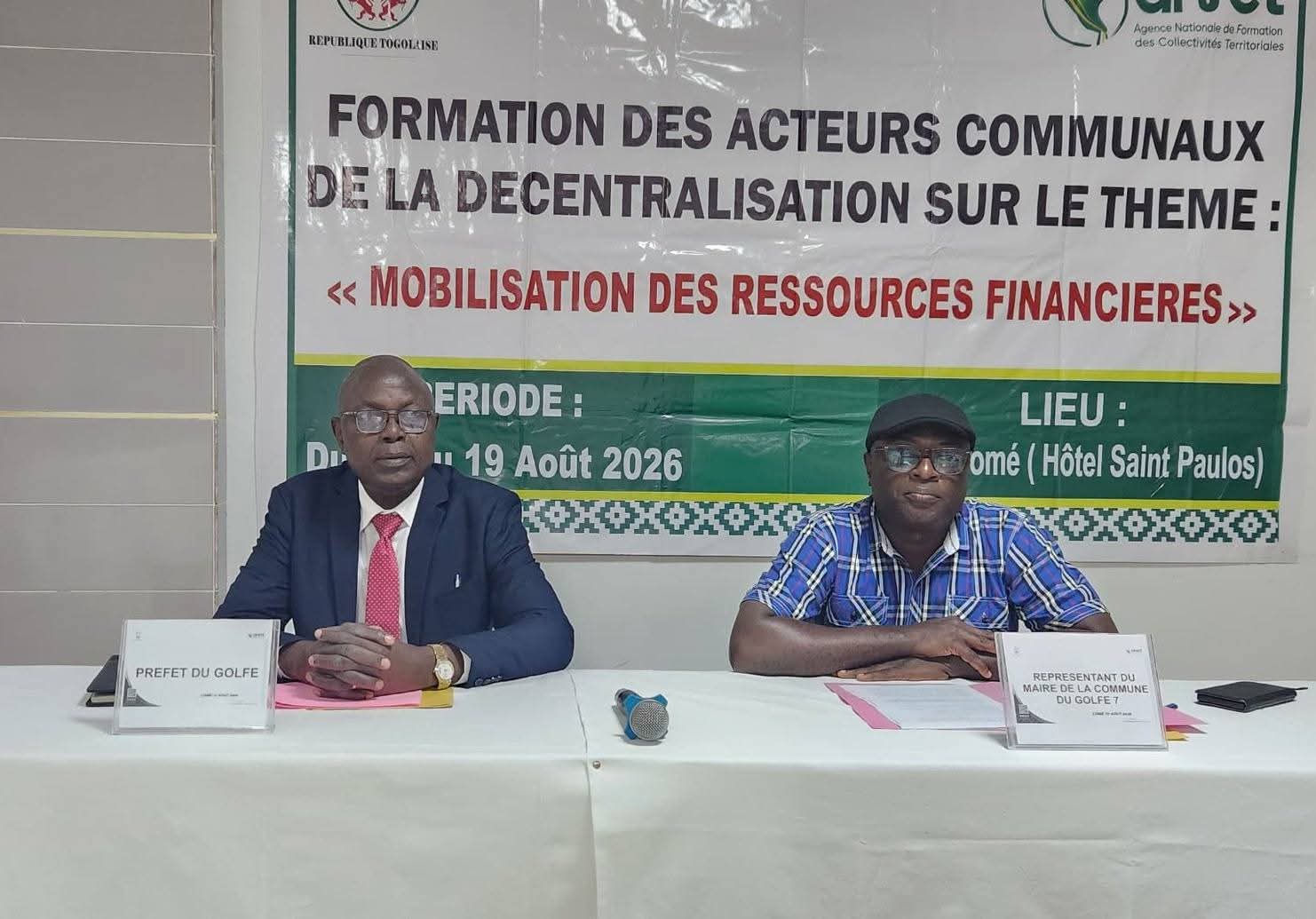
The workshop was inaugurated by Golfe’s Prefect, Kossivi Agbodan, alongside Adaka Koffi, the third deputy mayor of Golfe 7, along with mayors and representatives from participating communes, general secretaries, and financial officers. Adaka Koffi emphasized the importance of building genuine financial independence for local governments during his opening address.
The training encourages participants to share experiences, pinpoint operational challenges, and develop solutions that can be immediately applied in their respective municipalities. This hands-on approach moves beyond theoretical instruction, ensuring that lessons translate into measurable improvements.
Beyond raising funds: the importance of disciplined financial management
Prefect Agbodan underscored a second critical priority: strict adherence to sound financial practices. Increased revenue alone does not guarantee improved living conditions unless funds are managed with transparency, accountability, and efficiency. He stressed that revenue mobilization must align with rigorous financial governance to ensure every collected franc supports municipal priorities.
This dual focus—on both mobilization and management—gives the training its strategic depth. The ultimate goal is to ensure that financial resources translate directly into better infrastructure, services, and economic opportunities for local communities.
Transforming theory into sustainable action
Over three days, municipal leaders are engaged in collaborative learning, sharing best practices, and crafting strategies to strengthen financial resilience. The ANFCT’s involvement highlights its commitment to supporting Togo’s decentralization process, ensuring that local governments are equipped to meet citizen demands effectively.
For the four participating communes, the challenge now lies in translating training insights into lasting improvements. The ultimate test of success will be whether these efforts lead to stronger financial foundations and, consequently, better lives for residents.
By Harouna Ousmane — Reporter
Stay informedFind our stories in Feedly, Inoreader…