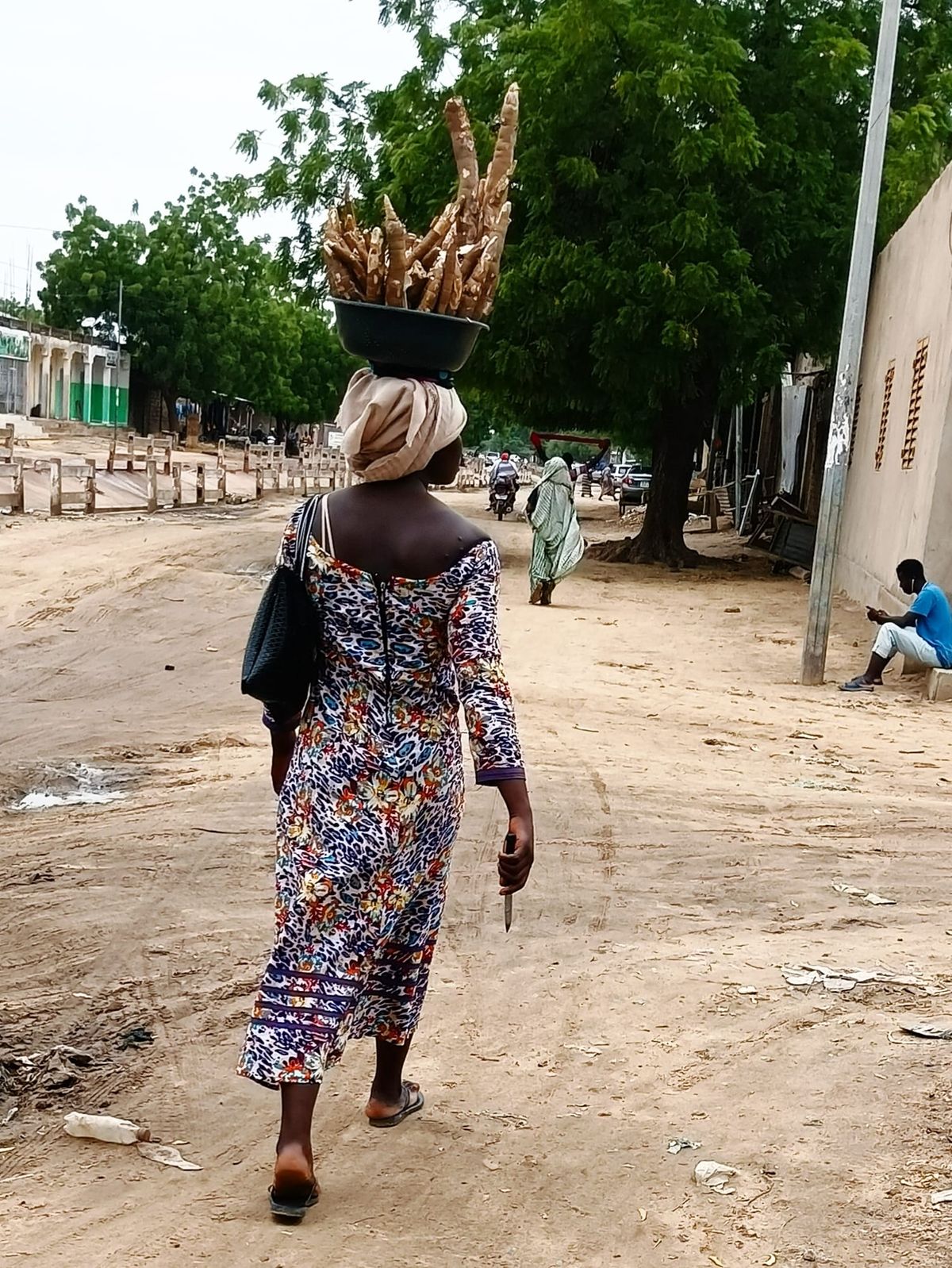
For many students in Chad, school holidays are not just a time to rest. They become a chance to learn real-life skills. In N’Djamena, Léa, a 10th‑grade student from the Kilwiti neighbourhood, has chosen to sell cassava. With a basin balanced on her head, she walks the streets of the capital every day looking for buyers.
“I live with my mother in Kilwiti. I use the holidays to sell cassava, which helps me prepare for the next school term,” she explains.
Léa says cassava prices range from 50 to 500 FCFA. Many other girls have also started this business, but it comes with difficulties.
“Cassava has become expensive. Some customers think we overcharge for portions of 100 or 200 FCFA, not realising we buy the goods at a high price ourselves; we cannot sell at a loss,” she confides. Fortunately, she notes that some customers understand and encourage them. The country is facing widespread poverty.
According to the World Bank, 44.8% of Chad’s population lives below the national poverty line. Extreme poverty affects about 36.5% of the population, who survive on less than $2.15 per day. Chad ranks among the lowest in human capital index, limiting opportunities for youth development.
A shift in mindset for the future
Beyond immediate financial needs, this initiative reflects a change in mentality among Chadian youth. Facing job market uncertainty and the reality that education alone may not guarantee a stable career, these students understand the importance of diversifying skills and gaining financial independence early. Alongside their studies, they learn discipline and the real‑world workings of business.