Hidden courage: how Senegal’s LGBTQ+ community navigates state homophobia
In a bustling Dakar street, K. blends seamlessly with the crowd. He walks briskly, phone in hand, exchanging greetings with acquaintances. On the surface, nothing seems out of the ordinary. Yet, every move is calculated. “Here, you have to know how to protect yourself,” he confides.
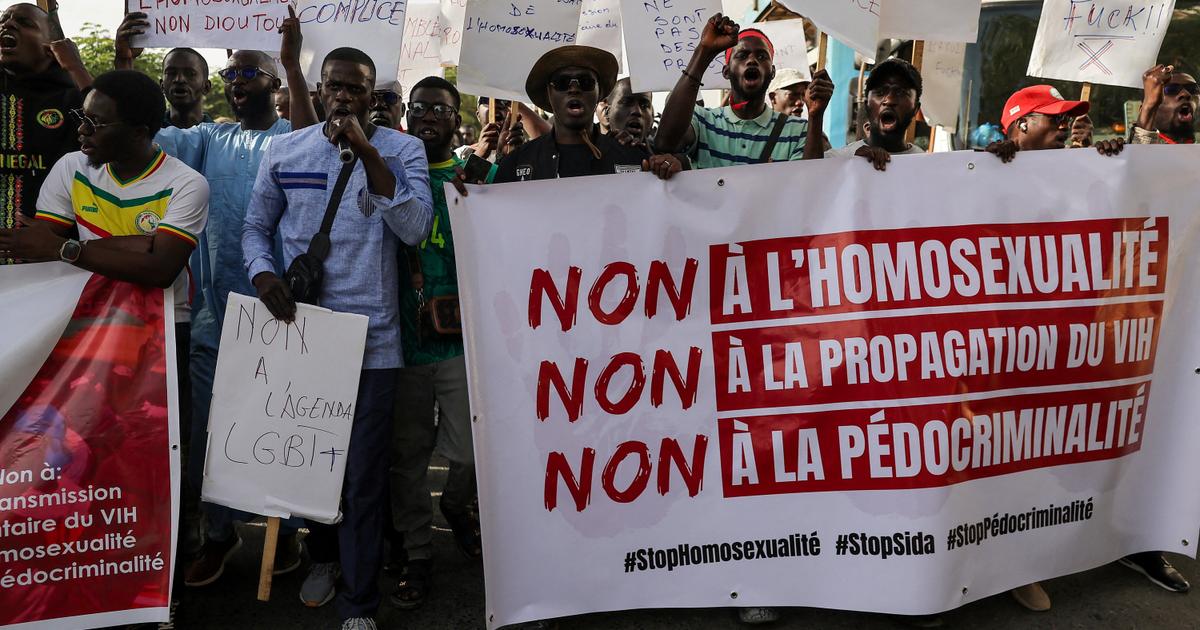
The arrest of a French national in his thirties, now behind bars since February 14, has sent shockwaves through the city. Charged with “unnatural acts,” criminal association, money laundering, and attempted transmission of HIV, his case underscores the escalating crackdown under a new law passed in early March. The legislation, which imposes five to ten years in prison for same-sex relations, has triggered a surge in daily arrests. While Paris has reiterated its commitment to universal decriminalization of homosexuality, diplomatic sources confirm the French embassy in Dakar is closely monitoring the situation, with consular officials visiting the detainee.
For K., being openly gay in Senegal is a daily balancing act. The country’s deep-rooted homophobia leaves little room for normality. Resistance here doesn’t always roar—it whispers. In glances exchanged, in words left unsaid, in the careful curation of identity. “You learn quickly what you can and cannot say.” Like many, he compartmentalizes: one life at home, another beyond its walls. The stigma surrounding homosexuality is pervasive, and its consequences are anything but abstract.
In a hushed apartment, M. speaks in hushed tones, instinctively glancing at the door. “You’re always on edge.” His story is unremarkable—precisely the problem. At work, certain topics are off-limits. At family gatherings, he performs a role. “I know who I can trust and with what.” This mental gymnastics has become second nature.
Silent solidarity in a hostile climate
Yet, in safer spaces, voices find their way. Small groups gather, sharing experiences and discussing rights, justice, and dignity. Not always aloud, but enough to keep hope alive. For M., resistance is simple: refusing to accept his existence as illegitimate.
Awa, an unsung hero in this landscape, is a nurse. In her health center, she has made a quiet vow: “I will not judge.” She has seen patients delay care out of fear, arriving too late or concealing critical details. Her approach isn’t activism—it’s adaptation. She listens, chooses her words carefully, and refuses to perpetuate harm. In a climate where neutrality can be an act of defiance, her stance is anything but passive.
In another neighborhood, I. recalls the ordeal of a neighbor accused of homosexuality. Rumors spiraled into threats, insults, and social ostracization. “It could happen to anyone,” he realized. Now, he treads cautiously—but he also intervenes when he can. A discreet question, a subtle challenge. It’s not much, but it’s a start.
The quiet rebellion of everyday choices
Aminata, a student, isn’t directly affected—but she refuses to stay silent. When faced with hateful remarks, she responded calmly: “Everyone deserves to live their life.” The stunned silence that followed stayed with her. “It unsettled people.” Small cracks in the wall, but cracks nonetheless.
Writer Fatou Diome often reminds us that societies are never static. They evolve, sometimes imperceptibly. Thinking for oneself, she argues, is a form of courage. Meanwhile, Mohamed Mbougar Sarr—the Senegalese laureate of the 2021 Goncourt Prize—sees literature as a sanctuary of freedom. A space where dominant narratives can be questioned, and certainties unraveled.
Resistance in Senegal doesn’t always wear a banner. It thrives in the gaps: in professional ethics, in friendships, in the refusal to repeat hate. Some choose silence over complicity. Others protect, listen, or stand by. None of it is dramatic—but these acts matter. They carve out fragile yet tangible spaces of dignity.
The message is clear: every individual deserves respect. Here, it’s a radical idea. Resisting homophobia in Senegal often means swimming against the current—discreetly, invisibly, but persistently. K., M., Awa, Aminata, I., and countless others may not wear the label of activist, yet their choices shift the ground beneath them. Their courage is not loud. It’s quiet. It’s daily. And it endures.