Libreville, Saturday, July 11, 2026 – A nation’s re-emergence on the global stage is not merely measured by the reopening of diplomatic channels. Rather, it is truly observed in its renewed capacity to articulate a vision, engage in significant discourse, and actively contribute to the political balance of the world.
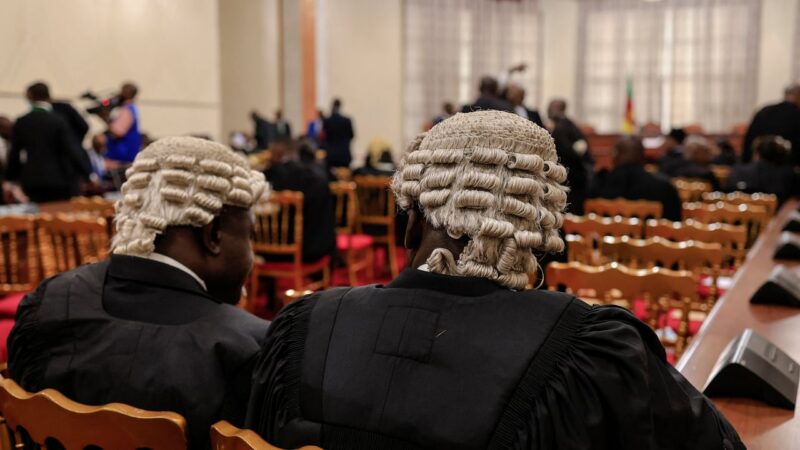
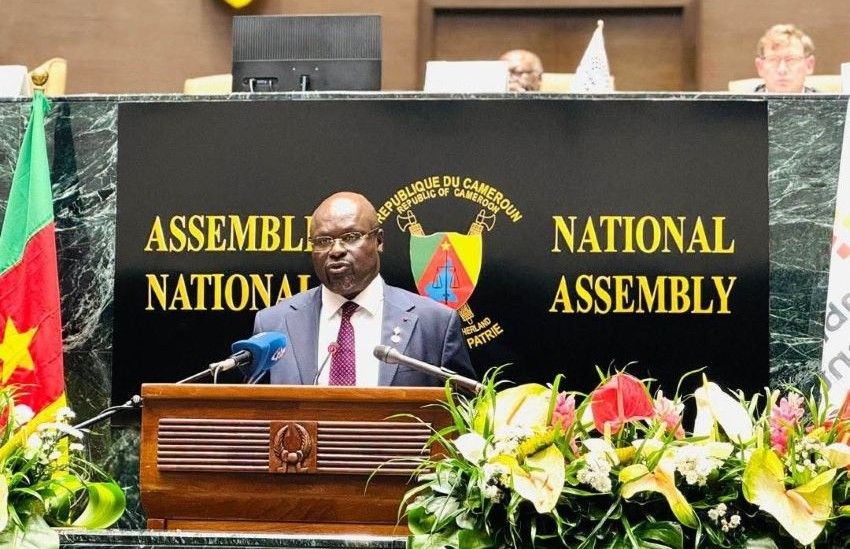
It was precisely this role that Gabon embraced in Yaoundé, during the 51st session of the Francophonie Parliamentary Assembly.
Addressing an assembly of parliamentary presidents, delegation heads, and representatives from across the Francophone world gathered in the Cameroonian capital, Michel Régis Onanga M. Ndiaye, President of the Gabonese National Assembly, officially announced Gabon’s reinstatement into this vital institution. This follows a two-year period of political transition dedicated to profound national institutional reforms. Far from a mere formality, this declaration marks a significant new chapter in Libreville’s diplomatic strategy, underscoring the Gabonese authorities’ clear intent to position the country at the forefront of regional and international dialogue mechanisms.
A reintegration beyond mere symbolism
The proceedings of this 51st session of the Francophonie Parliamentary Assembly unfolded amidst a complex international landscape, characterized by escalating crises, uncertainties surrounding the future of multilateralism, and a global surge in sovereignist sentiments across various regions. The session’s central theme, focusing on multilateralism and state sovereignty, provided Gabon with a particularly strategic platform to articulate the contours of its evolving diplomatic doctrine.
In his address, Michel Régis Onanga M. Ndiaye expressed gratitude to the Francophone institution for its unwavering support during Gabon’s transitional phase. He also emphatically reiterated Gabon’s enduring historical commitment to the values of dialogue, cooperation, and solidarity that form the bedrock of the Francophone community.
By powerfully asserting that Gabon is definitively back, the President of the National Assembly aimed to convey an unambiguous message to its international partners: that of a nation which considers its exceptional institutional journey complete and now intends to fully reclaim its rightful place within global decision-making and influence spheres. This reintegration carries implications far beyond the parliamentary framework. It also serves as a crucial message to investors, international organizations, and economic partners, signaling the nation’s restored stability and its readiness to fully participate in dynamic regional collaborations, vital for Africa news English audiences interested in governance Africa.
Sovereignty without isolation
A key takeaway from this intervention lies in Libreville’s distinct definition of sovereignty. At a time when some states equate sovereign affirmation with disengagement from international institutions, Gabon champions a different approach. Here, sovereignty is presented as a state’s inherent capacity to safeguard its national interests while remaining deeply committed to international cooperation.
This perspective is rooted in the conviction that dialogue, concerted action, and solidarity remain the most potent instruments for preventing crises, strengthening democratic institutions, and preserving regional stability. Such a stance reflects the evolving discussions within African politics concerning the role of states in the global system. It also signifies the rise of a new generation of leaders and political figures actively seeking to redefine the intricate relationship between national independence and multilateral cooperation. In this context, Gabon endeavors to position itself as a key actor capable of harmonizing the affirmation of its sovereignty with active diplomatic engagement.
Translating Gabonese experience into regional influence
The address in Yaoundé also allowed Gabon to unveil a broader ambition to support other African countries undergoing transition or institutional reconstruction processes. The proposal to host a high-level conference, bringing together parliamentary presidents from nations in transition and post-transition, clearly illustrates this desire to transform Gabon’s recent experience into a valuable tool for continental cooperation. The concept is both straightforward and ambitious: to leverage the insights gained over the past two years as a catalyst for institutional solidarity, ultimately serving African political stability.
This orientation reveals a significant evolution in parliamentary diplomacy across the continent. Historically confined to predominantly national functions, parliaments are progressively emerging as crucial actors in mediation, crisis prevention, and democratic support. Furthermore, by endorsing the reform proposals put forth by the Senegalese and Ivorian sections, Gabon demonstrates its commitment to transcend the role of a mere participant in debates, aspiring instead to become an active contributor to their evolution. This proactive stance could enable Libreville to solidify its influence within the Francophone sphere while reinforcing its image as a constructive partner on institutional and democratic matters.
Gabon’s return to the Francophonie Parliamentary Assembly thus represents far more than a simple diplomatic normalization. It constitutes the inaugural act of a more expansive strategy aimed at repositioning the country within major African and international dialogues. In a world grappling with geopolitical tensions, identity retrenchment, and challenges to multilateralism, Libreville deliberately chooses an alternative path: one of assumed yet open sovereignty, cooperation founded on mutual respect, and parliamentary diplomacy dedicated to stability and development.
The true challenge for Gabon now transcends merely its re-entry into international institutions. It lies in its ability to project a distinctive voice within these forums and to transform its re-established presence into enduring influence, benefiting its citizens and the entire Francophone community.