Gabon’s Kobe-Kobe deepwater port: a strategic shift towards industrialisation
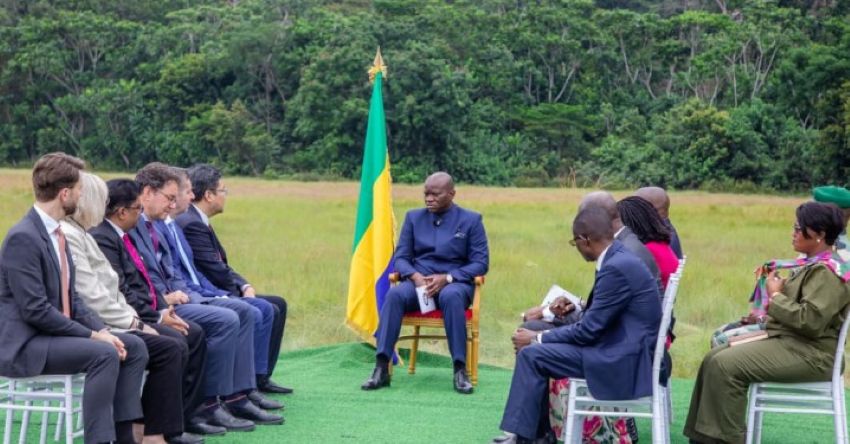
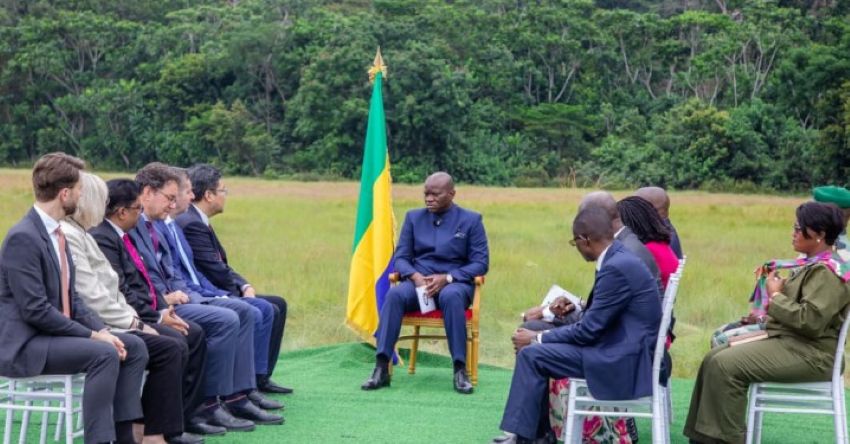
Just hours after officially launching the Kobe-Kobe deepwater port construction on Gabon’s Atlantic coast, President Brice Clotaire Oligui Nguema gathered a strategic circle of ambassadors and representatives from the leading powers involved in the project in Nyonie.
More than a simple diplomatic audience, this meeting set the tone for a now-confirmed ambition: transforming Gabon into a premier industrial, logistical, and mining platform in Central Africa.
Through this high-level exchange, the head of state aimed to send a clear message to international partners. Kobe-Kobe is not just a port infrastructure. It forms the foundation of a new economic model designed to prepare for the post-oil era, strengthen the country’s economic sovereignty, and reposition Gabon within global value chains.
A new economic doctrine
The Kobe-Kobe project revolves around one of Africa’s most strategic assets: the Belinga iron ore deposit, with estimated reserves of nearly 7.5 billion tonnes and an exceptional grade of around 65%, ranking among the world’s largest untapped deposits.
But the true breakthrough lies in the chosen approach. For decades, Africa’s extractive economy followed a simple pattern: extract raw materials and export them in crude form. The project presented by Gabon’s president aims precisely to break with this logic.
The future integrated complex combines four complementary infrastructures: the Belinga mine, an electric railway line spanning over 500 kilometres, a deepwater port capable of accommodating the world’s largest vessels, and energy infrastructure to power the entire industrial system.
This vertical integration pursues a specific goal: retain more added value within the national territory and foster a genuine Gabonese steel industry capable of processing part of the mining output locally.
Diplomacy of multiple partnerships
Before the diplomats gathered in Kobe-Kobe, Brice Clotaire Oligui Nguema also outlined what now appears as one of the pillars of his international strategy: diversification of partnerships.
Gabon’s president stressed a principle that has become central to his development vision: the country’s future cannot depend on a single partner or sphere of influence. It must rely on open cooperation involving multiple economic and industrial powers.
This orientation is already materialising in the composition of the international consortium mobilised around the project. China is involved in railway and mining infrastructure. France is present through several logistics operators. Italy, India, the United States, and Australia also contribute their industrial, financial, energy, or commercial expertise.
This international architecture serves a dual logic: secure the financing and technologies needed for major projects while preserving Gabon’s decision-making autonomy.
The ambassadors of France, Fabrice Mauriès, and China, Zhou Ping, praised this approach, describing it as balanced and offering new cooperation opportunities. Their public endorsement also reflects the growing interest Gabon has attracted from international investors since the establishment of the Fifth Republic.
Central Africa’s industrial bet
Beyond infrastructure, Kobe-Kobe represents a major economic wager. Government projections mention over 100,000 direct and indirect jobs in the long term, the emergence of a vast network of domestic subcontracting, and a powerful ripple effect across the entire economy.
Transport, energy, logistics, metallurgy, services, engineering, vocational training, construction, and industrial maintenance could directly benefit from this gigantic economic corridor.
The geopolitical impact is equally significant. With its future deepwater port, Gabon could become one of Central Africa’s main maritime gateways, at a time when regional competition among logistics platforms is intensifying.
By inviting diplomats to relay this vision to their governments, financial institutions, and economic operators, Brice Clotaire Oligui Nguema seeks to further expand the circle of investors around the project.
Kobe-Kobe thus emerges as much more than an infrastructure site. It symbolises a national strategy aimed at transforming natural resources into an industrialisation lever, attracting international capital while consolidating the country’s economic sovereignty.
If the stated goals are achieved, Gabon could, within the next decade, shift from being a raw material exporter to a major industrial player in Central Africa. The meeting with international partners right after the project launch shows that, for Libreville, the development battle is no longer fought solely on national soil. It is now waged on a global scale.