Cameroon targets 2% budget allocation for circular economy by 2030
Cameroon’s bold plan to transform waste management through circular economy
By 2030, Cameroon aims to dedicate 2% of its national budget to circular economy initiatives, a significant leap from current spending levels. This target is outlined in the country’s National Circular Economy Roadmap 2025–2035, developed by the Ministry of Economy, Planning, and Territorial Development. The strategy outlines sustainable resource management and waste valorization priorities for the coming decade.
According to projections, circular economy expenditures will reach 62.8 billion FCFA in 2025, with waste management costs nearing 30 billion FCFA annually. Combined, these figures represent 1.27% of the state budget. The government plans to progressively increase this allocation to 2% by 2030—a move that would require an additional 53 billion FCFA above current levels, based on the 2025 budget framework.
Soaring urban waste generation outpaces infrastructure
The need for greater investment stems from Cameroon’s rapidly growing waste production, which currently stands at 6 million tonnes per year. Households, markets, public services, and businesses generate the bulk of this waste, yet the country’s management system remains underdeveloped. Collection rates hover around 50%, while recycling rates fall below 10%, highlighting systemic inefficiencies.
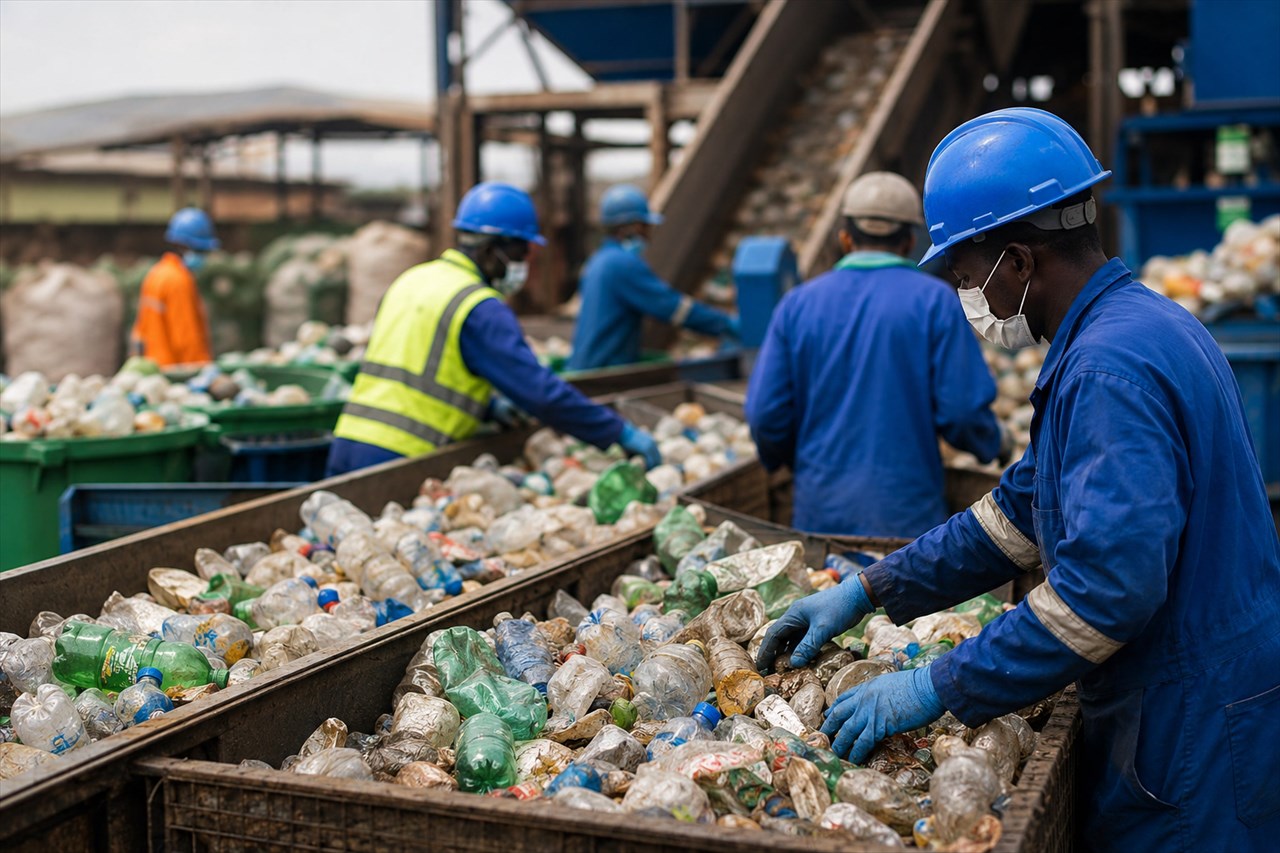
In major cities like Yaoundé and Douala, annual waste output is projected to exceed 2.8 million tonnes by 2040, further straining already inadequate infrastructure. Key challenges include the lack of source separation, limited recycling capacity, insufficient waste collection and treatment facilities, and a shortage of reliable data. Plastic pollution is a particularly pressing issue, with 1,300 tonnes of plastic waste discarded daily—yet only 250 tonnes are collected monthly, and a mere 180 tonnes are recycled.
Institutional reforms and infrastructure upgrades to drive change
To address these gaps, authorities are rolling out a series of reforms and investments aimed at overhauling the waste management chain. The roadmap calls for new legislation to embed circular economy principles into value chains, alongside stricter environmental enforcement and clearer division of responsibilities between government agencies and local authorities. A potential National Waste Management Agency may be established to streamline operations.
On the infrastructure front, plans include constructing and modernizing sorting centers, transfer stations, and sanitary landfills that meet international standards. Additional initiatives involve expanding organic waste processing units such as biodigesters and composting facilities. Community recycling incentives, public awareness campaigns, and training programs for recycling professionals are also on the agenda.
A dual funding strategy: public and private sectors in focus
While public funds will play a key role, the roadmap emphasizes private sector engagement. Proposed measures include municipal waste-related tax reforms and the implementation of Extended Producer Responsibility (EPR) systems to generate eco-contributions for collection and recycling. The National Waste Exchange Platform, already operational, will serve as a digital marketplace to facilitate transactions in recyclable materials, attract private investment, and foster a thriving market for recovered resources.
International partners, including the African Development Bank, African Circular Economy Facility, World Bank, Japan International Cooperation Agency (JICA), and several United Nations agencies, are identified as potential funding sources to support these efforts.