Senegal’s political shift: the unraveling of the Sonko-Diomaye duo
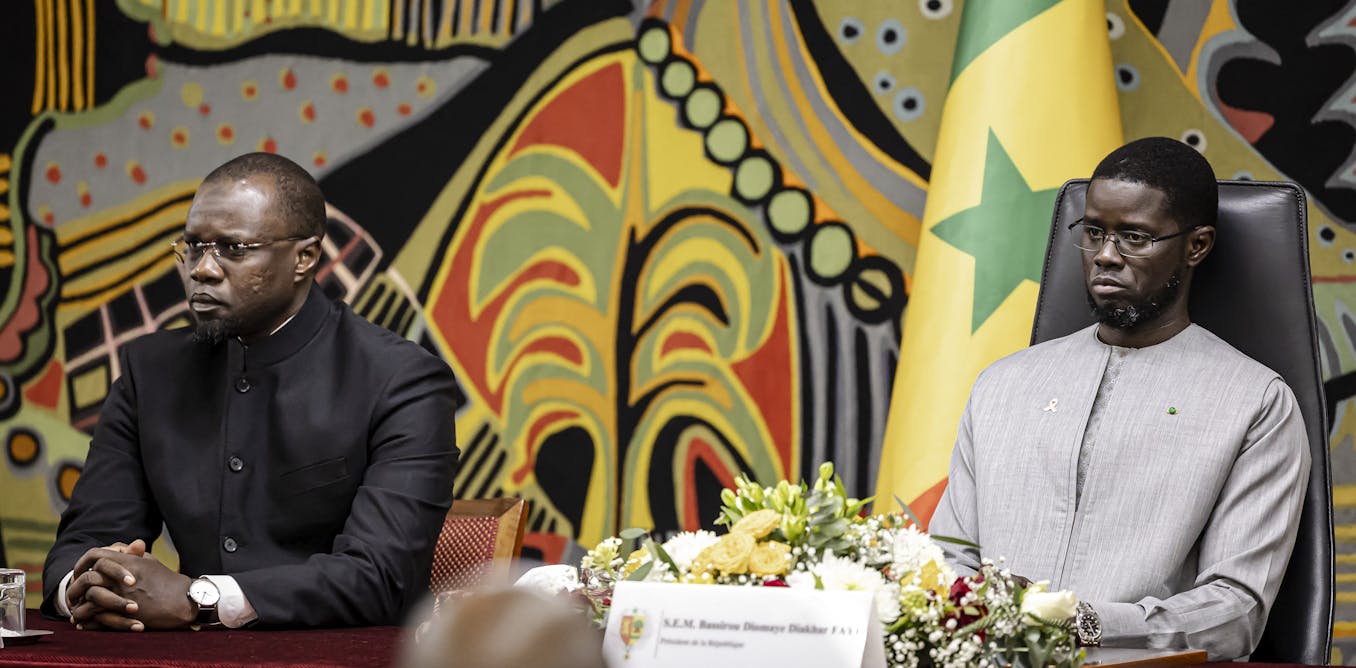
Senegal’s political landscape has long been shaped by shifting alliances, where power dynamics often hinge on evolving interests rather than enduring loyalties. This principle, long recognized in political science, has once again taken center stage in the nation’s executive branch.
Politics is a realm where permanent enemies and friends do not exist—only permanent interests prevail.
The once-united leadership of President Bassirou Diomaye Faye and Prime Minister Ousmane Sonko, once hailed for their synchronized vision, now faces deep internal fractures. These tensions culminated in the dissolution of the government and the removal of the Prime Minister on May 22, marking a decisive turning point in their political partnership.
Early signs of discord emerged during the November 8, 2025 rally, where tensions simmered beneath the surface. However, a May 2, 2026 meeting between the two leaders dispelled any remaining ambiguity, with the President openly criticizing what he described as Sonko’s excessive personalization of power.
The illusion of a unified leadership
Initially, the Sonko-Diomaye duo appeared as a strategic alliance, blending Sonko’s grassroots legitimacy with Diomaye’s institutional authority. Their collaboration was framed as a partnership of equals, designed to consolidate PASTEF’s dominance in Senegal’s political arena. However, the November 8, 2025 gathering exposed the fragility of this arrangement.
Sonko’s remarks following the event underscored the fractures within their relationship. The slogan “Sonko mooy Diomaye” (Sonko is Diomaye), once a unifying force against the former regime, has given way to individual assertions of identity. Observers note a shift from collective symbolism to personal ambitions, where Sonko’s influence now competes with Diomaye’s institutional role.
The Constitution’s delineation of presidential and prime ministerial powers—outlined in Articles 42 to 52—has intensified their rivalry. While Diomaye embodies constitutional authority, Sonko retains his role as a mobilizing force within PASTEF. This duality creates a paradox: their initial complementarity now risks destabilizing the very structure they sought to reinforce.
Diomaye’s resignation from PASTEF’s leadership positions reflects an attempt to distance himself from partisan conflicts, yet this move has only deepened the divide. The transition from street-level slogans to institutional protocol has further strained their relationship, as protocol now prioritizes the President’s image over collective narratives.
The inherent contradictions of their alliance
Drawing from fluid dynamics, the balance of power between the two leaders resembles two masses vying for dominance within a shared system. Sonko’s control over the party injects popular legitimacy into Diomaye’s decisions, while Diomaye’s decrees institutionalize Sonko’s vision in legal terms. However, this interdependence breeds instability. If one leader asserts too much influence, the other risks losing relevance—and vice versa.
This dynamic mirrors the classic dilemma of the ‘Number Two Syndrome,’ where ambitious deputies eventually challenge their leaders. Sonko’s aspirations for executive power clash with Diomaye’s determination to secure his position, creating a rivalry that transcends mere policy disagreements. The result is a leadership vacuum, where mutual suspicion erodes trust and fuels political turbulence.
The duo’s experiment in shared governance highlights the challenges of blending populist mobilization with institutional governance. As their ambitions diverge, Senegal’s political future hangs in the balance, with the risk of deeper societal divisions looming large.