Senegal’s political shake-up: Ousmane Sonko challenges president’s decisions
Senegal’s political shake-up: Ousmane Sonko challenges president’s decisions
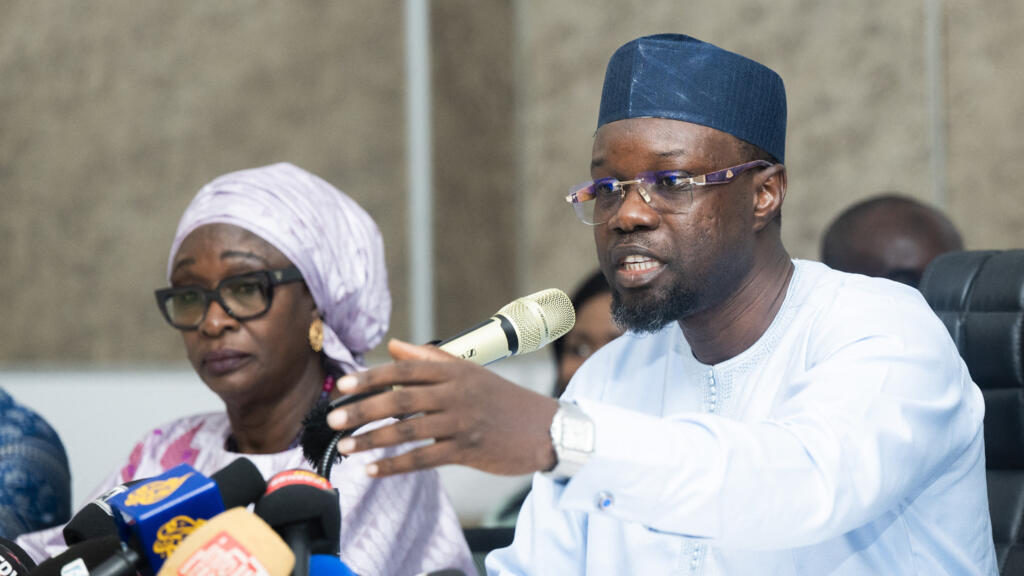
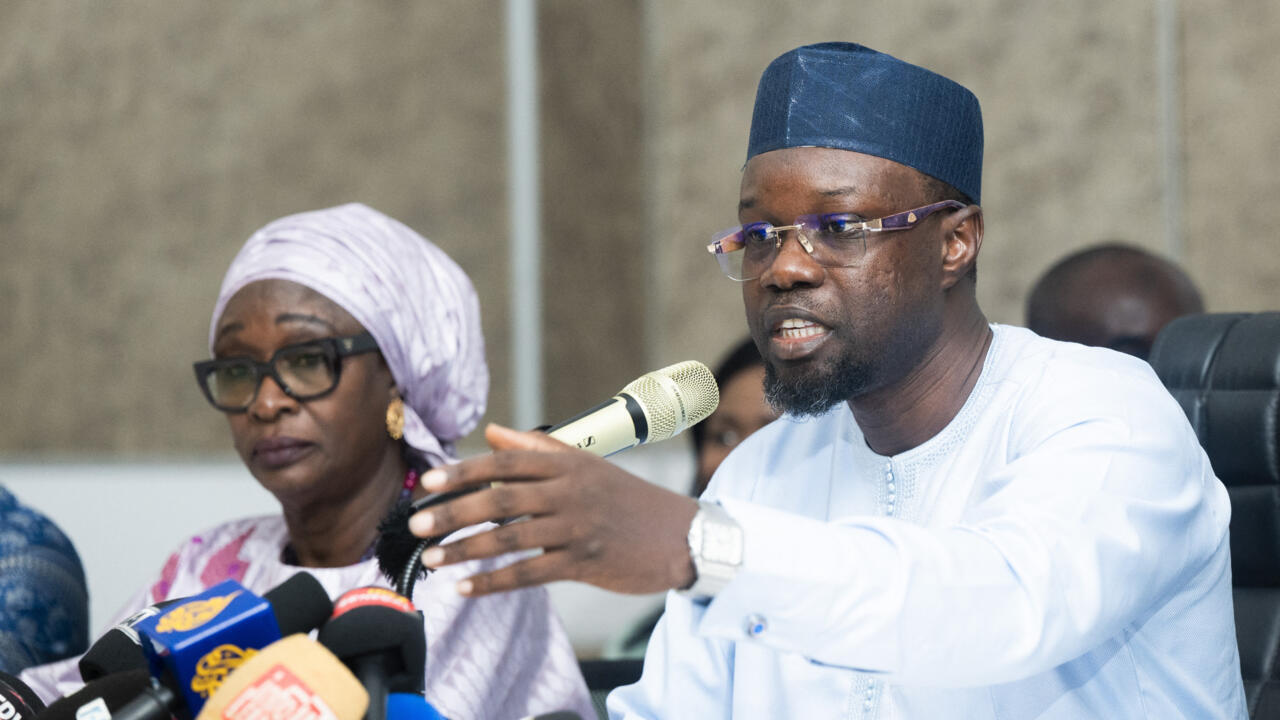
Days after his dismissal as Prime Minister by President Bassirou Diomaye Faye, Ousmane Sonko, leader of the Pastef party, has launched a sharp critique of the government’s actions. Speaking at a press conference in Dakar, the former chief executive made it clear he would not remain silent about what he perceives as a political misstep.
Sonko emphasized that while he does not intend to destabilize state institutions, his party’s parliamentary majority grants it the power to challenge the current administration through a no-confidence motion. He further revealed that he had warned the President months ago about the potential for such a political impasse, but his concerns were ignored.
The former Prime Minister spared no words in his assessment of the newly formed government led by Prime Minister Al Amine Lô. He contended that the executive branch lacks fundamental political legitimacy, declaring, “We have a government with no political foundation.” Sonko dismissed the coalition touted by the presidency as insignificant, asserting that labeling the cabinet a “technocratic government” merely masks its political isolation.
In essence, Sonko asserted Pastef’s exclusive claim to popular legitimacy within the ruling coalition, stressing that his party, as the country’s leading political force emerging from the polls, represents the voice of the people. “To govern without Pastef is to govern without the people,” he declared.
An executive under strain
This political confrontation places the Senegalese government in a precarious position, as highlighted by observers. The absence of Pastef in the cabinet creates a significant challenge for the President’s camp. As the nation’s dominant political force with a robust parliamentary majority, Pastef’s exclusion complicates governance.
While President Bassirou Diomaye Faye retains constitutional authority, the success of his agenda hinges on securing cooperation from Pastef’s lawmakers. Without their support, implementing promised reforms may prove difficult.
Analysts suggest that the political stability of the country is now at risk. The government’s ability to pass legislation and advance reforms without direct involvement from the majority party remains uncertain. The current standoff raises questions about the executive’s capacity to deliver on its commitments.
Some commentators describe the President’s approach as a departure from the movement that propelled him to power. They argue that his administration now operates in a void, disconnected from the historical narrative that defined its rise. Meanwhile, Ousmane Sonko stands ready in the National Assembly with his 130 deputies, representing a formidable force with both historical roots and popular mandate.
A rupture, not a cohabitation
The unfolding political scenario in Senegal defies conventional classification. It is not a typical cohabitation between opposing political forces but a fracture within the same movement. The President and his party, which commands an absolute majority in Parliament with 130 out of 165 seats, are now in direct conflict.
This unprecedented situation raises critical questions: How can a technocratic government without its own parliamentary base govern effectively when faced with a majority party that refuses to participate and simultaneously mobilizes its supporters nationwide? The answer to this dilemma will unfold in the coming weeks and months, within the corridors of power and beyond.