Senegal’s government stands firm on anti-nature acts law, Sonko rejects moratorium
Senegal’s leadership defends tougher penalties for unnatural acts, vows strict enforcement
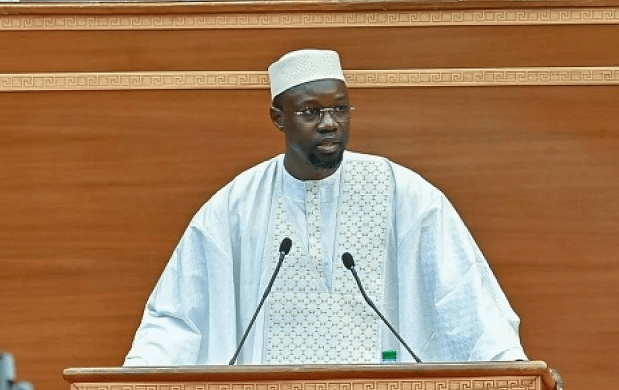
In a decisive parliamentary session, Prime Minister Ousmane Sonko made it unequivocally clear that Senegal will enforce its newly amended penal code without compromise. Addressing lawmakers during a high-stakes question-and-answer segment, Sonko emphasized that the revised legislation—particularly changes to Article 319—must be applied uniformly across all segments of society.
Speaking on behalf of the government, Sonko underscored that once a law is enacted, it is binding on every citizen, regardless of prior opposition. His remarks followed the recent promulgation of Law No. 2026-08, signed by President Bassirou Diomaye Faye on March 27, 2026, which strengthens penalties for acts deemed “contrary to nature.”
The updated legislation introduces stricter sanctions, including imprisonment ranging from five to ten years and fines between two and ten million West African CFA francs for convicted individuals. It also criminalizes the advocacy and financing of such acts, signaling a broader legal framework aimed at addressing both social and public health concerns.
Sonko dismissed international criticism, particularly from Western nations, asserting that Senegal retains full legislative sovereignty. He declared that the Senegalese people are entitled to shape their own societal values without external interference, stating that the country has no need for foreign guidance on this matter.
Highlighting the broader objectives of the reform, the Prime Minister framed the changes as essential for safeguarding public health, explicitly linking the legislation to efforts to combat the spread of HIV. He also categorically ruled out any possibility of a moratorium on the law’s implementation, signaling the government’s unwavering commitment to its enforcement.