Senegal urged to accelerate community reform implementation
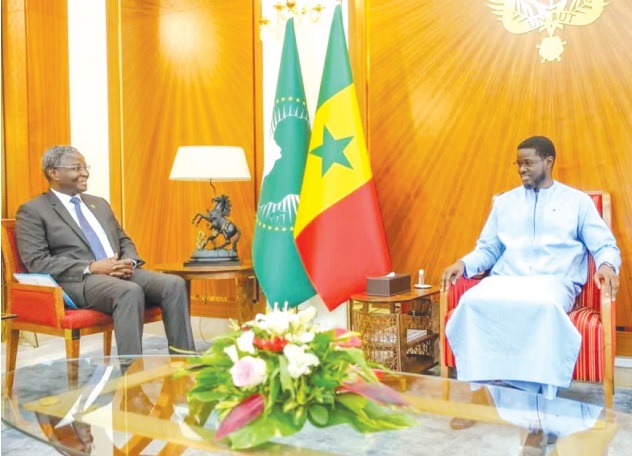
The political phase of the 11th annual review of UEMOA community reforms took place this Tuesday in Dakar, following a brief delay. The session, attended by Abdoulaye Diop, President of the UEMOA Commission, highlighted the need for Sénégal to address specific delays despite maintaining a generally respectable performance level across 145 evaluated reforms.
During these high-level discussions, the Senegalese Minister of Finance and Budget joined the Commission President to validate findings from the technical phase conducted in late 2025. Current data shows that Sénégal has achieved a provisional implementation rate of 76.45% for the 145 reforms under review. This represents a decrease of 2.14 percentage points compared to the 78.59% recorded across 132 reforms in 2024.
Areas requiring urgent attention
The slight decline is largely attributed to setbacks in two critical pillars: economic governance and convergence, and structural reforms, which saw a combined drop of 6.3 points. A specific concern raised was the failure to submit the 2024 report from the single window for financial statements to the Commission. Furthermore, sectors such as culture, tourism, handicrafts, and the overall business climate have been identified as fragile areas that require immediate corrective actions.
Finance and Budget Minister Cheikh Diba confirmed that the outcomes of this political phase would be formally presented to the Prime Minister during an upcoming audience with the Commission President.
Significant progress in key sectors
While some areas lagged, others showed impressive growth. The agriculture, livestock, fisheries, and environment sectors saw a substantial increase of 12 points. Human and social development improved by 6.5 points, while the energy sector rose by 3 points. Additionally, the modernization of legal, accounting, and statistical frameworks recorded a 5.5-point gain, reflecting a positive momentum that the government intends to sustain.
Abdoulaye Diop emphasized that this annual exercise, established by the Conference of Heads of State in 2013, is essential for monitoring collective efforts toward UEMOA treaty goals. It serves to pinpoint deficiencies and provide actionable recommendations. Since the process began in 2014, Sénégal has undergone ten reviews with generally positive outcomes. This eleventh edition follows the biennial political structure adopted in mid-2023.
To ensure these findings lead to real change, the Senegalese administration has pledged to hold a special briefing for the Prime Minister. This move signals a clear directive to all relevant government departments to prioritize compliance with regional standards before the next assessment cycle begins.