Sénégal debates sovereignty vs LGBT rights amid tightened laws
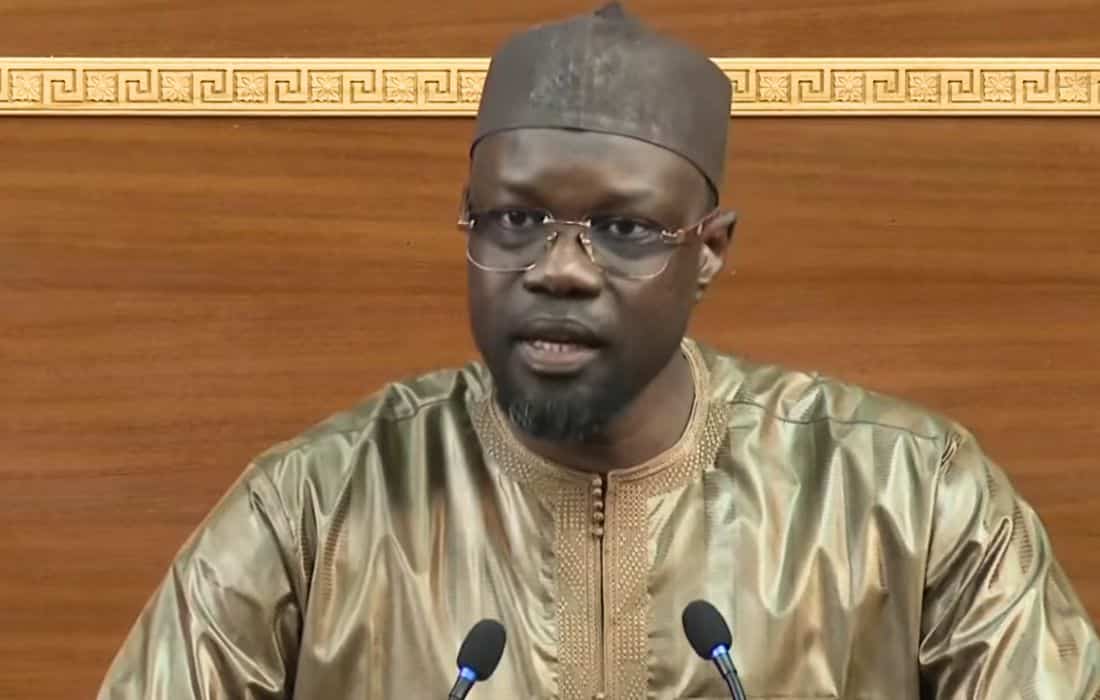
The Senegalese Prime Minister, Ousmane Sonko, recently addressed the National Assembly to denounce what he described as the Western dictate and tyranny accused of attempting to impose homosexuality worldwide. His statements come at a time when Senegal is reinforcing its legal stance on same-sex relationships, deepening the divide between national sovereignty and human rights.
This rhetoric reflects a growing trend in Senegal, where LGBT rights have become a focal point of political and geopolitical confrontation rather than a discussion on human dignity and equality.
As of early 2026, Senegal has further tightened its laws against same-sex relations, with sentences now ranging from five to ten years in prison. This legal shift coincides with heightened social stigma and reported arrests, raising serious concerns among human rights advocates about the safety and well-being of LGBT individuals in the country.
LGBT rights debate in Senegal: sovereignty or dignity?
The public discourse surrounding LGBT rights in Senegal often frames the issue as a clash between national sovereignty and external pressures. Phrases like “we won’t be dictated to,” “these are our values,” and “mind your own business” frequently dominate social media and public debates. At the heart of this discourse lies a persistent tension: the assertion of national autonomy versus the universal principle of human rights.
In this context, LGBT rights are often perceived as a foreign imposition, while legal restrictions are justified in the name of culture, tradition, or national identity. This narrative shift distracts attention from the lived realities of those affected by these laws.
The harsh reality of Senegal’s penal code
Same-sex relationships in Senegal are criminalized under the Penal Code, a stance that was further reinforced in 2026. The updated legislation now imposes harsher penalties, with sentences extending up to a decade behind bars.
Beyond the legal framework, human rights organizations have documented the severe social consequences of this criminalization. Stigmatization, arbitrary arrests, and violence against LGBT individuals have become alarmingly common. The debate, therefore, transcends legal technicalities to encompass the very safety and survival of those targeted by these laws.
Why LGBT rights in Senegal matter globally
The question arises: why do international observers and organizations engage with the issue of LGBT rights in Senegal? The answer lies in the foundational principle of human rights: universality. When individuals face punishment or violence based on their sexual orientation, it is not merely a domestic matter—it is a violation of fundamental human dignity and security.
To dismiss these concerns would imply that human rights protections should end at national borders, despite their intended universality.
Human rights: external imposition or shared commitment?
A common misconception in public debates is that human rights are an externally imposed norm. However, these rights are also grounded in international commitments voluntarily undertaken by states.
Senegal’s Constitution, adopted in 2001, explicitly references the Universal Declaration of Human Rights as a cornerstone of its legal system, affirming the country’s dedication to non-discrimination and human dignity. In this light, advocating for the respect of these commitments is not about imposing foreign values but about upholding existing obligations.
For LGBT rights in Africa, this distinction is crucial: the issue is not about interference but about protecting individuals at real risk.
LGBT realities in African societies: beyond myths
Another recurring argument is that LGBT identities are foreign to African societies or the result of external influences. This claim does not align with reality.
LGBT individuals exist in every society, including Senegal. They are born, live, and work within these communities. Their existence is not a cultural import but a universal human reality.
Historical evidence also challenges the narrative of LGBT identities as a recent or foreign phenomenon. In West Africa, documented social realities—such as the goor-jigeen in Senegal—highlight long-standing diversity in gender and sexual expressions. While not identical to contemporary LGBT identities, these examples underscore that such questions are not reducible to recent external influences.
A debate shaped by deep-seated tensions
The discourse on LGBT rights in Senegal is embedded in broader tensions: colonial legacies, internal political dynamics, social pressures, and overt hostility toward LGBT individuals. In this environment, defending human rights is often portrayed as a form of external pressure, while legal restrictions are justified in the name of culture or tradition. This framing distances the debate from the lived experiences of those most affected.
Some public narratives go even further, framing LGBT individuals as a threat or corruption. Such rhetoric not only fuels stigma but also dehumanizes the individuals at the center of the debate, reducing their identities to a problem rather than acknowledging their humanity.
Defending human dignity without imposing values
Advocacy for LGBT rights is not about imposing a foreign model or negating cultural realities. It is about a simple principle: no person should face punishment, exclusion, or violence due to their sexual orientation or gender identity. Beneath the rhetoric of sovereignty and interference lies a stark reality—individuals are living in conditions where their very existence puts them in danger.
This is, and should remain, unacceptable.
The global fight for human rights
Violations of human rights are not confined to Senegal. They occur worldwide, from Russia to China and beyond. Human rights organizations respond to these injustices based on local context, available resources, and ground-level alerts. Attention to specific situations does not imply a hierarchy of suffering but reflects the urgency of mobilizing where intervention is possible.
The fight for human rights is inherently contextual, yet its principles remain universal.
Taking action: supporting LGBT individuals in Senegal
In response to these challenges, initiatives have emerged to provide direct support to LGBT individuals in Senegal. Campaigns offering legal assistance, emergency aid, and psychosocial support aim to mitigate the harsh realities faced by those targeted by discriminatory laws. Supporting such efforts transforms advocacy into tangible action, providing relief to those in need.