Political funds in Senegal: sonko’s revelation exposes an old system
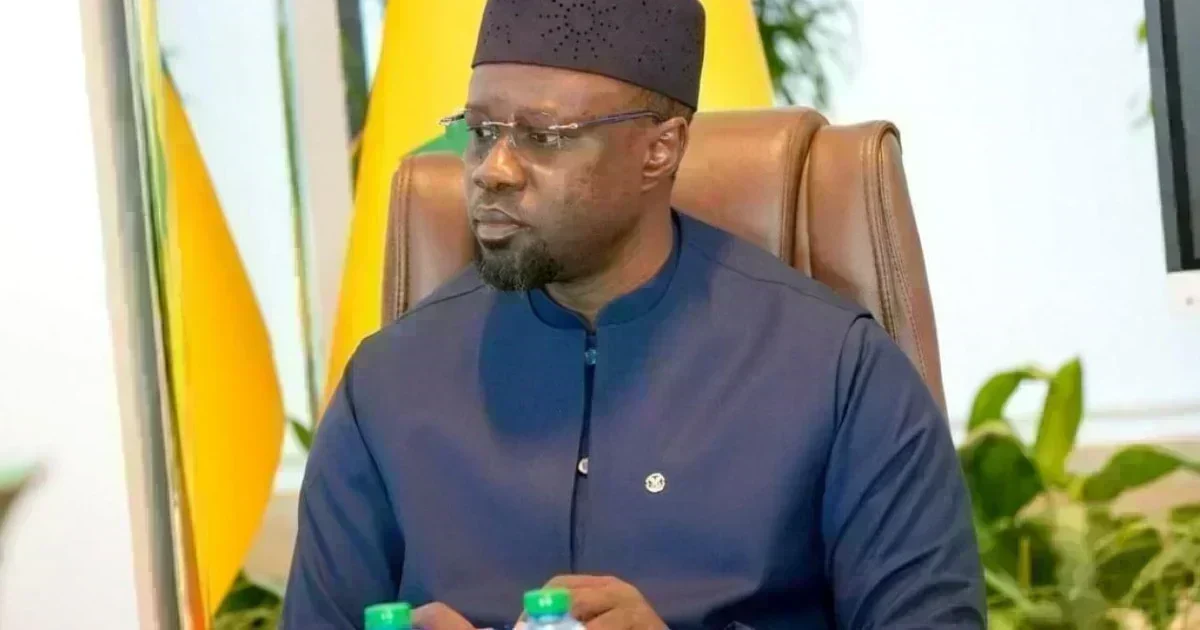
When Ousmane Sonko stood before Senegal’s National Assembly recently, he lifted the veil on a long-hidden financial mechanism that has quietly shaped governance in the country for decades. The Prime Minister disclosed the existence of a 1.77 billion CFA franc political fund under his control—an admission that sparked immediate debate but also revealed a practice far older than his tenure.
The revelation did not come out of nowhere. For weeks, Senegalese public discourse had been dominated by questions about these so-called political funds, which operate with minimal oversight and have long been a source of controversy. Sonko’s disclosure confirmed what many had suspected: the Prime Minister’s office has long had access to a discretionary financial envelope, traditionally managed with little transparency.
The roots of a controversial system
Political funds in Senegal have never been a novel concept. For years, they have formed part of a shadow financial system that operates alongside the formal budget. The Prime Minister has historically received around 1.7 billion CFA francs annually, while the President’s discretionary fund is estimated at over 11 billion CFA francs. This disparity has long fueled criticism, with many arguing that such opacity undermines democratic accountability.
Despite its controversial nature, the system has persisted with little public scrutiny—until now. Sonko’s decision to bring it into the open has forced a reckoning. His initial denial of the fund’s existence was short-lived; once pressed in Parliament, he acknowledged its presence and even defended its necessity for sensitive state missions. Yet his call for stricter oversight came with a caveat: he suggested modeling Senegal’s system after Western models, where the Prime Minister—not the President—oversees such funds under the watch of a dedicated commission.
A political rupture in the making
The Prime Minister’s public stance on these funds has not been without consequences. His push for transparency and reform clashed directly with President Bassirou Diomaye Faye’s vision of centralized control. The disagreement reached a breaking point when Sonko, in a rare public airing of intra-governmental tension, revealed that he had requested an additional budgetary allocation after depleting his annual fund. The revelation, later confirmed by the Minister of Petroleum and Energy, Abdourahmane Diouf, in late July 2026, reignited accusations of misuse and lack of accountability.
Civil society actors, including Moundiaye Cissé of the NGO 3D, have since intensified calls for full disclosure. They demand the publication of detailed reports on how these funds have been utilized over the past two years—both within the Prime Minister’s office and the National Assembly. The demand underscores growing public frustration with a system that has long operated in the dark.
As the political fallout continues, one thing is clear: the issue of political funds has evolved from a behind-the-scenes administrative practice into a defining challenge of Senegal’s governance landscape. Whether Sonko’s disclosure will lead to meaningful reform—or further entrench the opacity of the system—remains an open question, but one that now dominates national discourse.