Tuesday, November 3
Inside Benin’s projected 7.7% growth for 2027: the forces behind a rare economic streak
A la Une, Actualités

Inside Benin’s projected 7.7% growth for 2027: the forces behind a rare economic streak

Benin is once again positioning itself as one of West Africa's most dynamic economic performers, and the latest World Bank projections explain why. Behind the headline numbers lies a story of deliberate policy choices, steady infrastructure investment, and a logistical overhaul that is quietly reshaping the country's growth path through 2027. The mechanics of a sustained expansion The World Bank expects Benin's economy to grow by 7.7% in 2027, following estimated expansions of 8.1% in 2025 and 7.8% in 2026. That trajectory places the country well above the average for sub-Saharan Africa, and it is not driven by extractive industries. Instead, the momentum comes from a combination of continuous infrastructure spending, the modernisation of port and agricultural logistics chains, and reform...
Kémi Séba’s diplomatic passport rejected in South Africa: the strategy behind the setback
Actualités

Kémi Séba’s diplomatic passport rejected in South Africa: the strategy behind the setback

When South African judges convened on 6 October 2026 to examine the case of Kémi Séba, the central question was straightforward: does a diplomatic passport issued by Niger shield a pan-African activist from extradition to Benin? The answer, delivered after hours of argument, was no. The court found no official evidence that Kémi Séba is an accredited Nigerien diplomat in South Africa. He remains in detention, and the extradition process requested by Benin moves forward. The next critical hearing is scheduled for 20 November. Why the diplomatic argument failed The 6 October hearing was never going to be a routine procedural step. Since his arrest in South Africa, Kémi Séba’s legal team has built a significant part of its strategy around his alleged role with Nigerien authorities and the d...
Inside the FLA’s Kidal exit: what the pullout reveals about Mali’s war dynamics
Actualités

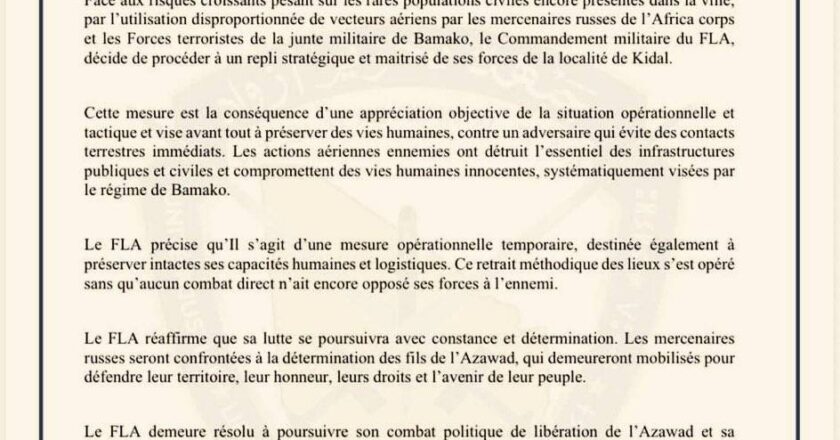
Inside the FLA’s Kidal exit: what the pullout reveals about Mali’s war dynamics

The Front for the Liberation of Azawad (FLA) has announced a withdrawal of its forces from Kidal, in northern Mali, framing the move as a "strategic and controlled retreat." The independence movement insists its fighters left the city without direct ground combat and that the decision is temporary. Behind this announcement lies another chapter in a conflict that has, in recent years, been defined by a relentless cycle of offensives, pullbacks and heavy losses inflicted on Malian forces and their Russian partners. Why Kidal remains the ultimate prize in northern Mali Kidal is no ordinary city in this conflict. Located in the far north of the country, it has been one of the primary hotbeds of Tuareg rebellions for decades. For Bamako as well as for the independence movements, controlling K...
Inside Moscow’s Baltic Nazi verdict: why history is now a weapon of state
International

Inside Moscow’s Baltic Nazi verdict: why history is now a weapon of state

When a Russian district court ruled on 5 October 2026 that thirteen individuals and five organisations from the Baltic states were complicit in Nazi Germany's crimes, it did more than reopen a chapter of the Second World War. It converted that chapter into a live instrument of political confrontation. Behind the memory of wartime atrocities, Moscow now explicitly invokes the defence of its "national interests" — a rhetoric that reaches far beyond the archives and lands squarely in the middle of today's standoff between Russia, the Baltic capitals and NATO. The case that had no defendants At first glance, this looked like a matter for historians. It quickly became something else. In late September, the Russian Prosecutor General's Office petitioned the district court in Tver, near Moscow, ...
Guinea-Bissau: what the Bissau arms seizures reveal about the junta’s political calculus
Actualités

Guinea-Bissau: what the Bissau arms seizures reveal about the junta’s political calculus

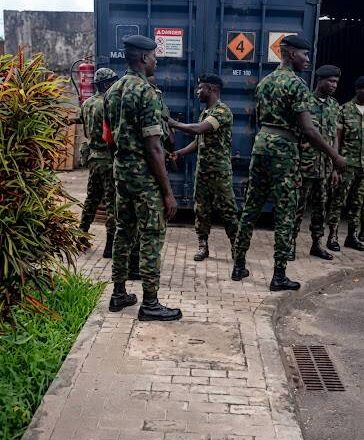
Behind the sandbags and cordons in Bissau, the military junta's sweeping disarmament campaign is not just about getting guns off the streets. It is the opening move in a high-stakes political chess game that will determine who controls Guinea-Bissau's return to civilian rule — and who gets to run in the presidential election set for December 6. The mechanics of a citywide weapons hunt For weeks now, security forces have been fanning out across multiple neighbourhoods in the capital, prying open shipping containers and searching homes in a bid to locate hidden weapons and ammunition. The stated goal: disarm groups deemed capable of destabilising Bissau. Military authorities say they are reclaiming control of firearms circulating outside official channels. This is a country where the armed ...
Why the M51.3 launch from Le Vigilant reveals Europe’s deeper security fault lines
International

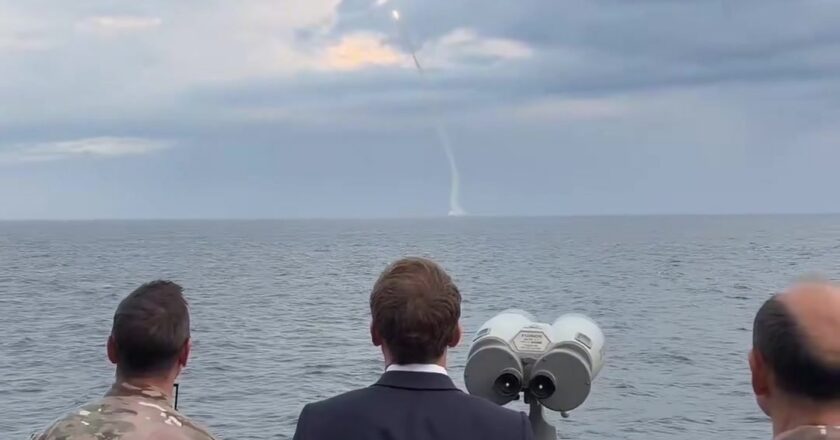
Why the M51.3 launch from Le Vigilant reveals Europe’s deeper security fault lines

The first acceptance firing of the M51.3 strategic ballistic missile from the nuclear-powered ballistic missile submarine Le Vigilant did not happen in a vacuum. It emerged from a European security environment that has been steadily deteriorating for years, and understanding the test requires looking at the pressures building beneath the surface — the airspace violations, the drone incursions, and the deepening rift between Russia and NATO that have turned a routine technical milestone into a broader strategic statement. The context that made this test matter Aboard the multi-mission frigate Auvergne, Emmanuel Macron watched the first M51.3 ballistic missile launch from the SNLE Le Vigilant. The trial, conducted on October 6, 2026 off the coast of Finistère, was designed to confirm the s...
Inside Gabon’s poultry ban: why Washington’s WTO move is only half the story
A la Une

Inside Gabon’s poultry ban: why Washington’s WTO move is only half the story

With less than three months to go before Gabon's ban on imported broiler chicken takes effect on 1 January 2027, Libreville and Washington are squaring off in the arena of international trade. Yet the real story behind the poultry dispute runs deeper than chicken: it raises a question that has quietly shaped trade policy for decades — how far can a state go to shield its own producers before it runs afoul of World Trade Organization rules? The roots of the standoff The confrontation did not emerge overnight. In May 2025, Gabonese authorities announced that imports of broiler chicken would be prohibited from 1 January 2027. The stated aim was straightforward: give domestic production more room to grow, draw investment into the poultry sector, generate rural jobs and cut the country's reli...
Behind Burkina Faso’s digital drive: why security and schooling set the real timetable
Actualités

Behind Burkina Faso’s digital drive: why security and schooling set the real timetable

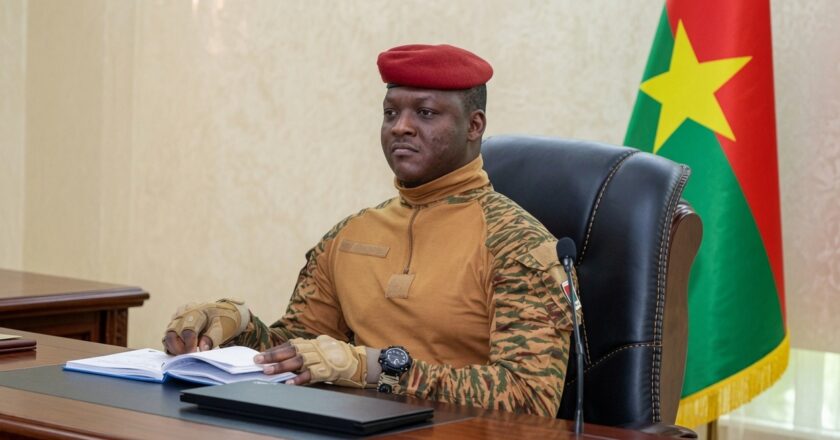
As Ouagadougou stages its National Days of Patriotic Engagement and Citizen Participation, the transitional government rolls out its full communications machinery. The "Avenue of Services to the People" stands as the centerpiece showcase of the Progressive Popular Revolution regime: online criminal records, digital nationality certificates, and a digitized universal health insurance scheme. Every element is choreographed to project the image of a modern, connected, efficient state. Yet beneath this technological veneer — and behind the triumphant figures brandished at ministerial gatherings — the country's lived reality tells a far grimmer story. This rush toward paperless administration looks like a communications gimmick designed by and for urban elites, while the very foundations of th...
Inside the mechanics of Cotonou port’s rise: transit growth, capacity goals and regional stakes
Actualités

Inside the mechanics of Cotonou port’s rise: transit growth, capacity goals and regional stakes

Cotonou's port is not simply growing; it is being deliberately repositioned as a regional trade platform. The numbers alone – a jump from 9.6 million tonnes in 2024 to 14.7 million tonnes in 2025 – tell only part of the story. Behind this surge lies a calculated effort to diversify trade routes, attract new cargo flows, and embed Benin's infrastructure deeper into West African supply chains. How regional demand is reshaping Cotonou's role Traditionally viewed as Benin's maritime gateway, the port now aims to serve a much broader hinterland. This shift is driven by evolving trade patterns across West Africa, particularly increased exchanges with Burkina Faso, Nigeria, and Chad. Hydrocarbons, manufactured goods, and general merchandise destined for domestic markets are all feeding the mome...