Tuesday, November 3
Why the EU chose Cotonou for its first Benin trade mission — and what it signals
Actualités

Why the EU chose Cotonou for its first Benin trade mission — and what it signals

The strategic logic behind a landmark economic mission Something more calculated than a routine diplomatic gesture is unfolding in Benin's economic capital. On Wednesday, 7 October 2026, the European Union formally opened its first-ever economic mission on Beninese soil in Cotonou, bringing with it a delegation of European companies eager to scout local investment opportunities. The timing and the format reveal a deliberate strategy: rather than waiting for Beninese operators to travel to Brussels or Paris, the EU has opted to bring its business community directly into the Cotonou marketplace. A three-day push with long-term ambitions Scheduled to run from 7 to 9 October 2026, the three-day trade mission is designed to forge direct links between European and Beninese economic players. The...
Behind Cotonou’s port edge: why 36-72 hour container waits are no accident
Actualités

Behind Cotonou’s port edge: why 36-72 hour container waits are no accident

The operational logic beneath Cotonou's container turnaround West African port hubs are straining under critical congestion, yet Benin's maritime gateway is quietly holding its ground. Container waiting times at the Autonomous Port of Cotonou are estimated at 36 to 72 hours, placing the facility among the smoothest in the sub-region. In a West African maritime logistics landscape that often turns into a headache, the Autonomous Port of Cotonou (PAC) is showing notable resilience. At the PAC Media Connect meeting held in early October 2026, Charles Bennett Fayomi, Director of Port Operations and Security, laid out a comparative assessment of commercial activity. A sharp regional contrast While several neighbouring ports record waiting times at sea ranging from six weeks to two months, Coto...
Behind Niger’s push for a five-year term against lawyer Lirwana: inside a case that tests digital speech
Culture

Behind Niger’s push for a five-year term against lawyer Lirwana: inside a case that tests digital speech

The confrontation between Niger's judiciary and the most outspoken members of its bar has entered a decisive phase. Fifteen days after being remanded in custody, lawyer Abdourahamane Lirwana appeared on Tuesday, October 6, before the Niamey High Court to answer the charges against him. When the hearings concluded, the prosecution requested a five-year prison sentence, along with a fine of five million CFA francs. Online posts at the heart of the case The proceedings stem from content the lawyer published on social media. Prosecutors accuse Lirwana of "disseminating data likely to disturb public order," an offence severely punished under Niger's cybercrime legislation. The charge carries heavy penalties, reflecting the authorities' increasingly strict approach to online expression. Tensio...
Behind Benin’s ECOWAS court seat: the deeper story of a judicial gamble
Actualités

Behind Benin’s ECOWAS court seat: the deeper story of a judicial gamble

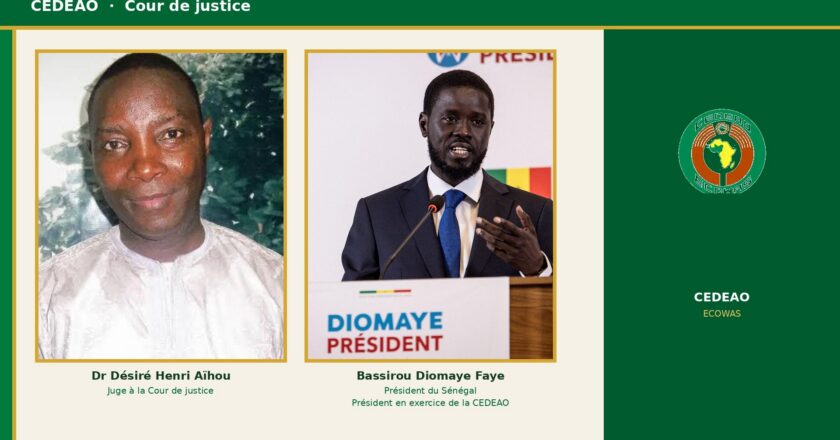
When Désiré Henri Aihou raised his hand in Abuja on 6 October 2026, the moment looked like a routine judicial ceremony. But the swearing-in of Benin's new judge at the ECOWAS Court of Justice carries a much heavier backstory — one that stretches from a landmark national conference in Cotonou to the enforcement battles now facing West Africa's community court. The appointment, for a single non-renewable four-year term, is less about one magistrate and more about whether regional justice can finally bite. The Abuja ceremony and the team behind the bench The oath was administered at the ECOWAS Commission headquarters in Abuja, under the authority of Bassirou Diomaye Faye, Senegal's president and current chair of the regional bloc's Authority of Heads of State and Government. Five judges to...
Behind Benin’s ECOWAS court seat: the deeper story of a judicial gamble
Actualités

Behind Benin’s ECOWAS court seat: the deeper story of a judicial gamble

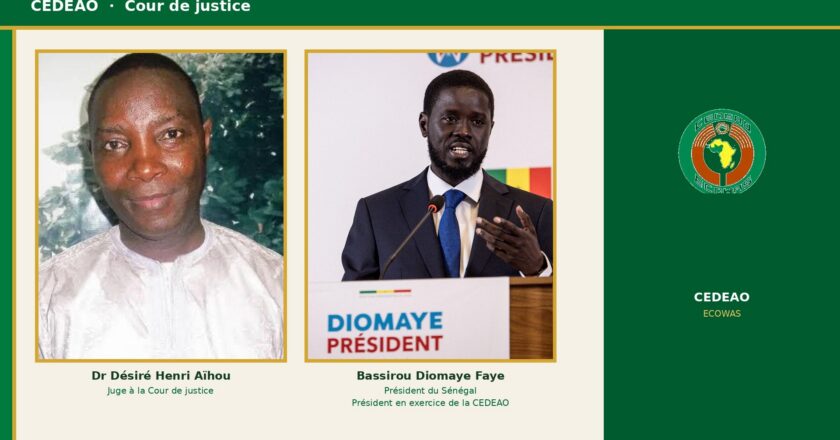
When Désiré Henri Aihou raised his hand in Abuja on 6 October 2026, the moment looked like a routine judicial ceremony. But the swearing-in of Benin's new judge at the ECOWAS Court of Justice carries a much heavier backstory — one that stretches from a landmark national conference in Cotonou to the enforcement battles now facing West Africa's community court. The appointment, for a single non-renewable four-year term, is less about one magistrate and more about whether regional justice can finally bite. The Abuja ceremony and the team behind the bench The oath was administered at the ECOWAS Commission headquarters in Abuja, under the authority of Bassirou Diomaye Faye, Senegal's president and current chair of the regional bloc's Authority of Heads of State and Government. Five judges to...
Niger’s fuel price decision: the hidden pressures forcing the CCR’s hand
Culture

Niger’s fuel price decision: the hidden pressures forcing the CCR’s hand

The recommendation that emerged from the Conseil Consultatif de la Refondation (CCR)'s first extraordinary session of 2026 landed like a thunderclap — yet it merely confirmed what many had long suspected. The advisory body is now openly advocating for an upward adjustment of pump prices for petroleum products. Behind closed doors, officials describe the move as a bitter pill that cannot be avoided if Niger is to protect its macroeconomic stability and energy security. The financial undertow driving the price review Persistent supply-chain disruptions and mounting financial strain on the Société Nigérienne des Produits Pétroliers (SONIDEP) have left the CCR with little room to manoeuvre. The institution is urging the government to take the plunge, recommending an increase in hydrocarbon pr...
Why Moussa Kaka’s case exposes deeper fault lines in Niger’s security apparatus
A la Une, Actualités

Why Moussa Kaka’s case exposes deeper fault lines in Niger’s security apparatus

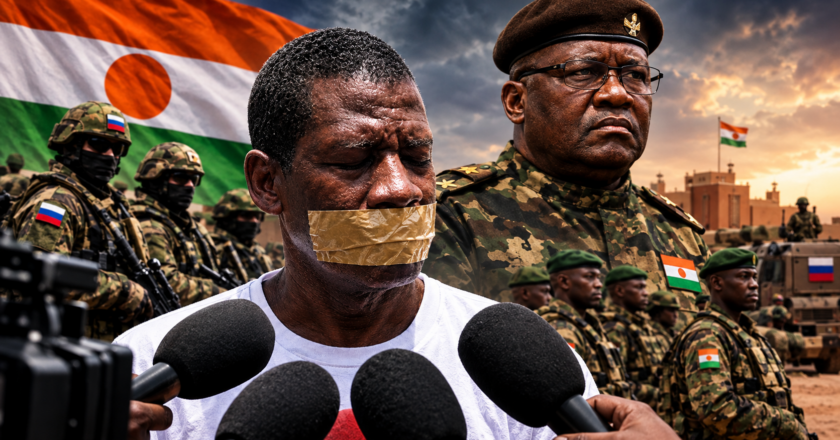
The anatomy of a confirmation that raised more questions than it settledWhen Nigerien authorities finally broke their silence on the fate of journalist Moussa Kaka, the admission was as notable for what it revealed as for what it left unsaid. More than a month after Kaka vanished upon leaving the premises of Radio Télévision Saraounia in Niamey, the government confirmed on 6 October that he was "alive" and "held by the authorities." The disclosure, conveyed to Reporters Without Borders, marked the first official acknowledgment of his detention.Yet this confirmation, significant as it is, does not resolve the central ambiguities surrounding the case. The authorities have not publicly disclosed where Kaka is being held, what specific accusations he faces, or the precise legal basis for his d...
What the Algeria-Niger fiber optic deal really means for Sahel’s digital map
Actualités

What the Algeria-Niger fiber optic deal really means for Sahel’s digital map

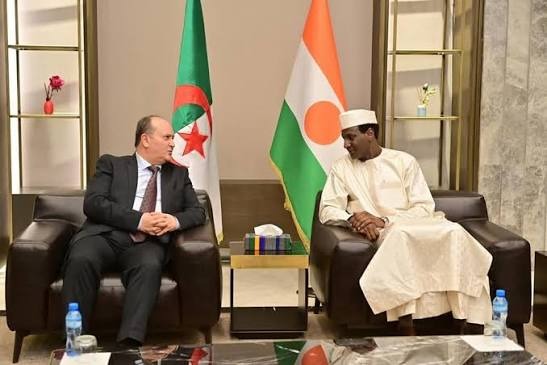
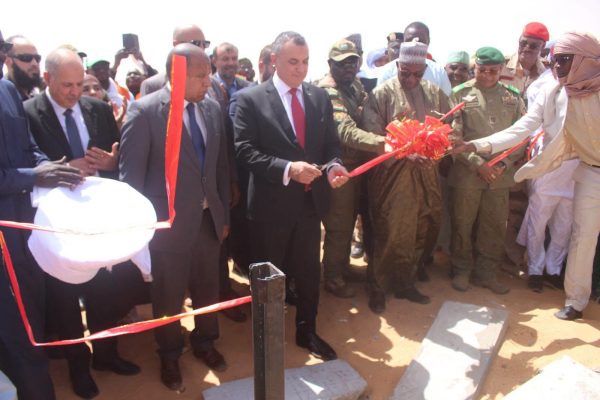
A strategic corridor, not just a cable At Assamaka, a dusty outpost on the edge of the Sahara, Algeria and Niger have formally activated their cross-border fiber optic link. The ceremony marks the completion of years of construction under the Trans-Saharan Fiber Optic Backbone (DTS), a regional initiative backed by the New Partnership for Africa's Development (NEPAD). But beyond the high-speed promises, the project reveals a more complex story: access to international bandwidth, reduced digital dependence, potential new revenue streams for operators, and for Algiers, a calculated bid to extend its strategic influence south of its borders. In a Niger grappling with jihadist expansion, protecting this new infrastructure will be a challenge in itself. Assamaka: a symbol with a purpose The lo...