Tuesday, November 3
Inside Benin’s 14 health projects: the driving forces behind a decisive push
A la Une

Inside Benin’s 14 health projects: the driving forces behind a decisive push

The strategic logic behind Benin's latest health investment Benin's government has taken a significant step in its ongoing effort to modernize public healthcare and narrow the persistent gaps in medical access. During a cabinet meeting on Wednesday, October 7, 2026, the executive branch approved the contractual arrangements with selected contractors, effectively clearing the way for construction to begin on fourteen health centers across the country. In parallel, the plan includes a comprehensive overhaul of the maternity ward at the Ouidah zone hospital. While the announcement may appear to be a routine infrastructure rollout, a closer look reveals a deliberate effort to address structural weaknesses that have long shaped health outcomes in underserved areas. The decision to bundle the co...
What Benin’s new coastal authority really signals for the Fidjrossè-Ouidah corridor
Actualités

What Benin’s new coastal authority really signals for the Fidjrossè-Ouidah corridor

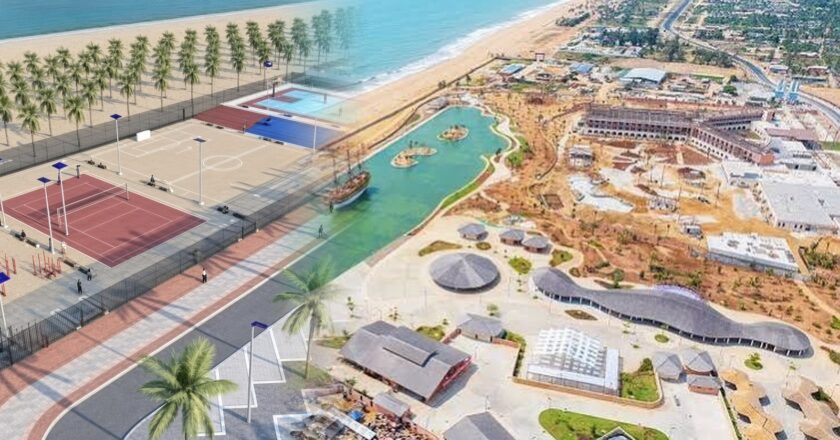
The decision to set up a dedicated body for the stretch of coast between Fidjrossè and Ouidah is not simply an administrative move. Behind it lies a deeper calculation: how to keep the tourism momentum of the Route des Pêches alive while putting a brake on the chaotic occupation of wetlands that has been quietly fuelling flood risk. A coastline that has become strategic On Benin's southern shore, the corridor linking Fidjrossè to Ouidah has turned into one of the most visible testing grounds for the country's broader transformation agenda. Once defined by natural spaces, wetlands and local livelihoods, the area is now the target of heavy investment aimed at boosting its appeal. Roads, drainage works, landscaping and tourist facilities have gradually reshaped the face of this part of the l...
Inside Benin’s 2027 budget: the strategy driving the 14.7% surge
Actualités

Inside Benin’s 2027 budget: the strategy driving the 14.7% surge

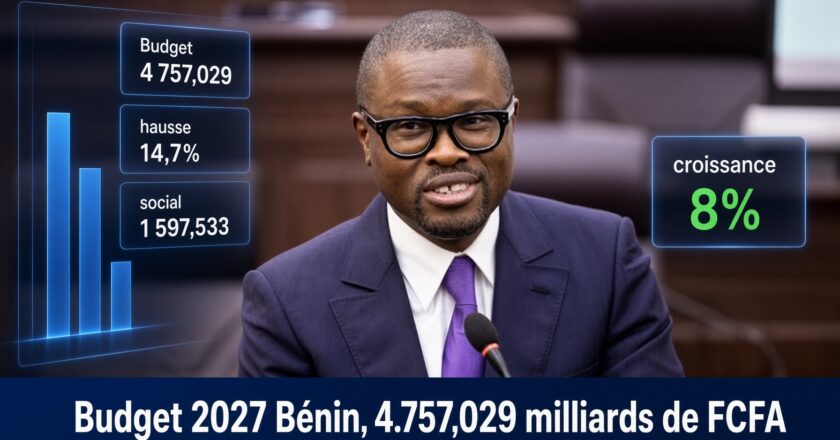
What really powers Benin's 2027 budget jump Benin's government has taken a decisive step in preparing the 2027 fiscal year by sending its draft finance bill to the National Assembly for review and approval. Balanced at 4,757.029 billion FCFA in both resources and spending — up from 4,148.357 billion FCFA in the 2026 revised finance law — the proposal reflects a 14.7% increase. The underlying ambition is clear: fuel 7.5% economic growth, keep the deficit at 2.8% of GDP, and channel more money into sectors seen as vital for economic and social transformation. Why the 14.7% increase matters The draft budget for 2027 represents a substantial expansion of Benin's fiscal capacity. With resources and charges reaching 4,757.029 billion FCFA, the plan adds 608.672 billion FCFA compared to the revi...
Burkina Faso’s 40 billion CFA market debt: the fiscal reality behind the sovereignty narrative
Culture

Burkina Faso’s 40 billion CFA market debt: the fiscal reality behind the sovereignty narrative

Behind the daily rhetoric of rupture and national sovereignty, Burkina Faso's public finances tell a more complicated story. On 7 October 2026, the government once again turned to private investors on the UMOA financial market to raise 40 billion CFA francs. The operation itself is technically routine, but its timing and context reveal a structural tension that has been building for months: the gap between the country's declared ambition of self-reliance and the hard arithmetic of its budget.The structural roots of the paradoxFor analysts tracking the region's political economy, the contradiction is not new — but it is becoming harder to ignore. The executive has repeatedly championed the idea of counting on the nation's own forces, rejecting what it frames as external dependency. Yet curr...
Niger’s fuel shortage: the hidden dynamics behind an official narrative
Uncategorized

Niger’s fuel shortage: the hidden dynamics behind an official narrative

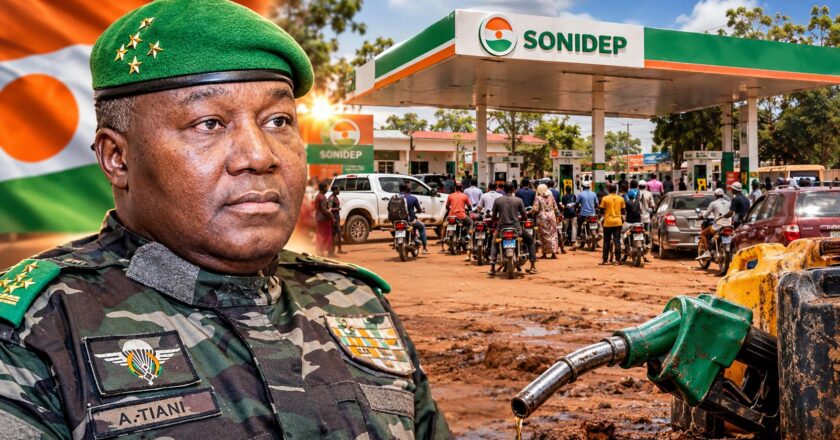
The widening gap between official statements and lived experience Is Niger the only country in the world where a fuel shortage can be plainly visible on the streets yet vanish from official press releases? As supply problems heighten public anxiety and long queues are reported at filling stations, the response from Niamey has been striking. On the state broadcaster RTN, the shortage is dismissed as a mere "rumor." According to the official line, not a single locality in Niger is affected by any fuel shortage. That assertion raises a simple question: what should citizens believe when the official account appears to contradict what they see with their own eyes? Are the drivers and motorcyclists waiting at service stations also a "rumor"? Have the queues become images fabricated by artificial...
Inside Benin’s 2027 budget: the strategy behind the 4,757 billion FCFA figure
A la Une, Actualités

Inside Benin’s 2027 budget: the strategy behind the 4,757 billion FCFA figure

Benin's government has sent its draft finance bill for the 2027 fiscal year to the National Assembly for review and a vote. Balanced at 4,757.029 billion FCFA in both resources and spending — up from 4,148.357 billion FCFA in the amended 2026 budget — the plan represents a 14.7% increase. Behind that headline number lies a deliberate strategy: the government is aiming for 7.5% economic growth, holding the deficit at 2.8% of GDP, and channeling more money into sectors seen as pivotal to economic and social transformation. What the 14.7% jump really tells us The draft budget for 2027 marks a major expansion of Benin's financial firepower. At 4,757.029 billion FCFA, resources and charges rise by 608.672 billion FCFA compared with the amended 2026 projections. That gap points to a clear int...
Inside Benin’s restitution strategy: the thinking behind 35 new cultural claims on France
Culture

Inside Benin’s restitution strategy: the thinking behind 35 new cultural claims on France

When Benin secured the return of 26 royal treasures from Abomey in 2021, it was widely seen as a diplomatic breakthrough. Yet the machinery behind that success never stopped running. President Romuald Wadagni has now formally asked his French counterpart, Emmanuel Macron, to hand back 35 additional cultural objects and historical documents still held in France. The request is not a random gesture: it is the product of a carefully built restitution apparatus that has been quietly expanding for years, blending memory politics, cultural sovereignty and a long-term tourism agenda. What really drives Cotonou's latest claim The restitution of African cultural property held in Europe has become a permanent feature of relations between Benin and France. By lodging a fresh request for 35 cultural ...