The small village of Doungouro, located in the Tillabéri region of Niger, became the site of a harrowing double tragedy on a fateful Monday morning. The day began like any other market day, but the tranquility was shattered when heavily armed militants from the Islamic State in the Greater Sahara (ISGS) stormed the area. In a brutal assault, four civilians lost their lives in front of stunned vendors. The attackers then seized livestock from the market before vanishing toward the Malian border, leaving behind a trail of devastation.
What followed was an even greater catastrophe. Responding to the attack, members of the Volunteers for the Defense of the Homeland (VDP) from the nearby commune of Kokorou arrived in Doungouro. However, instead of providing protection, they unleashed a wave of indiscriminate violence. Operating under the guise of counterterrorism, these poorly trained civilian militias—locally referred to as DomolLeydi—targeted anyone wearing a turban, a traditional garment worn by merchants and herders in the region. Their justification? A dangerous assumption that such attire marked individuals as potential accomplices or hidden terrorists.
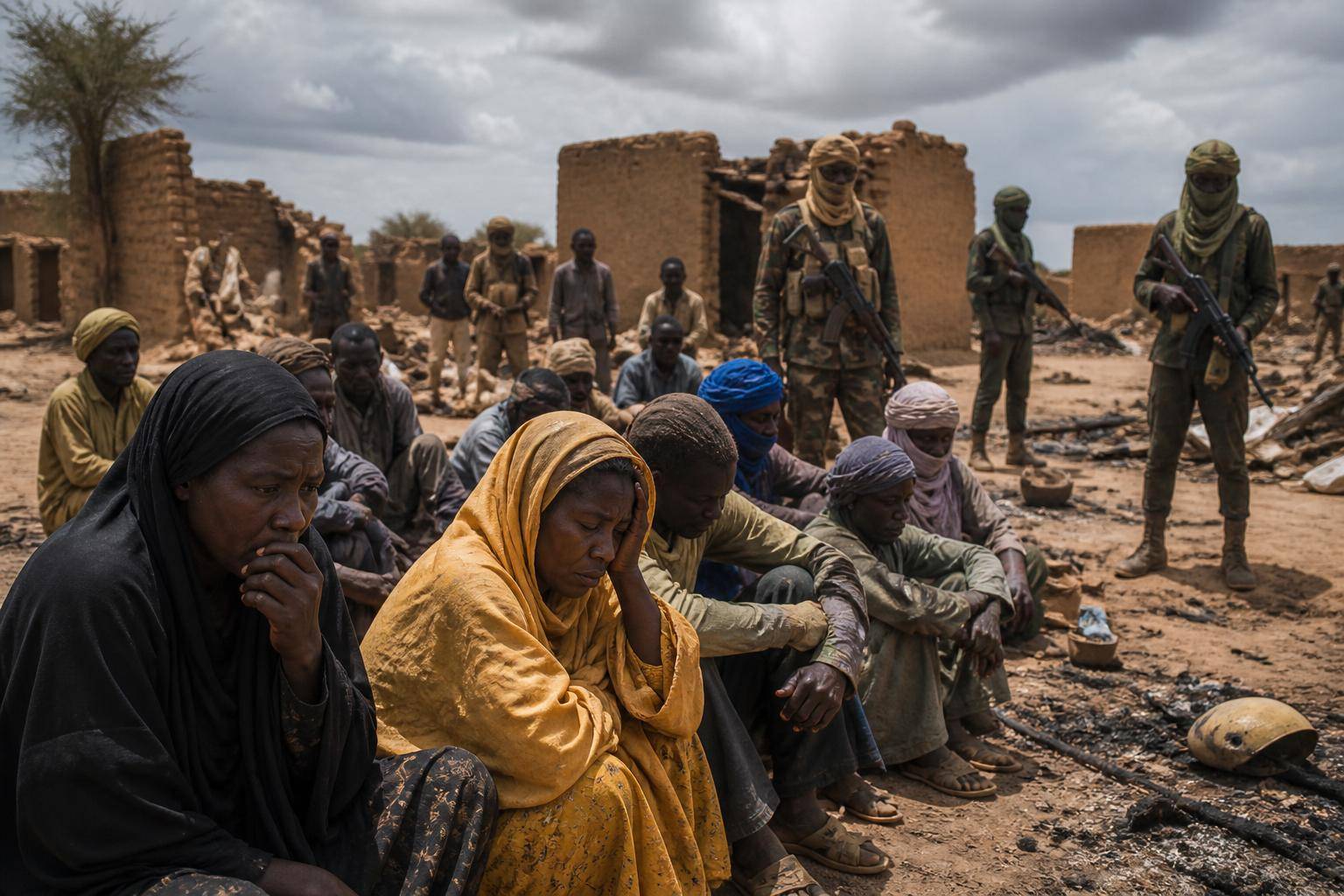
a massacre disguised as security operations
The consequences were catastrophic. Of the 32 lives lost that day, 28 were attributed to the VDP’s reckless actions. Among the victims were merchants from Téra, familiar faces at the Doungouro market whose only crime was being in the wrong place at the wrong time, dressed in the traditional attire of their community. Survivors recounted how the militiamen opened fire without hesitation, targeting anyone in a turban, regardless of age or innocence. One witness described it as a mass execution, a chilling testament to the VDP’s complete disregard for human life.
the dangerous gamble of militia-based security
The tragedy in Doungouro lays bare the severe flaws in Niger’s security strategy under the current transitional government. By heavily relying on civilian militias like the VDP to compensate for the shortcomings of the regular army, authorities in Niamey have inadvertently fostered an uncontrollable force. Officially recognized but operating in a legal and operational gray area, these groups often lack proper oversight, training, and supervision. Without strict command structures or the presence of professional military personnel to guide them, they frequently spiral into ethnic and cultural profiling, as seen in Doungouro.
Since the coup, official rhetoric has urged civilians to take up arms for self-defense. Yet arming untrained individuals without instilling principles of international humanitarian law and human rights is a recipe for disaster. While the junta readily condemns foreign interference, it remains disturbingly silent on the atrocities committed by its own proxies. The massacre in Doungouro is not an isolated incident but part of a disturbing pattern of abuses that erode trust between civilians and defense forces.
time for accountability and systemic change
The VDP’s indiscriminate violence does more than claim innocent lives—it deepens insecurity and pushes marginalized communities toward extremist groups that pose as protectors. Niger cannot win its war on terror by turning against its own people. The transitional government must take immediate action: launch an independent investigation into the Doungouro killings and hold those responsible for the summary executions accountable. Additionally, operations by civilian militias must be strictly regulated, requiring the presence of regular military forces at all times.
Ending systemic profiling based on ethnicity or attire is equally critical to preserving national cohesion. If no action is taken, Doungouro will stand as a grim symbol of a security strategy gone horribly wrong—one where the state, through its militias, inflicts more harm on civilians than the terrorists it claims to fight. The families of the 32 victims deserve answers. The lives lost on that black Monday were not mere collateral damage; they were sacrifices to a failing security doctrine.