Mali’s new presidential jet sparks debate amid security crisis
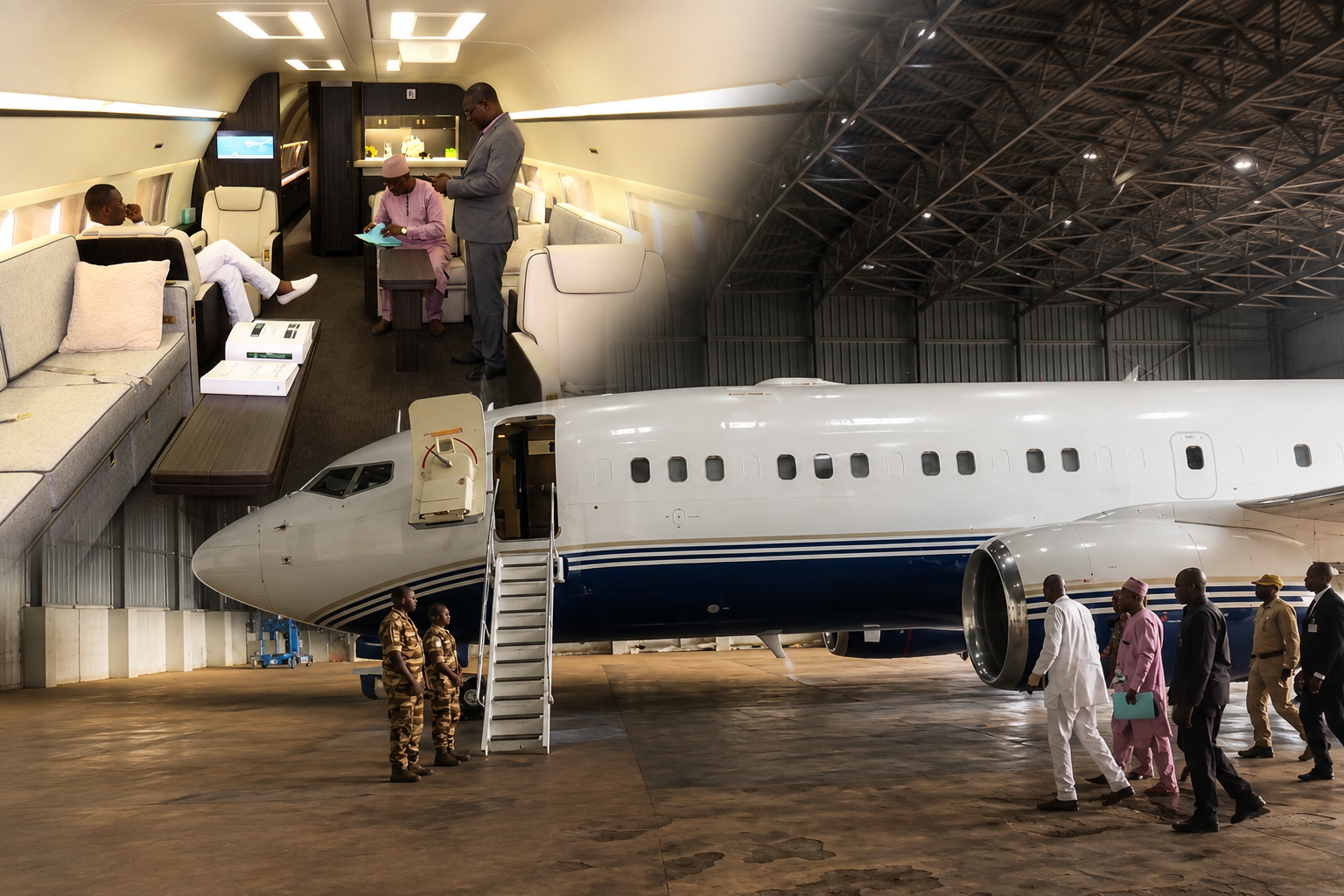
The unveiling of Mali’s new presidential Boeing 737 on national television last Wednesday has reignited a fierce debate about governance priorities in the face of escalating challenges. The government justified the acquisition as a financially sound decision, claiming the initial 15.6 billion CFA franc cost was reduced to approximately 6 billion through insurance payouts and the sale of parts from the decommissioned aircraft.
While officials emphasize the fiscal prudence of the transaction, critics argue that the timing and nature of this investment raise broader questions about the alignment between state priorities and national imperatives.
Contrasting reality with national priorities
The announcement arrives at a critical juncture. As authorities repeatedly urge citizens to embrace sacrifice, resilience, and patriotism, the introduction of a brand-new presidential aircraft complete with a lavish presentation has fueled perceptions of a leadership more concerned with symbolism than substance.
Across Mali, insecurity remains a daily reality. Military outposts face persistent attacks, road ambushes disrupt civilian travel, and violence against non-combatants continues unabated. In many regions, state presence is fragile at best, with entire communities struggling to access basic services.
Security challenges persist despite transition promises
Three years into the Transition, the state’s ability to restore stability remains severely constrained. In the north, the Cadre stratégique permanent, including the Front de Libération de l’Azawad (FLA), continues to challenge government control in key areas. Meanwhile, the Jama’at Nusrat ul-Islam wal Muslimin (JNIM) has entrenched itself in central and southern regions, targeting military installations, economic infrastructure, and state representatives.
Such developments starkly contrast with the image of strength and efficiency the regime seeks to project.
Budgetary choices scrutinized under pressure
Even if the government’s financial rationale holds, critics contend that billions of CFA francs could have been allocated to more pressing needs:
Bolstering the operational capacity of Malian Armed Forces;
Procuring armored vehicles, communication systems, and protective gear;
Enhancing intelligence gathering and aerial surveillance capabilities;
Providing medical and financial support to wounded soldiers and fallen servicemen’s families;
Assisting internally displaced persons and funding the reconstruction of war-damaged infrastructure.
The crux of the issue lies not in the accounting details but in the hierarchy of priorities.
Legitimacy challenged by symbolic spending
Since seizing power, the Transition has cultivated an image of austerity, promising governance rooted in national interest rather than personal aggrandizement. The acquisition of a long-range presidential jet widely perceived as a luxury asset undermines this narrative for many observers.
The disconnect is particularly pronounced amid persistent economic hardship: soaring living costs, strained public finances, unmet social needs, and sluggish economic activity. For critics, the move exemplifies a leadership prioritizing optics over tangible progress.
Diplomatic utility weighed against domestic expectations
Proponents argue that a modern aircraft enhances Mali’s diplomatic mobility, facilitating high-level international engagements and official missions. Yet, skeptics counter that a state’s credibility hinges first on internal stability, citizen security, and the uninterrupted functioning of its institutions.
Sovereignty, they contend, is not measured by the quality of an executive fleet but by the state’s ability to assert control over its own territory.
Political symbolism fuels skepticism
In opposition circles, the acquisition has been interpreted through a political lens. Some view it as evidence of a government investing in its own mobility rather than the state’s. Others speculate though without conclusive evidence that the presence of a long-range aircraft may serve as an escape mechanism in the event of further deterioration in security.
Regardless of intent, the move has deepened public distrust in governance decisions.
Reassessing the Transition’s strategic direction
The arrival of the new Boeing 737 transcends routine administrative procurement. It has become a focal point for broader questions about the Transition’s strategic direction. As security threats persist, civilian casualties rise, and economic hardships intensify, every high-profile expenditure is met with heightened scrutiny.
For many Malians, true sovereignty is demonstrated not by the modernization of an executive aircraft but by the state’s capacity to protect its people, restore territorial integrity, and improve living conditions. Until these fundamental objectives are met, investments in prestige risk widening the gap between government actions and citizen aspirations.