Mali’s growing military state: power shifts and unmet challenges
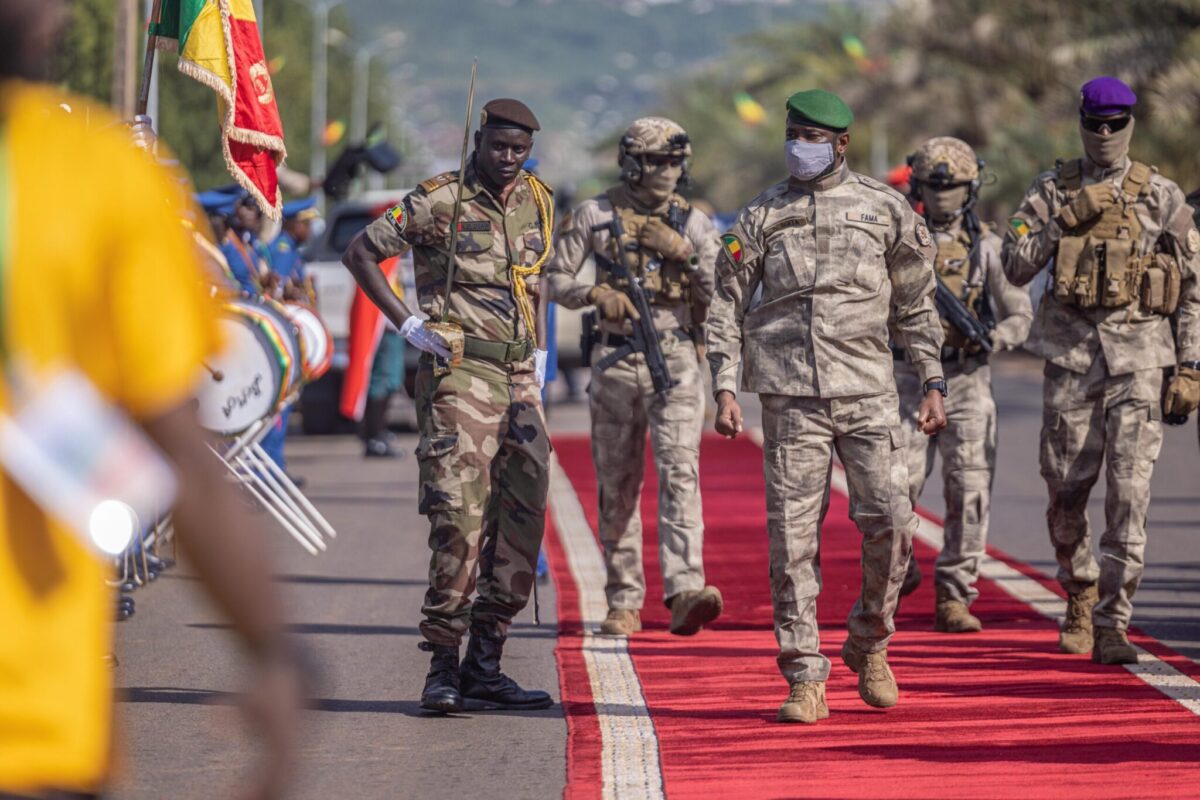
The Malian government proudly declares it has regained military sovereignty following the withdrawal of French forces and the gradual severing of ties with Western security frameworks. Official narratives frame this as a historic triumph—an African nation reclaiming control over its territory and rejecting foreign dominance.
Yet beneath the rhetoric lies a far-reaching transformation of Mali’s political system. The much-celebrated military sovereignty has not eliminated external dependencies. Instead, it has merely shifted the epicenters of power, influence networks, and war-related economic circuits. The state’s security fate now rests increasingly in the hands of Africa Corps, a mercenary organization tasked not only with combating terrorism but also with safeguarding the ruling regime.
From coup to control: how the military reshaped governance
Over recent years, conflict has evolved into Mali’s primary mode of political organization. The army has ascended to a dominant position in state governance, regime legitimacy, and internal economic balance. Since the 2022 coup, military leaders have consolidated control over every decisive lever of power. For them, war is no longer a problem to solve—it has become the very foundation of their governance model.
The departure of French troops has dramatically altered regional power dynamics. For many Malians, this rupture symbolized liberation after years of interventions perceived as ineffective. The transitional authorities have leveraged nationalist sentiment to bolster their legitimacy, turning foreign withdrawal into a tool for regime consolidation.
Sovereignty without stability
Yet rhetorical sovereignty does not translate into tangible realities on the ground. Armed groups remain active, violence persists across multiple regions, and the state’s operational capacities remain critically limited. Today, Bamako finds itself encircled by jihadist forces. The central question is no longer about foreign presence but about the Malian state’s actual ability to achieve lasting territorial stabilization.
In this shifting landscape, new security partners have risen to prominence. Russia, directly or indirectly, has emerged as a key player in Sahelian military restructuring—a development that fuels both hope and controversy.
The international debate often reduces this situation to a geopolitical rivalry between Paris and Moscow. However, Mali’s trajectory is more nuanced. The regime prioritizes partners who can sustain its political survival without imposing Western-style diplomatic constraints.
When war becomes the economy of power
This evolution carries a profound consequence: the escalating militarization of Mali’s political economy. Security budgets swell, military institutions gain institutional influence, and conflict becomes a permanent tool for national mobilization. The higher the perceived security threat, the more the government can justify centralizing decision-making, curtailing political pluralism, and postponing democratic transitions. In essence, war ceases to be merely a context—it becomes a governing resource.
The Alliance of Sahel States (AES)—comprising Mali, Burkina Faso, and Niger—further entrenches this dynamic. These nations are constructing a political space built on security sovereignty, criticism of former colonial powers, and the primacy of military institutions. Yet this alliance rests on shaky ground, relying on weakened economies, deep social tensions, and an unstable regional environment.
The Malian case exposes a broader paradox of contemporary Sahel governance: breaking free from Western frameworks may yield symbolic gains in political sovereignty, but this sovereignty remains fragile as long as the state’s administrative, economic, and security structures continue to revolve around military urgency. War, in this context, transforms into a permanent state infrastructure.
In such a system, peace itself becomes a political risk. Meaningful stabilization would force the regime to confront long-deferred questions: economic redistribution, corruption, local governance, civilian participation in power, the return of pluralism, and institutional reconstruction.
Thus, Mali’s crisis transcends geopolitical rivalries. It forces an uncomfortable inquiry: how can a state be rebuilt when war economies increasingly define the mechanisms of power? For Bamako, the challenge is no longer merely military—it is fundamentally political, social, and structural. As long as sovereignty is equated primarily with military capacity, Mali risks exchanging one form of dependency for another: a state permanently organized around war, now entrenched in the grip of Russian mercenaries.
Mourad Ighil