JNIM’s strategic shift reshapes Mali’s conflict landscape
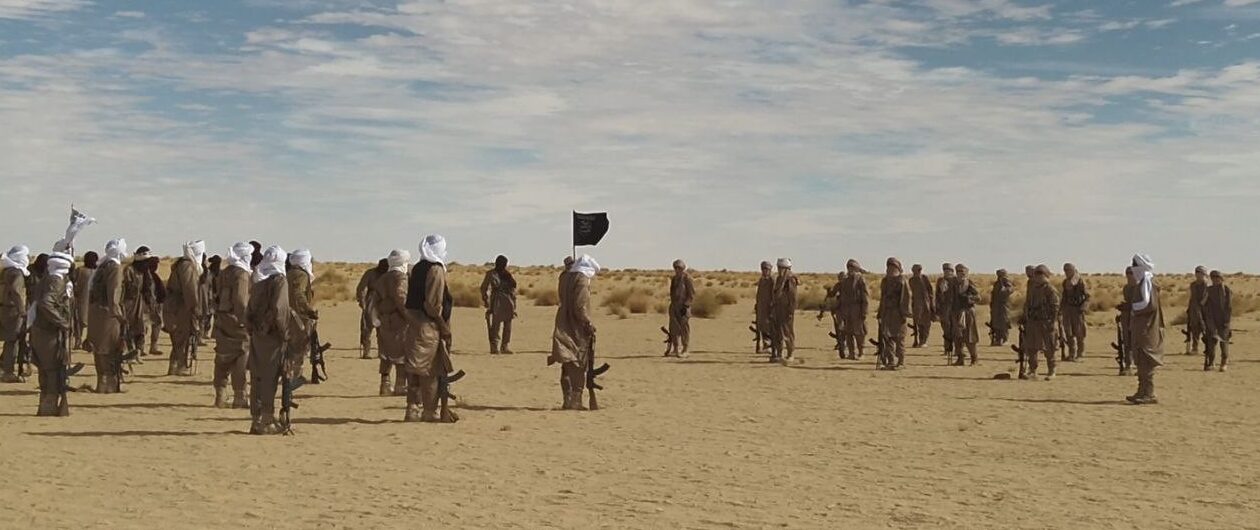
The JNIM’s strategic evolution is transforming Mali’s security dynamics
The north and central regions of Mali are no longer merely battlegrounds for sporadic armed confrontations. For years now, these areas have existed under the shadow of perpetual warfare and collective exhaustion. Recent offensives by the Group for the Support of Islam and Muslims (JNIM) and the Azawad Liberation Front (FLA)—targeting military outposts, supply convoys, and critical road infrastructure—signal a significant strategic shift in how these armed groups operate.
These factions are no longer fixated on capturing towns or orchestrating high-profile attacks. Instead, their new objective is far more insidious: to gradually render vast territories ungovernable, pushing the Malian military junta into an increasingly precarious position in Bamako.
This transformation is critical because it redefines the very nature of the conflict. The struggle is no longer confined to territorial control or the dominance of a single military camp. It now revolves around a more fundamental question: which forces can still ensure the free movement of people, goods, fuel, administrative personnel, and public services?
The war against mobility: a strategic weapon
Over recent months, attacks on road networks and military convoys have surged across Mali. In some regions, routine administrative travel has become nearly impossible without armed escorts. This erosion of mobility undermines not only the Malian army’s operational capacity but also the state’s ability to assert authority beyond major urban centers.
The JNIM has evidently grasped a crucial insight: in a nation already weakened by years of institutional, economic, and security crises, attrition can yield greater political dividends than direct confrontation. This strategy is not only less resource-intensive than traditional territorial conquest; it also disperses enemy forces, inflates security expenditures, and fosters a pervasive sense of insecurity. Most critically, it cultivates collective fatigue—among soldiers, civilians, and institutions alike.
In rural areas, the crisis is no longer solely about the presence of armed groups. It is increasingly about the absence of stable administrative structures, leaving communities stranded in a void of governance.
The limitations of a purely military approach
The current Malian regime has staked its legitimacy on restoring security following successive coups. The withdrawal of French forces and the growing influence of Russian military cooperation have been framed as a return to sovereignty. Yet sovereignty cannot be measured solely by the capacity to wage war. It must also encompass the ability to maintain territorial continuity, economic resilience, and administrative presence.
A paradox has emerged: intensified military operations do not necessarily translate into lasting stability. In some regions, they coexist with the fragmentation of rural spaces, where state institutions—schools, healthcare, local justice, infrastructure—struggle to take root.
The prevailing security logic prioritizes offensive operations, airstrikes, and troop deployments. However, it has yet to rebuild durable administrative structures or restore civilian governance. Where the state withdraws, parallel systems of protection, arbitration, and survival often fill the void.
The Sahel: a theater of rapid armed recomposition
The Malian crisis is no longer confined within its borders. The entire Sahel region is experiencing a rapid realignment of armed actors, local alliances, and clandestine economic networks.
The porous borders between Mali, Burkina Faso, and Niger facilitate the mobility of armed groups. Yet responses from regional governments remain fragmented, despite the existence of political-military alliances. The latest offensives by the JNIM and FLA have exposed the fragility of these pacts and the isolation of the Malian junta, which now relies almost exclusively on foreign mercenaries for support.
This asymmetry favors groups that can adapt quickly. The JNIM, in particular, benefits from its territorial flexibility, local anchoring in certain zones, and integration into informal economic networks. This does not mean it permanently controls all traversed territories, but it consistently imposes a steep security cost on governments.
The Sahel conflict is increasingly a war of endurance. Armed groups are less interested in administering entire nations than in systematically disrupting state functionality.
What Mali’s crisis reveals
The Malian conflict underscores the limitations of viewing the Sahel crisis through a strictly counterterrorism lens. Reducing the crisis to a military confrontation obscures its deeper social, economic, and territorial dimensions.
In many rural areas, frustrations stemming from state abandonment, land disputes, communal rivalries, and structural poverty create persistent vulnerabilities. Armed jihadist groups do not always create these fractures but excel at exploiting them. The core challenge, therefore, is political: how can a state rebuild legitimacy in territories where its presence is intermittent—often limited to military patrols?
The future of Mali may hinge not on a single decisive battle but on the ability—or failure—to restore a stable public presence beyond security operations. A war of attrition does not merely destroy military positions; it erodes roads, economies, administrations, and social cohesion. Ultimately, it threatens the very idea of a governed territory.
Mourad Ighil