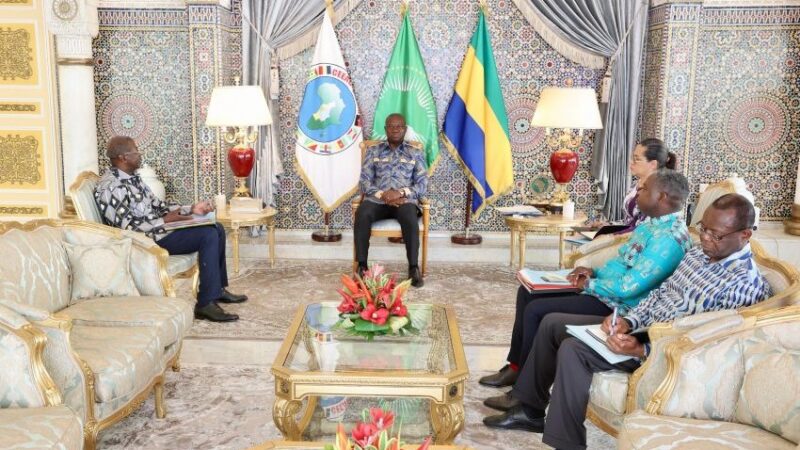

Libreville, Wednesday, July 8, 2026 – Gabon’s authorities have initiated a comprehensive restructuring of the political party landscape, leveraging Law n°16/2025. This significant move could permanently reshape the nation’s democratic framework and governance Africa.
Gabon is embarking on a new political chapter. For the first time since the introduction of multiparty politics in the early 1990s, the legal existence of political parties now hinges on their ability to demonstrate genuine national presence and support. This extensive operation, driven by Law n°16/2025, is poised to redefine the country’s democratic balances.
The Ministry of Interior recently disclosed that 69 out of the 102 officially recognized political entities successfully submitted their compliance documentation by the June 27, 2026 deadline. The remaining 33 parties now face a precarious legal future, fueling one of the most contentious political debates since the new authorities began their institutional transition.
Beyond the statistics lies a profound question that resonates far beyond Gabon’s borders: To what extent can a state streamline its partisan system without undermining the democratic pluralism that forms the bedrock of any modern democracy?
The anticipated end of opportunistic parties
This reform introduces an unprecedented requirement in Gabonese political history. Each party must now verify a minimum of 9,000 registered members, distributed across at least five of the country’s nine provinces.
For the government, this measure addresses an unsustainable reality. Gabon officially hosted over a hundred political organizations for a population of barely three million, making its political system one of the most fragmented on the African continent.
The stated objective is clear: to curb the proliferation of structures often limited to a few dozen activists, encourage mergers, and foster the emergence of parties capable of advancing genuine national agendas rather than individual or localized ambitions. Authorities present this reform as an instrument of democratic modernization, designed to enhance the representativeness of political actors and consolidate the rule of law within Gabon’s society.
This rationale aligns with the vision championed by President Brice Clotaire Oligui Nguema, who has positioned the moralization of public life and institutional refoundation as cornerstones of the Fifth Gabonese Republic.
The backlash from the excluded
However, for the non-compliant parties, the reform appears less as administrative modernization and more as political selection. Jean Romain Fanguinoveny’s Parti du Peuple Gabonais, despite having supported the head of state during the 2025 presidential election, took the initiative to convene the 33 affected parties at its Libreville headquarters on July 8. Their aim was to forge a united front, already bearing the ambitious name: Le Collectif des Partis Politiques Historiques pour le Respect de la Constitution et du Pluralisme Démocratique au Gabon (CPPHRCPDG).
Its proponents denounce what they label as “political cleansing through legal arbitrariness.” They intend to pursue appeals before administrative and constitutional courts, and potentially even directly with the head of state.
Their central argument rests on the principle of non-retroactivity of laws. They contend that parties legally established, some for several decades, should not be compelled to meet new requirements under penalty of administrative dissolution.
Beyond the legal debate, these organizations fear a mechanical reduction in political diversity and an excessive concentration of partisan power among a select few major entities.
A broader African political question
Gabon’s current debate reflects a much broader discussion unfolding across numerous African democracies. From Sénégal to Bénin, Niger to Togo, several states are seeking to limit partisan dispersion to make their political systems more coherent and effective. This is a crucial aspect of African politics and governance Africa.
Everywhere, similar arguments clash. On one side, those who believe a democracy cannot function sustainably with a multitude of parties lacking genuine national implantation. On the other, those who emphasize that pluralism is not solely measured by membership numbers but also by the freedom to represent minority political sensitivities.
Gabon now finds itself at the heart of this intricate equation. The handling of the 69 compliant parties’ dossiers and the potential appeals from the 33 others will serve as a major test for the reform’s credibility and, more broadly, for the promise of democratic openness articulated in the wake of the transition. Building a more structured democracy without narrowing the scope of political debate remains one of the most delicate institutional challenges in contemporary Africa.