Gabon president pushes cabinet to accelerate intra-African trade

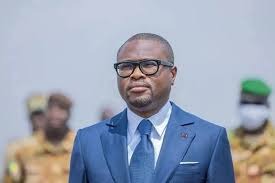
Intra-African trade has become a central pillar of Gabon’s economic agenda. During a cabinet meeting on 25 June in Libreville, President Brice Clotaire Oligui Nguema explicitly directed his government to speed up the implementation of this policy, which is seen as crucial for diversifying the national economy. The presidential instruction goes beyond a mere statement of intent: it requires concrete indicators and a tight timeline.
The stakes go beyond diplomatic posturing. Gabon, whose external revenues remain dominated by oil, manganese, and timber, aims to expand its regional markets and capture a larger share of continental trade flows. The African Continental Free Trade Area (AfCFTA), which entered its operational phase in 2021, provides the natural framework for this ambition. However, Gabon’s administration must equip itself with the necessary tools to take advantage of it.
A presidential priority with demands for results
By raising his voice before his team, the Transition president clearly intends to signal that patience is no longer acceptable. The ministers involved—especially those in charge of Trade, Economy, Transport, and Foreign Affairs—are ordered to deliver tangible outputs. This internal pressure aligns with the head of state’s now-familiar method, which has multiplied performance injunctions since the change of regime in August 2023.
Concretely, the challenge spans several complementary areas. Customs facilitation, removal of non-tariff barriers, modernisation of logistics corridors, and promotion of Gabonese exports to markets in Central, West, and Southern Africa are among the expected levers. The local industrial fabric, still embryonic, must also upgrade to meet continental demand that is stringent on standards and traceability.
A pan-African bet as a diplomatic framework
The line defended by Brice Clotaire Oligui Nguema reflects a deliberate geoeconomic vision. For Libreville, intra-African trade represents both a tool of sovereignty and a buffer against commodity price volatility. The share of internal trade on the continent remains historically low, around 15-16% of total African trade according to estimates from the United Nations Economic Commission for Africa, compared to over 60% in Europe or Asia. This structural gap is precisely what the AfCFTA aims to close.
Gabon’s pan-African positioning also carries a political dimension. By repeatedly referencing continental integration, the president seeks to anchor his actions in a long-term trajectory beyond the transition period. This narrative also boosts the country’s external image, as Libreville works to strengthen ties with regional partners, particularly within the Economic and Monetary Community of Central Africa (CEMAC).
Structural challenges to overcome quickly
Yet turning presidential directives into operational reality will encounter well-known obstacles. The lack of transport infrastructure between Gabon and its neighbours, the burden of certain administrative procedures, high energy costs, and the low competitiveness of several sectors limit the country’s ability to become a regional platform. Local business operators often point to the difficulty of accessing neighbouring markets, despite existing community legal frameworks.
Moreover, scaling up intra-African trade requires close coordination with the private sector. Chambers of commerce, business federations, and port operators must be involved in defining an operational roadmap. Without this alignment, there is a high risk that the presidential ambition will dissolve into announcements with no measurable impact. At this stage, no precise timeline has been communicated for the government’s first expected milestones.
The challenge is clear: convert a political direction into quantifiable economic gains. The Gabonese executive’s ability to deliver results in the coming months will be closely watched by both the business community and the country’s regional partners.