Gabon president oligui nguema unveils 25 billion fcfa plan for agricultural self-sufficiency
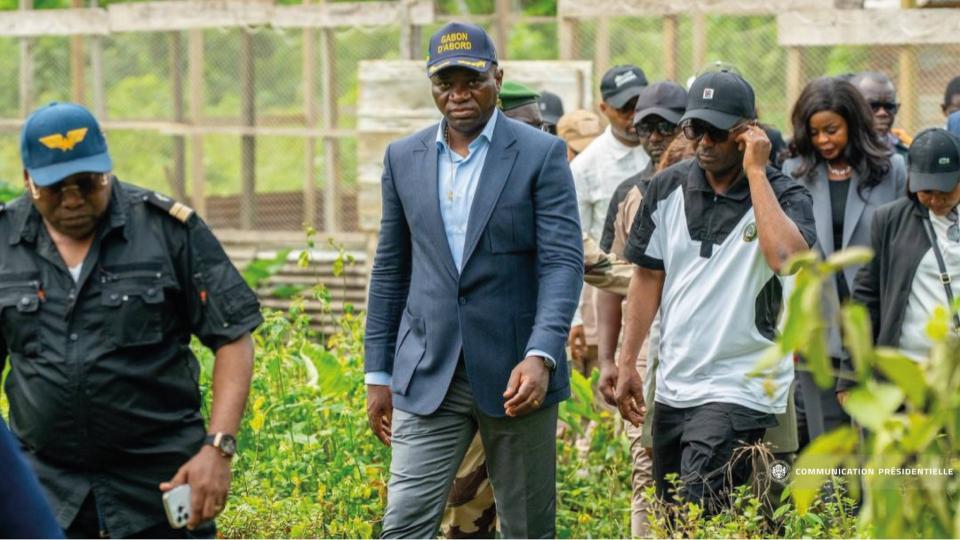
On June 24, 2026, President Brice Clotaire Oligui Nguema declared an uncompromising battle against Gabon’s dependence on food imports. The head of state unveiled a detailed and highly ambitious plan with a clear goal: restore the country’s agricultural autonomy by 2030.
The starting point is stark, an acknowledgement of past failures. Today, Gabon imports 80% of what it consumes. The president calls this situation simply an “aberration.” How could a country spanning 270,000 square kilometers, with exceptional arable land that remains largely underused, have reached such a point?
To reverse the trend, Libreville now bets on a return of strong political will and massive investments. The aim is to definitively break with inertia.
The 2027 shockwave: local meat, milk and poultry
To turn this vision into reality, the presidency is going on the offensive with concrete short- and medium-term measures. The first component involves restructuring national livestock farming through the massive introduction of 12,000 head of cattle to boost the meat and dairy sectors.
But the poultry sector is about to experience a real upheaval. The government has decreed a shock measure: a total ban on importing broiler chickens as of January 1, 2027. To cushion this transition, a robust support program will be rolled out to assist local poultry farmers. At the same time, the authorities aim for systematic development of food crops in each province, so every region contributes to the food war effort.
25 billion FCFA for human capital
Because goodwill alone is not enough, this transition will rely on training in new cultivation technologies and unprecedented financial backing. Brice Clotaire Oligui Nguema announced the creation of a special fund of 25 billion CFA francs within the Banque pour le commerce et l’entrepreneuriat du Gabon (BCEG). This financial lever will be entirely dedicated to farmers, poultry farmers and fishermen.
“Gabon has the means to feed itself. What was missing was political will and investment. We are putting both on the table,” the president declared.
The ultimate ambition is staggering: reduce Gabon’s food dependence by 50% by 2030. A titanic challenge that, if met, will lastingly transform the country’s economy and sovereignty.