Gabon: how rising prices reflect deeper economic challenges
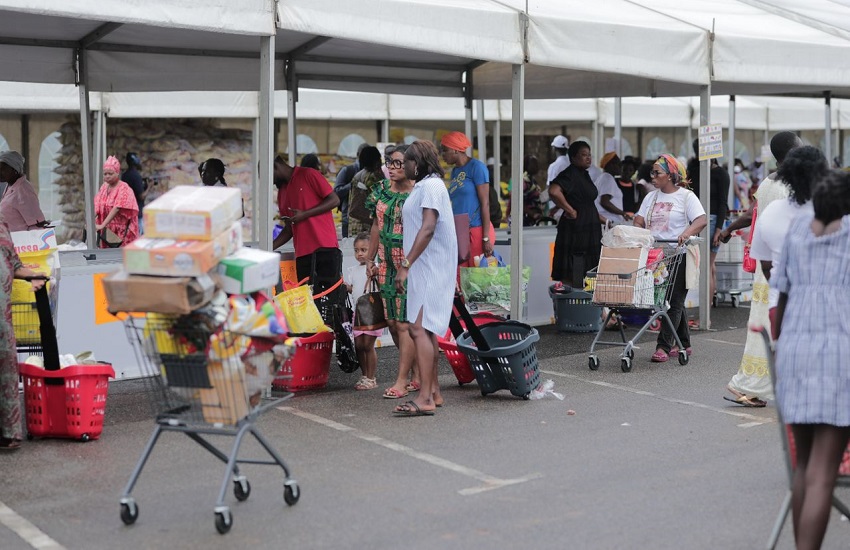
Libreville, July 3, 2026 – The fight against rising prices has become a defining issue for households across Africa. In Gabon, this struggle has taken center stage in public discourse, as families grapple with the relentless pressure of escalating costs. For years, policymakers have deployed an array of tools—price controls, tax exemptions, subsidies, flash sales, tariff caps, and massive subsidized markets organized by the Gabonese Purchasing Authority (CEAG). These measures, while well-intentioned, raise a critical question: why do prices remain stubbornly high despite repeated interventions?
The answer may lie not in pricing mechanisms but in the structural weaknesses of Gabon’s economy. What if the root of the problem isn’t the price tags themselves but the country’s inability to generate sufficient wealth?
Price controls: a temporary fix with limited impact
Mechanisms designed to lower prices offer immediate relief to vulnerable households. The CEAG’s initiatives, for instance, provide temporary access to essential goods at reduced rates, addressing urgent social needs. Yet, these solutions are inherently temporary. Once the subsidized markets close, consumers return to traditional retail channels, and the same economic pressures resurface. Prices rebound because the underlying factors driving them remain unchanged.
This doesn’t mean these measures are ineffective—only that they address symptoms rather than root causes. The real challenge is understanding why prices stay high and why administrative solutions fail to deliver lasting results.
Imports and inflation: the hidden cost of structural dependency
Most debates about rising prices focus on consumers, but the problem often originates upstream. An economy heavily reliant on imports is exposed to global market fluctuations, maritime transport costs, logistical bottlenecks, and supply chain disruptions. Every increase in international prices ultimately trickles down to local consumers, making inflation an imported phenomenon.
From this perspective, high prices reveal a deeper truth: a country that imports most of its food imports inflation as well. A nation that exports raw materials without processing them also exports potential jobs, future income, and purchasing power. The debate about price hikes is, in reality, a debate about economic models.
Transforming the economy: the path to sustainable solutions
The solution may lie in accelerating Gabon’s productive transformation. The country boasts significant potential—vast forestry and mineral resources, a strong agricultural sector, a strategic geographic position, and relative institutional stability. Yet, much of this wealth leaves the country in its raw form, only to be processed elsewhere.
Local processing of raw materials is more than an industrial ambition; it’s a direct lever against rising prices. Every factory built generates jobs. Every job creates income. Every income strengthens purchasing power. Every increase in purchasing power fuels consumption, which in turn stimulates the economy. The same principle applies to agriculture and livestock.
Boosting local agricultural production, modernizing food supply chains, expanding poultry farming, and supporting agro-industry can gradually reduce the country’s dependence on food imports. Beyond lowering costs, these sectors offer a unique opportunity to create sustainable employment.
The future of the fight against price hikes may well be decided not in supermarkets or government offices but in fields, farms, and processing plants.
Building a strong middle class: the foundation of economic resilience
For decades, public policies have focused on controlling prices. Perhaps it’s time to shift the conversation toward income generation. A society doesn’t thrive because prices are artificially capped; it thrives when the majority of its citizens earn enough to afford essential goods and services, invest in education, plan for the future, and fully participate in the economy.
Expanding the middle class is one of Gabon’s most strategic goals. A dynamic middle class drives domestic demand, encourages private investment, and fosters the growth of national entrepreneurship. The real battle against rising prices may be the creation of productive jobs and sustainable incomes. In this context, purchasing power should no longer be seen as a byproduct of growth but as one of its primary objectives.
Transparency and digital innovation: modernizing economic governance
This transformation must be accompanied by modernized governance tools. Digitalizing price monitoring is a particularly promising reform. Real-time tracking of price trends across the country can help identify abnormal discrepancies, strengthen competition, and assess the real impact of public policies.
Economic data can become a powerful regulatory instrument, shifting governance from perception-based management to fact-based decision-making. In an era where citizens demand greater transparency, this evolution could rebuild trust between consumers, businesses, and public authorities.
The debate over rising prices extends far beyond Gabon’s borders. Across Africa, governments face the same dilemma: how to protect citizens without locking their economies into a cycle of perpetual subsidies and price corrections. Gabon has the opportunity to pioneer an original response to this challenge.
By combining social support mechanisms with accelerated local processing of raw materials, agricultural development, industrialization, job creation, digital market modernization, and middle-class expansion, the country can shift the fight against rising prices from a focus on compensation to a focus on transformation. The question is no longer how long the state can keep lowering prices but how many Gabonese will soon live with dignity on stable incomes, free from constant reliance on corrective measures to preserve their purchasing power.
The dividing line between an economy that manages consequences and one that addresses root causes may well hold the key to a sustainable solution to the price hike crisis.