Tuesday, November 3

Actualités

Behind Benin’s ECOWAS court seat: the deeper story of a judicial gamble
Actualités

Behind Benin’s ECOWAS court seat: the deeper story of a judicial gamble

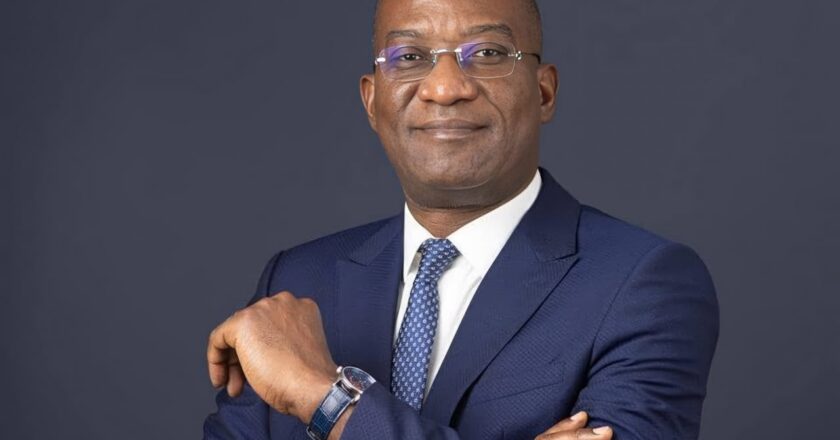
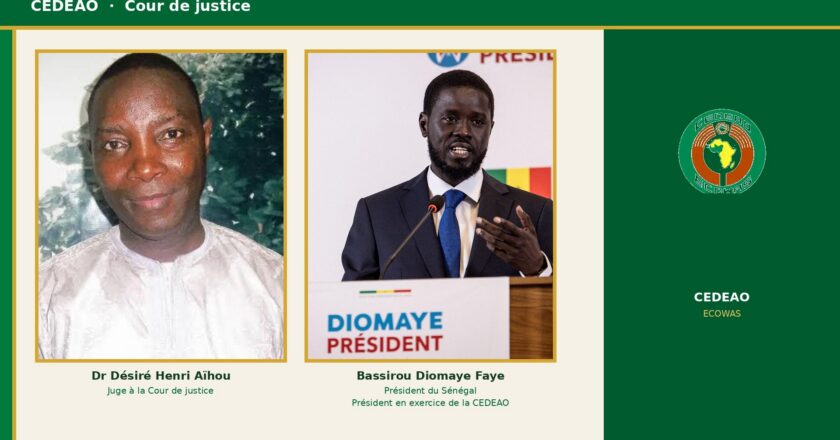
When Désiré Henri Aihou raised his hand in Abuja on 6 October 2026, the moment looked like a routine judicial ceremony. But the swearing-in of Benin's new judge at the ECOWAS Court of Justice carries a much heavier backstory — one that stretches from a landmark national conference in Cotonou to the enforcement battles now facing West Africa's community court. The appointment, for a single non-renewable four-year term, is less about one magistrate and more about whether regional justice can finally bite. The Abuja ceremony and the team behind the bench The oath was administered at the ECOWAS Commission headquarters in Abuja, under the authority of Bassirou Diomaye Faye, Senegal's president and current chair of the regional bloc's Authority of Heads of State and Government. Five judges to...
Behind Benin’s ECOWAS court seat: the deeper story of a judicial gamble
Actualités

Behind Benin’s ECOWAS court seat: the deeper story of a judicial gamble

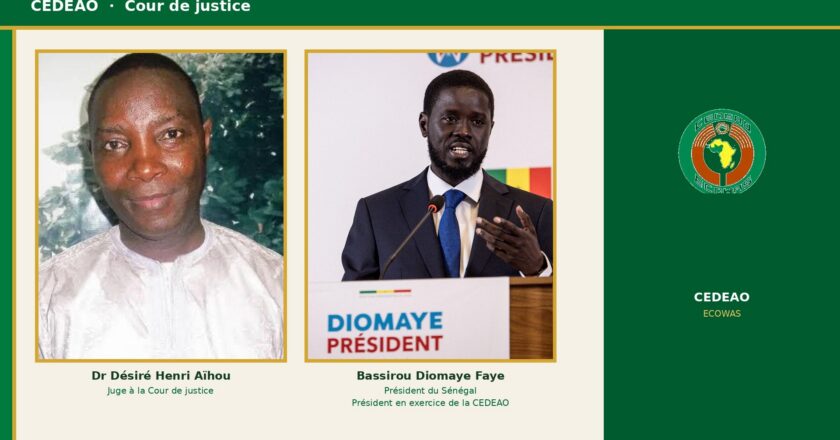
When Désiré Henri Aihou raised his hand in Abuja on 6 October 2026, the moment looked like a routine judicial ceremony. But the swearing-in of Benin's new judge at the ECOWAS Court of Justice carries a much heavier backstory — one that stretches from a landmark national conference in Cotonou to the enforcement battles now facing West Africa's community court. The appointment, for a single non-renewable four-year term, is less about one magistrate and more about whether regional justice can finally bite. The Abuja ceremony and the team behind the bench The oath was administered at the ECOWAS Commission headquarters in Abuja, under the authority of Bassirou Diomaye Faye, Senegal's president and current chair of the regional bloc's Authority of Heads of State and Government. Five judges to...

Why Moussa Kaka’s case exposes deeper fault lines in Niger’s security apparatus
A la Une, Actualités

Why Moussa Kaka’s case exposes deeper fault lines in Niger’s security apparatus

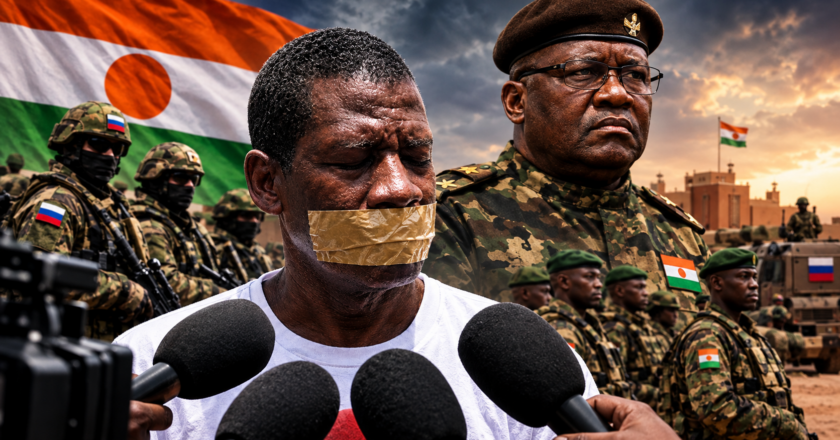
The anatomy of a confirmation that raised more questions than it settledWhen Nigerien authorities finally broke their silence on the fate of journalist Moussa Kaka, the admission was as notable for what it revealed as for what it left unsaid. More than a month after Kaka vanished upon leaving the premises of Radio Télévision Saraounia in Niamey, the government confirmed on 6 October that he was "alive" and "held by the authorities." The disclosure, conveyed to Reporters Without Borders, marked the first official acknowledgment of his detention.Yet this confirmation, significant as it is, does not resolve the central ambiguities surrounding the case. The authorities have not publicly disclosed where Kaka is being held, what specific accusations he faces, or the precise legal basis for his d...
What the Algeria-Niger fiber optic deal really means for Sahel’s digital map
Actualités

What the Algeria-Niger fiber optic deal really means for Sahel’s digital map

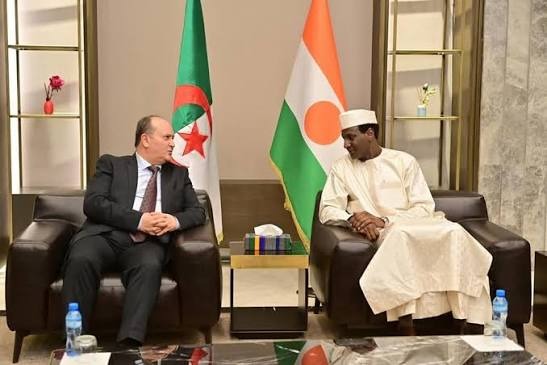
A strategic corridor, not just a cable At Assamaka, a dusty outpost on the edge of the Sahara, Algeria and Niger have formally activated their cross-border fiber optic link. The ceremony marks the completion of years of construction under the Trans-Saharan Fiber Optic Backbone (DTS), a regional initiative backed by the New Partnership for Africa's Development (NEPAD). But beyond the high-speed promises, the project reveals a more complex story: access to international bandwidth, reduced digital dependence, potential new revenue streams for operators, and for Algiers, a calculated bid to extend its strategic influence south of its borders. In a Niger grappling with jihadist expansion, protecting this new infrastructure will be a challenge in itself. Assamaka: a symbol with a purpose The lo...
Inside Benin’s projected 7.7% growth for 2027: the forces behind a rare economic streak
A la Une, Actualités

Inside Benin’s projected 7.7% growth for 2027: the forces behind a rare economic streak

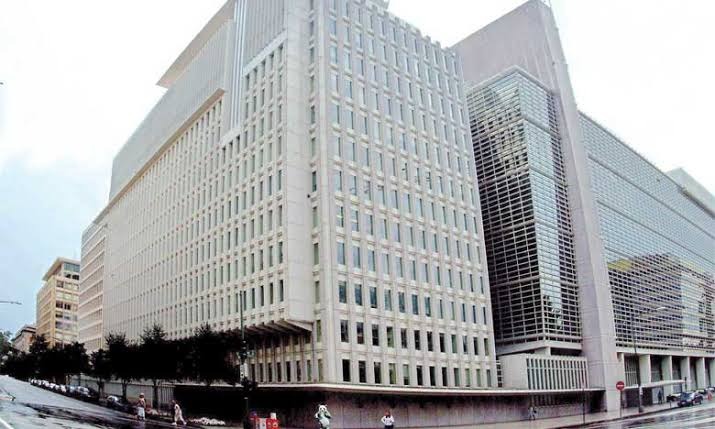
Benin is once again positioning itself as one of West Africa's most dynamic economic performers, and the latest World Bank projections explain why. Behind the headline numbers lies a story of deliberate policy choices, steady infrastructure investment, and a logistical overhaul that is quietly reshaping the country's growth path through 2027. The mechanics of a sustained expansion The World Bank expects Benin's economy to grow by 7.7% in 2027, following estimated expansions of 8.1% in 2025 and 7.8% in 2026. That trajectory places the country well above the average for sub-Saharan Africa, and it is not driven by extractive industries. Instead, the momentum comes from a combination of continuous infrastructure spending, the modernisation of port and agricultural logistics chains, and reform...
Kémi Séba’s diplomatic passport rejected in South Africa: the strategy behind the setback
Actualités

Kémi Séba’s diplomatic passport rejected in South Africa: the strategy behind the setback

When South African judges convened on 6 October 2026 to examine the case of Kémi Séba, the central question was straightforward: does a diplomatic passport issued by Niger shield a pan-African activist from extradition to Benin? The answer, delivered after hours of argument, was no. The court found no official evidence that Kémi Séba is an accredited Nigerien diplomat in South Africa. He remains in detention, and the extradition process requested by Benin moves forward. The next critical hearing is scheduled for 20 November. Why the diplomatic argument failed The 6 October hearing was never going to be a routine procedural step. Since his arrest in South Africa, Kémi Séba’s legal team has built a significant part of its strategy around his alleged role with Nigerien authorities and the d...
Inside the FLA’s Kidal exit: what the pullout reveals about Mali’s war dynamics
Actualités

Inside the FLA’s Kidal exit: what the pullout reveals about Mali’s war dynamics

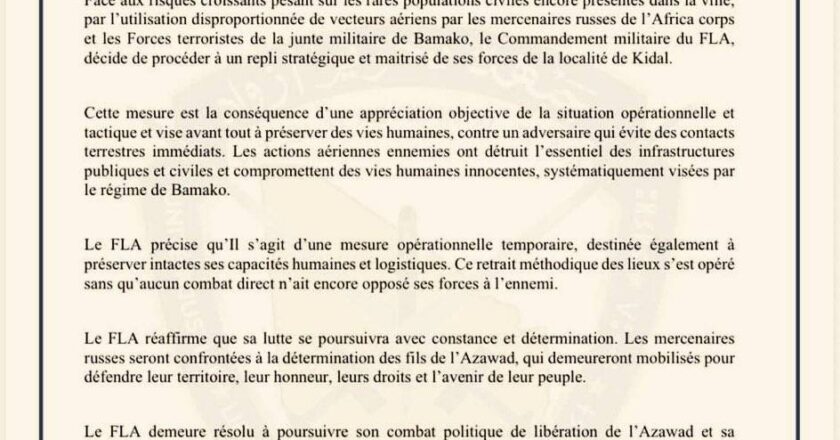
The Front for the Liberation of Azawad (FLA) has announced a withdrawal of its forces from Kidal, in northern Mali, framing the move as a "strategic and controlled retreat." The independence movement insists its fighters left the city without direct ground combat and that the decision is temporary. Behind this announcement lies another chapter in a conflict that has, in recent years, been defined by a relentless cycle of offensives, pullbacks and heavy losses inflicted on Malian forces and their Russian partners. Why Kidal remains the ultimate prize in northern Mali Kidal is no ordinary city in this conflict. Located in the far north of the country, it has been one of the primary hotbeds of Tuareg rebellions for decades. For Bamako as well as for the independence movements, controlling K...
Guinea-Bissau: what the Bissau arms seizures reveal about the junta’s political calculus
Actualités

Guinea-Bissau: what the Bissau arms seizures reveal about the junta’s political calculus

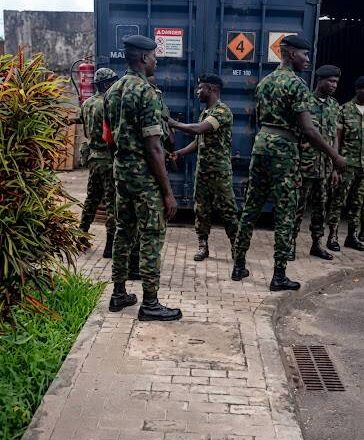
Behind the sandbags and cordons in Bissau, the military junta's sweeping disarmament campaign is not just about getting guns off the streets. It is the opening move in a high-stakes political chess game that will determine who controls Guinea-Bissau's return to civilian rule — and who gets to run in the presidential election set for December 6. The mechanics of a citywide weapons hunt For weeks now, security forces have been fanning out across multiple neighbourhoods in the capital, prying open shipping containers and searching homes in a bid to locate hidden weapons and ammunition. The stated goal: disarm groups deemed capable of destabilising Bissau. Military authorities say they are reclaiming control of firearms circulating outside official channels. This is a country where the armed ...
Behind Burkina Faso’s digital drive: why security and schooling set the real timetable
Actualités

Behind Burkina Faso’s digital drive: why security and schooling set the real timetable

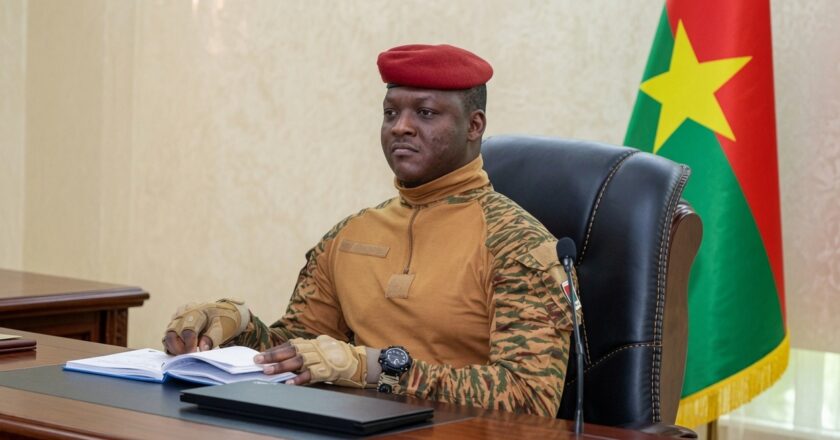
As Ouagadougou stages its National Days of Patriotic Engagement and Citizen Participation, the transitional government rolls out its full communications machinery. The "Avenue of Services to the People" stands as the centerpiece showcase of the Progressive Popular Revolution regime: online criminal records, digital nationality certificates, and a digitized universal health insurance scheme. Every element is choreographed to project the image of a modern, connected, efficient state. Yet beneath this technological veneer — and behind the triumphant figures brandished at ministerial gatherings — the country's lived reality tells a far grimmer story. This rush toward paperless administration looks like a communications gimmick designed by and for urban elites, while the very foundations of th...