Tuesday, November 3

Actualités

Inside the mechanics of Cotonou port’s rise: transit growth, capacity goals and regional stakes
Actualités

Inside the mechanics of Cotonou port’s rise: transit growth, capacity goals and regional stakes

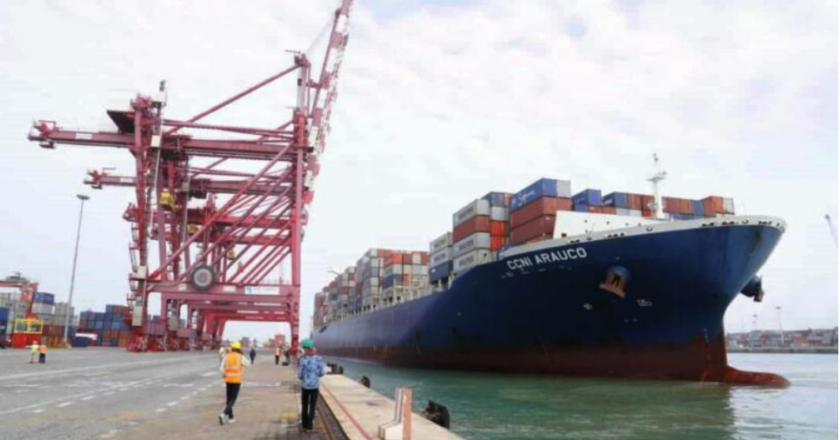
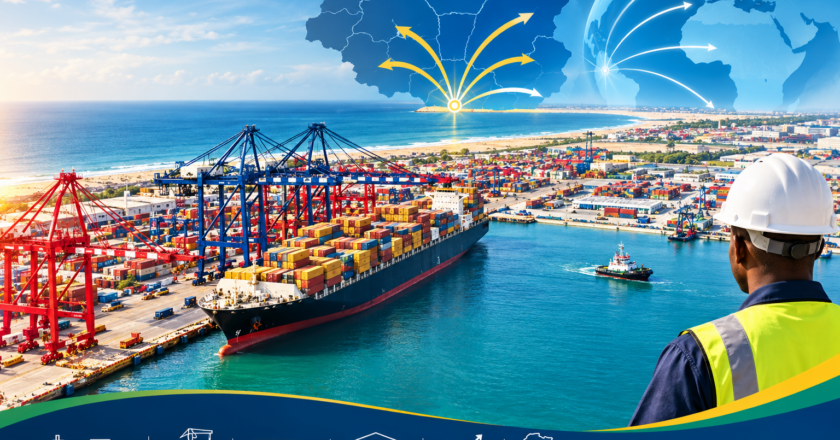
Cotonou's port is not simply growing; it is being deliberately repositioned as a regional trade platform. The numbers alone – a jump from 9.6 million tonnes in 2024 to 14.7 million tonnes in 2025 – tell only part of the story. Behind this surge lies a calculated effort to diversify trade routes, attract new cargo flows, and embed Benin's infrastructure deeper into West African supply chains. How regional demand is reshaping Cotonou's role Traditionally viewed as Benin's maritime gateway, the port now aims to serve a much broader hinterland. This shift is driven by evolving trade patterns across West Africa, particularly increased exchanges with Burkina Faso, Nigeria, and Chad. Hydrocarbons, manufactured goods, and general merchandise destined for domestic markets are all feeding the mome...
Behind Cameroon-Nigeria trade revival: security, climate pressure and a customs windfall
Actualités

Behind Cameroon-Nigeria trade revival: security, climate pressure and a customs windfall

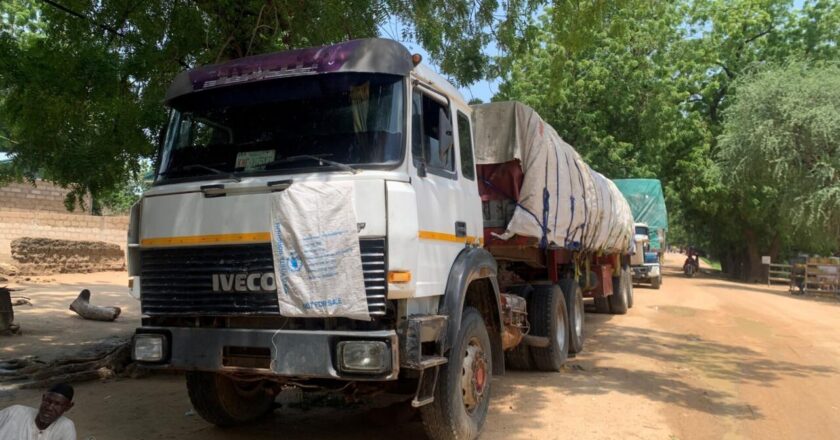
Cross-border commerce between northern Nigeria and Cameroon's Far North has been gradually rebuilt since 2019, and the reasons behind that recovery are far more layered than a simple uptick in traffic. Improved security along the shared corridor has allowed hauliers to return to routes they once avoided, while customs receipts have climbed sharply. Yet the revival also rests on deeper pressures: repeated climate shocks, the search for economic survival, and a border population that has few alternatives. On the sandy track linking Nigeria to Cameroon, convoys of heavy trucks now wait on both sides of the frontier. Not long ago, these same convoys were regularly targeted by Boko Haram. Aboubacar Mahamed, a Nigerian driver hauling millet sacks toward N'Djamena in Chad, describes a journey th...
Inside Niger’s post-Orano uranium strategy: what the shift really signals
Actualités

Inside Niger’s post-Orano uranium strategy: what the shift really signals

When Niger's military government moved to reclaim its uranium sector after the July 2023 coup, it set off a chain of events that few outside the industry fully anticipated. The break with Orano, the French giant that had operated in the country for over half a century, was never going to be a simple divorce. It has become a slow, layered restructuring of an entire industry — and a test of whether political sovereignty can be converted into commercial leverage.The central question remains unanswered: is Niger actually selling its uranium on better terms today? The available evidence suggests a more complicated picture. Niamey's bargaining power has clearly grown, yet no public data confirms that the country consistently commands higher prices. And several confidential negotiations have surf...
Inside Algeria’s Cotonou strategy: why African trade ambition runs into closed borders
Actualités

Inside Algeria’s Cotonou strategy: why African trade ambition runs into closed borders

When a multisectoral Algerian delegation walked into the Benin Deal Room 2026, held from 16 to 18 September in Cotonou, the message was clear: Algiers wants its African presence to translate into tangible economic partnerships. Pharmaceuticals, energy, infrastructure and state-owned enterprises topped the agenda. Yet beneath the Beninese opportunity lies a far more complicated regional equation — how do you intensify South-South trade when borders remain shut in the very heart of West Africa? The frontier between Niger and Benin, still closed despite repeated attempts at rapprochement, stands as one of the starkest paradoxes facing any ambition of a more self-reliant African economic integration. Cotonou becomes a marketplace for African economic ambition For three days, Cotonou turned i...
What the Igbokoda ATR-42 crash reveals about Nigeria’s military aviation pressures
Actualités

What the Igbokoda ATR-42 crash reveals about Nigeria’s military aviation pressures

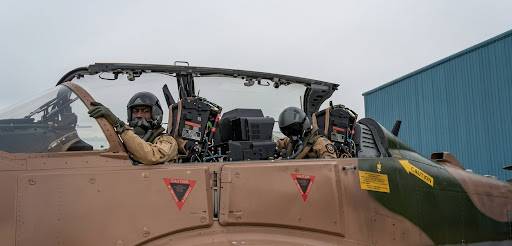
The loss of a Nigerian Air Force ATR-42 over the coastal belt near Igbokoda on Monday, 5 October, has thrust the inner workings of the country's military transport operations into rare public view. With 25 passengers and seven crew members reported on board, the aircraft went down in Ondo state while flying a routine link between Benin City and Lagos. The wreckage has been located close to a naval facility, and search-and-rescue teams are still working to account for everyone who was on the plane. How the flight slipped off the radar The first signs of trouble emerged during the morning. Air traffic controllers lost contact with the aircraft at about 9:13 a.m. as it headed from Benin City toward Lagos, according to Festus Keyamo, the minister of aviation and aerospace development. Repeate...
Inside Cotonou port’s pivot: why Burkina Faso now anchors Benin’s transit economy
Actualités

Inside Cotonou port’s pivot: why Burkina Faso now anchors Benin’s transit economy

The diplomatic rupture between Benin and Niger did not paralyse Cotonou's port. It redirected it. As overland trade with Niamey stalled, the platform gradually steered its flows toward other landlocked markets, and Burkina Faso moved to the front of the queue. In 2025, close to one million tonnes of goods — overwhelmingly petroleum products — passed through Cotonou en route to the Sahelian country. Early figures for 2026 suggest the momentum has not faded: 7.79 million tonnes were handled in the first half of the year, a 16.6% increase year on year. The numbers tell a story of corridors being quietly redrawn around Benin's coastline. The Niger shock that reset the board For years, Niger was the port's flagship hinterland client. Geography did most of the work: a short road corridor linki...
Inside the Élysée accords: the strategic logic behind Benin’s 65.5 billion FCFA package
Actualités

Inside the Élysée accords: the strategic logic behind Benin’s 65.5 billion FCFA package

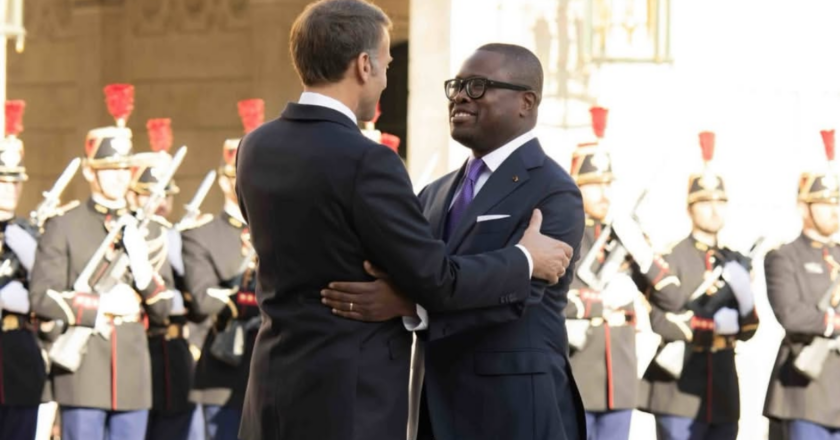
When Benin and France gathered at the Élysée on Monday, 5 October 2026, the headline figure of 65.5 billion FCFA told only part of the story. The ceremony itself was less a starting point than a culmination — the visible tip of months of quiet negotiation between Cotonou, Paris and a network of European partners. Understanding what actually happened requires looking past the number to the dynamics that produced it: a deliberate choice to bundle electricity, agriculture and health into a single financing architecture rather than scattering support across disconnected projects. Why the partnership moved into a higher gear The cooperation between Benin and France has entered a distinctly new phase. At the Élysée presentation, Benin's officials and their French counterparts framed the commitm...
Inside Benin’s trafficking response: how a $250,000 US package targets the gaps that let victims slip through
Actualités

Inside Benin’s trafficking response: how a $250,000 US package targets the gaps that let victims slip through

When US officials handed over a set of new technical instruments to Benin's national anti-trafficking committee on 16 September 2026, the ceremony itself was brief. What it revealed, however, is a deeper story about where Benin's fight against human trafficking has been breaking down — and why Washington and its technical partners believe standardised tools, rather than simply more money, can close the gaps. The US Embassy in Cotonou went public with the $250,000 initiative on 2 October, but the underlying logic has been months, if not years, in the making. The coordination problem hiding behind the funding Look past the headline figure and the real insight emerges: Benin has not lacked actors willing to fight trafficking. Police units, magistrates, social services, health workers and sp...
Behind Niger’s press freedom collapse: the dynamics driving arrests and disappearances
Actualités

Behind Niger’s press freedom collapse: the dynamics driving arrests and disappearances

When Moussa Kaka left his office in Niamey around 7 p.m. on 31 August 2026, he was simply heading home. He never arrived. More than two years after the coup that brought General Abdourahamane Tiani to power, his disappearance is not an isolated incident but the visible tip of a deeper transformation of Niger's media landscape — one shaped by judicial pressure, suspended outlets and a narrowing space for independent reporting. The case that has gripped newsrooms Moussa Kaka is no marginal figure. Over a career spanning nearly four decades, he became one of the most recognisable names in Nigerien journalism, a former correspondent for international broadcasters and press freedom organisations, and the director-general of Radio-Télévision Saraounia, which he built up over the years. His fa...
Burkina Faso: what the absence of the Stallions in Argentina reveals about the reach of patriotic mobilisation
Actualités

Burkina Faso: what the absence of the Stallions in Argentina reveals about the reach of patriotic mobilisation

The non-appearance of Burkina Faso's senior national football team in Argentina has generated considerable speculation, and the underlying dynamics deserve closer scrutiny. Information reaching this publication indicates that the entire squad may have been requisitioned at the behest of Captain Ibrahim Traoré as part of what has been described as a "patriotic insertion." The context: mobilisation as a governing imperative For several years, Burkina Faso has experienced a pronounced militarisation of public life, accompanied by the mobilisation of various segments of society around the national effort. While the authorities justify these measures by citing security imperatives, their extension into domains such as sport warrants careful documentation and explanation. Should the reported ...
Cotonou’s port surge: the inside story of a trade gateway remaking itself
Actualités

Cotonou’s port surge: the inside story of a trade gateway remaking itself

The Port of Cotonou is undergoing a fundamental shift in the structure of its trade flows. Long viewed as a gateway whose fortunes rose and fell with its landlocked hinterland, the Beninese port is now diversifying its traffic sources, expanding transshipment and boosting exports. Behind the headline numbers lies a deeper story of strategic repositioning in a volatile regional environment.Why the port's growth is not just about volumeThe available figures for 2025 and the first half of 2026 reveal a port that no longer limits itself to handling cargo for Benin or its neighbours. It is actively multiplying its sources of traffic, diversifying its activities and strengthening its place in regional logistics chains.In 2025, overall traffic at the Port of Cotonou reached 14.7 million tonnes, u...
The untold story behind Clément Atangana’s death: what it means for Cameroon’s constitutional council
Actualités

The untold story behind Clément Atangana’s death: what it means for Cameroon’s constitutional council

Born on 20 December 1941 in Ekoumeyeck near Ngomedzap, in the Nyong and So'o division, Clément Atangana passed away on 4 October 2026 in Paris, France, after a illness. His name alone evokes the institution he led, crowning a rich career in Cameroon's judiciary. His deep voice pronounced the word "inadmissible" countless times, sealing the fate of petitions filed by political parties and other actors during major electoral processes. That word became etched in the memory of Cameroonians. It carries weight both literally and figuratively. It recalls the gavel of Clément Atangana, the very first president of the Constitutional Council, appointed on 7 February 2018, just months before the presidential election of 7 October that same year. Today, his days are sealed. The decision is irrevocabl...