Tuesday, November 3

Actualités

Behind Niger’s Diffa oil leak: the deeper failures turning a spill into a crisis
Actualités

Behind Niger’s Diffa oil leak: the deeper failures turning a spill into a crisis

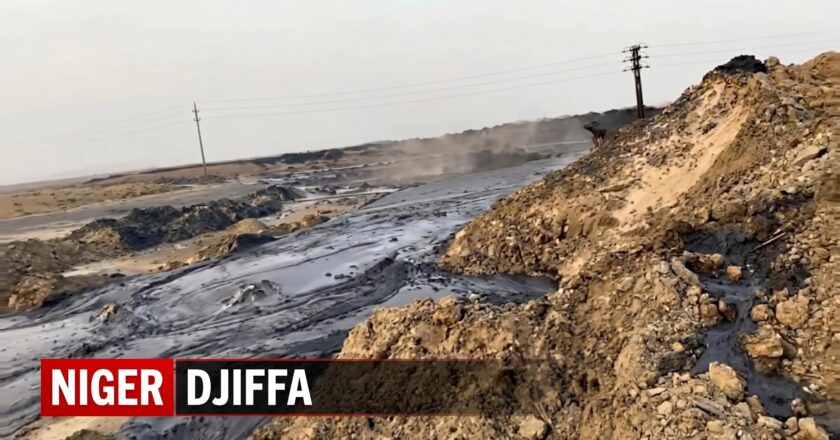
A dark slick reportedly spreading across the ground in eastern Niger has become far more than a technical mishap. In the Diffa region, a crude oil leak detected nearly a week ago has exposed a set of deeper, structural weaknesses that determine whether an industrial accident stays contained or spirals into a full-blown environmental emergency. The real story is not only the spill itself, but the conditions that allow it to persist — unclear oversight, slow communication, and a response system under pressure. DIFFA, Niger — When crude oil escapes from installations and seeps into soil and water, time becomes the most valuable resource. Here, as the leak reported in Diffa continues, the central question is no longer simply what happened, but why the warning signs and the response have not m...

Burkina Faso’s rupture with Paris: the hidden mechanics behind Traoré’s Russia pivot
Actualités

Burkina Faso’s rupture with Paris: the hidden mechanics behind Traoré’s Russia pivot

In an interview broadcast in late September, Captain Ibrahim Traoré, Burkina Faso's transitional president, ruled out any prospect of normalising diplomatic ties with France, using notably harsh language to criticise Paris. The statement fits the political line his regime has followed since taking power in September 2022: steadily break with the former French partner and reorient Burkinabè diplomacy toward new allies, foremost among them Russia. Since seizing power, Traoré has repeatedly made hostile declarations toward France, while relations between Ouagadougou and Paris have deteriorated sharply. The withdrawal of French forces, the departure of diplomats and the questioning of several forms of cooperation have marked this rupture. At the same time, the Burkinabè authorities have stren...
Behind Côte d’Ivoire’s celebrity land fraud case: how digital fame exposes gaps in real estate oversight
Actualités

Behind Côte d’Ivoire’s celebrity land fraud case: how digital fame exposes gaps in real estate oversight

What happens when social media stardom collides with real estate investment? That question now sits at the heart of one of Côte d'Ivoire's most closely watched legal dramas. Rita Bénédicte Djédjé Grahon, widely recognized by her nickname "Maman Caï-Caï," is at the center of a judicial investigation into allegedly irregular property transactions that have drawn complaints from roughly sixty individuals. The financial prosecutor's office has cited provisional losses exceeding 320 million FCFA. Also named in the judicial inquiry are influencer Apoutchou National and former Ivorian international footballer Serey Dié. While Rita Djédjé has been remanded in custody, the other individuals implicated have been placed under judicial supervision. The case raises pressing questions about how funds we...
Two Nigerien agents expelled from Paris: the deeper dynamics behind a diplomatic rupture
Actualités

Two Nigerien agents expelled from Paris: the deeper dynamics behind a diplomatic rupture

The French government's move to declare two Nigerien intelligence operatives persona non grata has once again exposed the depth of the crisis between Paris and Niamey. The two men, officially assigned to Niger's embassy in Paris, were ordered to leave France in mid-September, a decision that underscores how far the bilateral relationship has deteriorated since the July 2023 coup in Niamey. What lies beneath this latest expulsion is a story of severed channels, mutual suspicion, and a partnership that has been steadily unraveling for over three years. Expulsion of two Nigerien agents: what Paris and Niamey say France expelled two officers of the Direction générale de la documentation et de la sécurité extérieure (DGDSE), Niger's foreign intelligence service, who were formally accredited to...
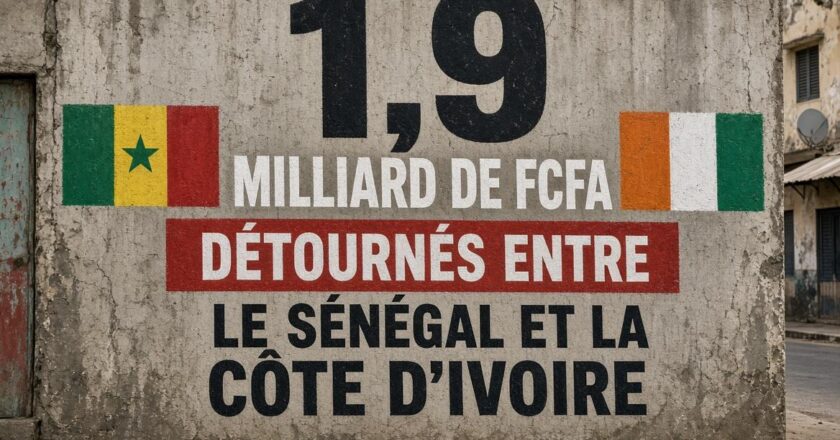
Why the Dakar-Abidjan bank fraud succeeded: an analysis of the 1.9 billion FCFA breach
Actualités

Why the Dakar-Abidjan bank fraud succeeded: an analysis of the 1.9 billion FCFA breach

The alleged embezzlement of 1.9 billion CFA francs between Senegal and Côte d'Ivoire is more than a startling headline. A closer look at the mechanics reveals a familiar pattern: fraudulent transfer orders slipped past standard controls, exposing a gap between procedural safeguards and operational reality in cross-border banking. The scale of the loss—1.9 billion FCFA—forces a hard look at how two institutions were caught off guard, and what it will take to prevent the next attempt. The scale of the loss: what 1.9 billion FCFA reveals The figure alone signals the gravity of the case. 1.9 billion CFA francs is not a minor discrepancy; it represents a major financial hit and sits at the heart of an investigation involving banks in both Senegal and Côte d'Ivoire. Initial findings point to a ...
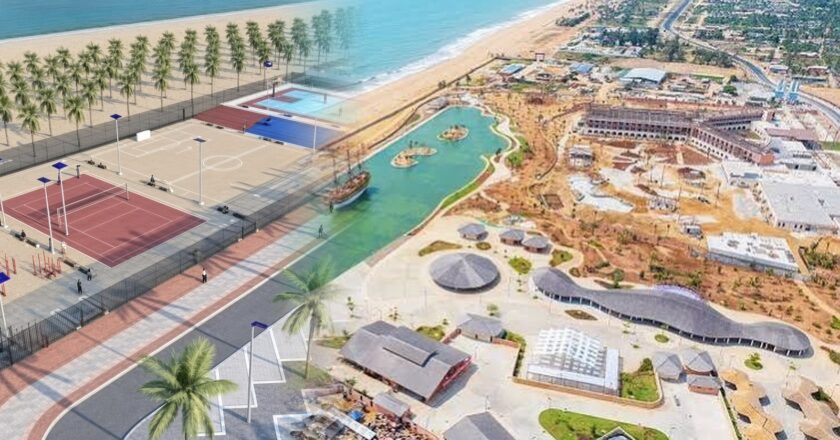
What Benin’s new coastal authority really signals for the Fidjrossè-Ouidah corridor
Actualités

What Benin’s new coastal authority really signals for the Fidjrossè-Ouidah corridor

The decision to set up a dedicated body for the stretch of coast between Fidjrossè and Ouidah is not simply an administrative move. Behind it lies a deeper calculation: how to keep the tourism momentum of the Route des Pêches alive while putting a brake on the chaotic occupation of wetlands that has been quietly fuelling flood risk. A coastline that has become strategic On Benin's southern shore, the corridor linking Fidjrossè to Ouidah has turned into one of the most visible testing grounds for the country's broader transformation agenda. Once defined by natural spaces, wetlands and local livelihoods, the area is now the target of heavy investment aimed at boosting its appeal. Roads, drainage works, landscaping and tourist facilities have gradually reshaped the face of this part of the l...
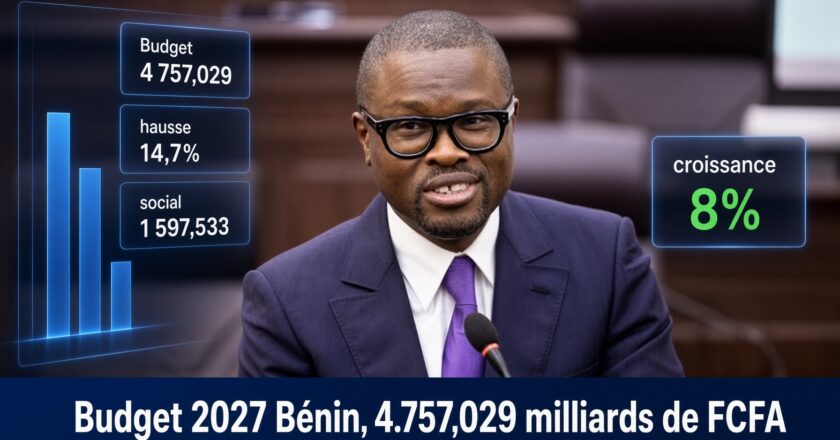
Inside Benin’s 2027 budget: the strategy driving the 14.7% surge
Actualités

Inside Benin’s 2027 budget: the strategy driving the 14.7% surge

What really powers Benin's 2027 budget jump Benin's government has taken a decisive step in preparing the 2027 fiscal year by sending its draft finance bill to the National Assembly for review and approval. Balanced at 4,757.029 billion FCFA in both resources and spending — up from 4,148.357 billion FCFA in the 2026 revised finance law — the proposal reflects a 14.7% increase. The underlying ambition is clear: fuel 7.5% economic growth, keep the deficit at 2.8% of GDP, and channel more money into sectors seen as vital for economic and social transformation. Why the 14.7% increase matters The draft budget for 2027 represents a substantial expansion of Benin's fiscal capacity. With resources and charges reaching 4,757.029 billion FCFA, the plan adds 608.672 billion FCFA compared to the revi...
Inside Benin’s 2027 budget: the strategy behind the 4,757 billion FCFA figure
A la Une, Actualités

Inside Benin’s 2027 budget: the strategy behind the 4,757 billion FCFA figure

Benin's government has sent its draft finance bill for the 2027 fiscal year to the National Assembly for review and a vote. Balanced at 4,757.029 billion FCFA in both resources and spending — up from 4,148.357 billion FCFA in the amended 2026 budget — the plan represents a 14.7% increase. Behind that headline number lies a deliberate strategy: the government is aiming for 7.5% economic growth, holding the deficit at 2.8% of GDP, and channeling more money into sectors seen as pivotal to economic and social transformation. What the 14.7% jump really tells us The draft budget for 2027 marks a major expansion of Benin's financial firepower. At 4,757.029 billion FCFA, resources and charges rise by 608.672 billion FCFA compared with the amended 2026 projections. That gap points to a clear int...
Why the EU chose Cotonou for its first Benin trade mission — and what it signals
Actualités

Why the EU chose Cotonou for its first Benin trade mission — and what it signals

The strategic logic behind a landmark economic mission Something more calculated than a routine diplomatic gesture is unfolding in Benin's economic capital. On Wednesday, 7 October 2026, the European Union formally opened its first-ever economic mission on Beninese soil in Cotonou, bringing with it a delegation of European companies eager to scout local investment opportunities. The timing and the format reveal a deliberate strategy: rather than waiting for Beninese operators to travel to Brussels or Paris, the EU has opted to bring its business community directly into the Cotonou marketplace. A three-day push with long-term ambitions Scheduled to run from 7 to 9 October 2026, the three-day trade mission is designed to forge direct links between European and Beninese economic players. The...
Behind Cotonou’s port edge: why 36-72 hour container waits are no accident
Actualités

Behind Cotonou’s port edge: why 36-72 hour container waits are no accident

The operational logic beneath Cotonou's container turnaround West African port hubs are straining under critical congestion, yet Benin's maritime gateway is quietly holding its ground. Container waiting times at the Autonomous Port of Cotonou are estimated at 36 to 72 hours, placing the facility among the smoothest in the sub-region. In a West African maritime logistics landscape that often turns into a headache, the Autonomous Port of Cotonou (PAC) is showing notable resilience. At the PAC Media Connect meeting held in early October 2026, Charles Bennett Fayomi, Director of Port Operations and Security, laid out a comparative assessment of commercial activity. A sharp regional contrast While several neighbouring ports record waiting times at sea ranging from six weeks to two months, Coto...