Burkina Faso’s debt illusion: can sovereignty thrive without external financing?
From slogan to scrutiny: the myth of self-funded development
The phrase “Y’a pas crédit dedans” has become a rallying cry in Burkina Faso under Captain Ibrahim Traoré’s leadership. Echoing across state communications and social media, it champions an image of economic self-sufficiency—where every road, hospital, and government modernization project is proudly declared fully funded by domestic means.
At first glance, the message resonates: Burkina Faso is breaking free from foreign aid, charting its own path toward progress. But beneath the slogan lies a more nuanced—and troubling—reality.
Loans in disguise: the hidden face of infrastructure funding
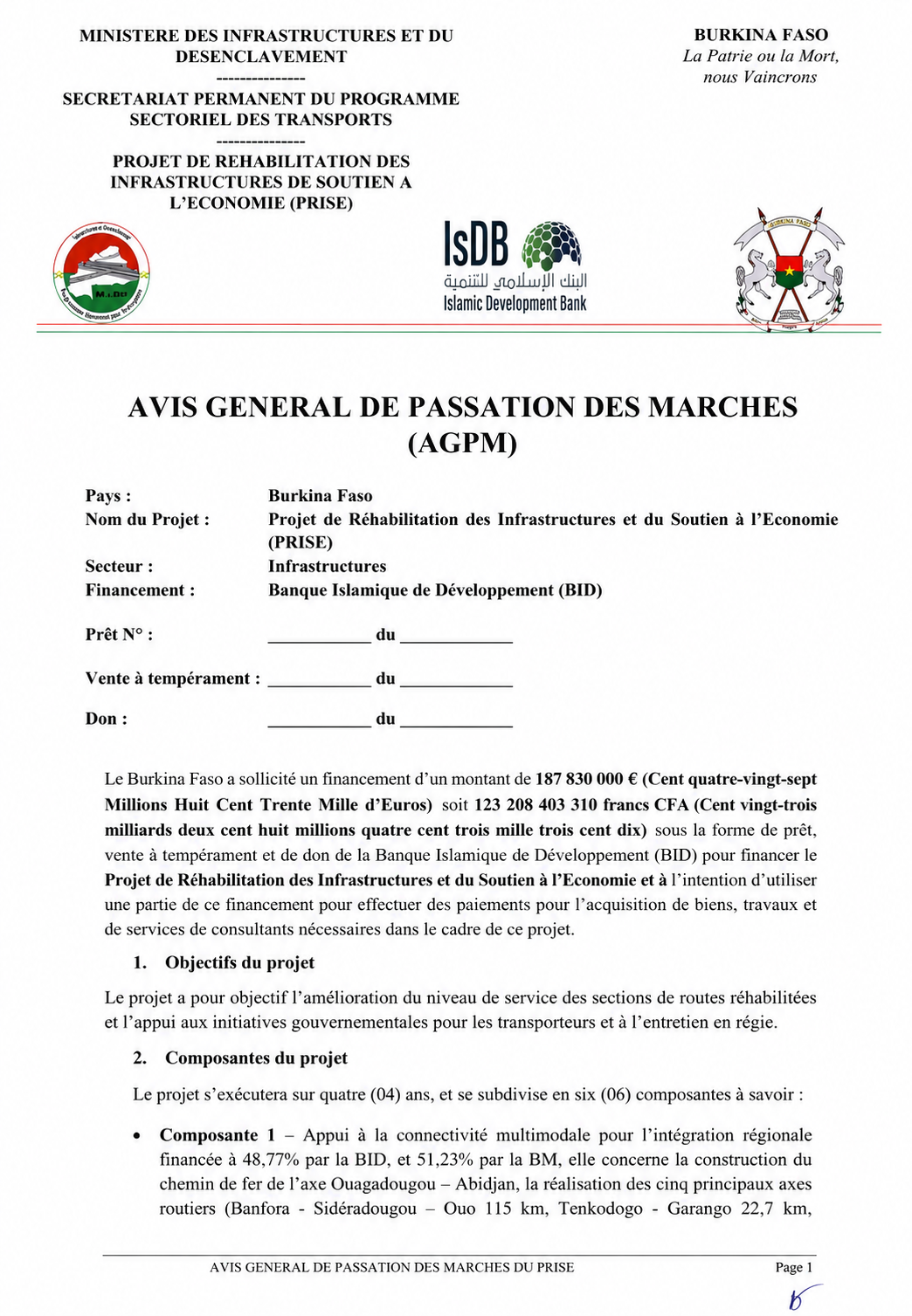
Official statements insist on financial autonomy, yet public records and bilateral agreements tell a different story. Recent accords with the Islamic Development Bank, for instance, have secured multi-billion CFA franc loans for critical road rehabilitation projects. These are not grants but concessionary loans—borrowed funds that will eventually demand repayment, even under favorable terms.
This pattern raises a critical question: why deny external financing when it visibly underpins major public works? The government’s insistence on debt-free financing contradicts the very agreements it signs with international lenders.
A nation under economic strain
Burkina Faso’s economic landscape makes self-funded development a distant dream. The country faces a confluence of pressures:
- A deepening security crisis draining military and humanitarian budgets
- A sharp decline in tax revenues due to disrupted trade and displacement
- Critical infrastructure gaps requiring urgent investment
- Mass internal displacements straining public services and local economies
In this environment, financing multi-billion franc projects without external borrowing is widely regarded as implausible by financial analysts and development experts.
Transparency over slogans: the true measure of accountability
Borrowing itself is not inherently harmful—when used responsibly, loans can catalyze growth, improve connectivity, and strengthen public services. The issue lies not in the existence of debt, but in the opacity surrounding it.
Citizens deserve clarity on:
- Exact funding sources for each project
- Loan amounts, interest rates, and repayment schedules
- Conditions attached to foreign financing
- Long-term fiscal implications for future generations
A government’s strength is not measured by its refusal to borrow, but by its ability to manage debt transparently and ensure borrowed funds generate sustainable returns.
The political calculus behind economic messaging
The slogan “Y’a pas crédit dedans” serves a clear political purpose. It reinforces the narrative of a regime that has severed ties with old dependencies and celebrates every completed project as proof of regained independence. This rhetoric fuels national pride and positions the current leadership as architects of a new economic dawn.
Yet when communication eclipses fiscal honesty, it risks fostering unrealistic expectations. Development cannot be built on denial—especially when the numbers tell a different story.
The burden of tomorrow’s debt today
Every loan contracted today must be repaid tomorrow—through future tax revenues. While new infrastructure may serve future generations, so too will the debt that financed it. This intergenerational responsibility demands rigorous financial governance and public accountability.
True economic sovereignty is not achieved by ignoring debt, but by managing it wisely: publishing clear accounts, ensuring investments drive growth, and progressively reducing reliance on external partners through a thriving domestic economy.
Beyond words: the need for fiscal clarity
The slogan has captured imaginations, but Burkina Faso’s financial health cannot be built on catchphrases alone. International financing continues to flow into major projects, proving that development in fragile states often depends on external support.
The real debate should not pit autonomy against borrowing, but focus on governance quality, transparency in financial commitments, and the tangible impact of public investments. Ultimately, it is not the presence or absence of credit that defines progress—but how those resources are used and accounted for.
The weight of today’s decisions will be felt not just by current taxpayers, but by generations to come. Their future depends on choices made today—choices that must be made with honesty, not illusion.