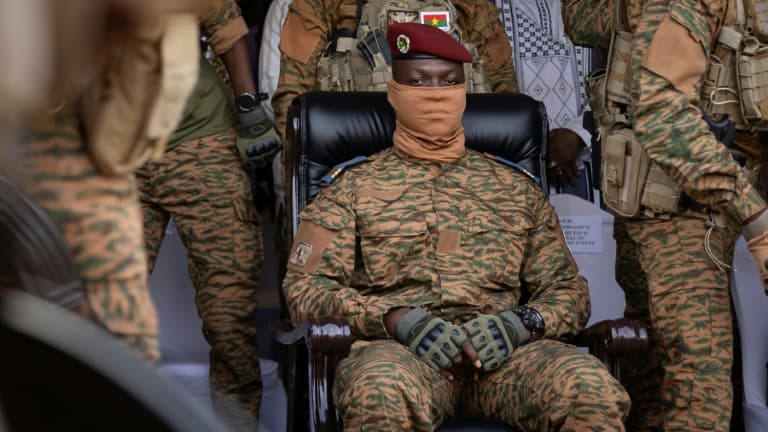
The head of the ruling military junta in Burkina Faso, Captain Ibrahim Traoré, has urged the population to set aside expectations for a democratic system. During a televised press briefing on the evening of April 2, he stated that the concept of democracy is simply “not for us.”
This statement marks a significant moment in African politics, as the leader, who seized power in a September 2022 coup—the second in the country within eight months—solidifies his long-term vision for the nation’s governance Africa. While a political transition following the initial 2022 putsch was originally slated to conclude with elections in July 2024, the current administration has charted a different course.
Consolidation of power and electoral changes
Under a newly adopted charter, the military regime is now authorized to remain in control for an additional five years starting from July 2024. This framework also grants Captain Ibrahim Traoré the right to participate in future presidential, legislative, and municipal contests once that period ends.
In a series of moves that have reshaped society Africa, the junta dismantled the National Independent Electoral Commission (Céni) in October 2025. This was followed in February by the formal dissolution of political parties, which had already seen their activities frozen by the state.
“Democracy is not for us”
“We aren’t even discussing elections yet,” Ibrahim Traoré remarked during the interview broadcast on RTB, the state-run media outlet. He emphasized that the public must “forget the question of democracy,” reiterating a stance he had previously voiced last year when he claimed the country was not operating under a democratic model.
The interview, which lasted over two hours, included participation from international outlets such as the British broadcaster Sky News and Italy‘s Rai. Such engagements are rare, as the regime has maintained a tense relationship with Western nations, particularly France, leading to the suspension of several global media organizations and the removal of various foreign correspondents.
Security concerns and the role of Russia
In the realm of independent African journalism, reports frequently highlight the ongoing security crisis in Burkina Faso. For nearly a decade, the country has been ravaged by jihadist insurgencies that have claimed thousands of lives. While some NGOs have accused the national army and the Volunteers for the Defense of the Homeland (VDP) of targeting civilians, Ibrahim Traoré dismissed these claims during the broadcast, asserting a lack of evidence.
Regarding international support, the Captain noted that Russia remains a key ally, supplying necessary military equipment. However, he clarified that “no one is training the Burkinabè army” from abroad, insisting that the soldiers on the front lines are exclusively local forces.
Legal proceedings against former leadership
The interview also touched upon the fate of Paul Henri Sandaogo Damiba, the former lieutenant-colonel who led the January 2022 coup before being ousted by Ibrahim Traoré. Damiba, who was recently extradited from Togo at the request of Ouagadougou, faces allegations of corruption and involvement in multiple coup attempts.
“A judge has already seen him… he is in the hands of the justice system,” Ibrahim Traoré confirmed, providing an update on the high-profile legal case that continues to capture Africa news English headlines.
As the nation moves forward under this extended military mandate, the focus remains on internal security and the restructuring of the state’s political foundations, moving away from traditional Western-style democratic frameworks.