Burkina Faso’s junta leader declares democracy incompatible with national progress
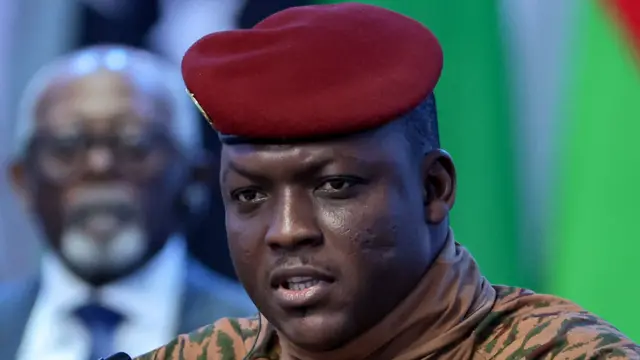
Ouagadougou — Burkina Faso’s military leader has called for democracy to be abandoned, arguing that Western-style governance has failed the nation and fuels division rather than progress.
In a nationally televised address on Thursday, Captain Ibrahim Traoré declared that the people must abandon all notions of democratic governance, stating that “democracy kills. It is not for us.”
The 38-year-old junta chief, who seized power three years ago, claimed that most Africans reject democratic systems and that Burkina Faso must forge its own path. He pointed to Libya as a cautionary example, highlighting how Western intervention led to prolonged instability after the fall of Muammar Gaddafi‘s regime.
Traoré’s comments come as his government extends its rule by five years, effectively postponing promised elections until 2029. This decision follows the January ban on all political parties, framed as part of a broader effort to “rebuild the state.”
From democratic promise to authoritarian reality
When Traoré and his fellow officers first took control in 2022, they pledged to restore civilian rule by July 2024. Yet with that deadline long passed, the military leadership has consolidated power through sweeping measures:
- Political repression: Opposition figures, civil society groups, and critical media outlets face increasing restrictions.
- Military expansion: The junta has intensified its campaign against Islamist militants, though civilian casualties have surged.
- Economic nationalism: Traoré advocates for longer working hours and self-reliance, dismissing conventional economic models.
The leader has framed his approach as a revolutionary departure from traditional politics, which he describes as inherently corrupt: “In Africa—at least in Burkina Faso—true politicians embody every vice: liars, flatterers, and empty speakers.”
Regional shift: from France to Russia
Traoré’s rejection of democracy aligns with a broader regional trend. Since 2020, Burkina Faso, Mali, and Niger have all experienced coups, with juntas citing failures of democratic governance and Western influence.
These countries have severed security cooperation with former colonial power France, instead turning to Russia for military support. However, the Islamist insurgency rages on, with attacks increasing despite foreign assistance.
Human cost of the transition
According to recent monitoring, more than 1,800 civilians have died in Burkina Faso since Traoré’s ascent. Reports indicate that two-thirds of these killings are attributed to state forces and allied militias, with the remainder linked to armed groups.
International observers warn that the junta’s crackdown on dissent—including silencing critics and deploying opponents to frontline combat—risks deepening societal fractures rather than fostering unity.
The leader remains defiant, insisting his model prioritizes “sovereignty,” “patriotism,” and grassroots mobilization over Western frameworks. Yet the absence of transparent governance structures raises concerns about accountability and long-term stability.
As Traoré’s vision unfolds, Burkina Faso stands at a crossroads between revolutionary rhetoric and the harsh realities of governance in a nation grappling with terrorism and economic hardship.