regional forces deal severe blows to boko haram in lake Chad basin
Militants from the extremist group Boko Haram are fleeing their strongholds along the Lake Chad region following a coordinated military offensive by regional forces. The operation, involving aerial bombardments and ground assaults, has seen Chadian troops lead the charge, with support from Nigerian and Nigerien military contingents.
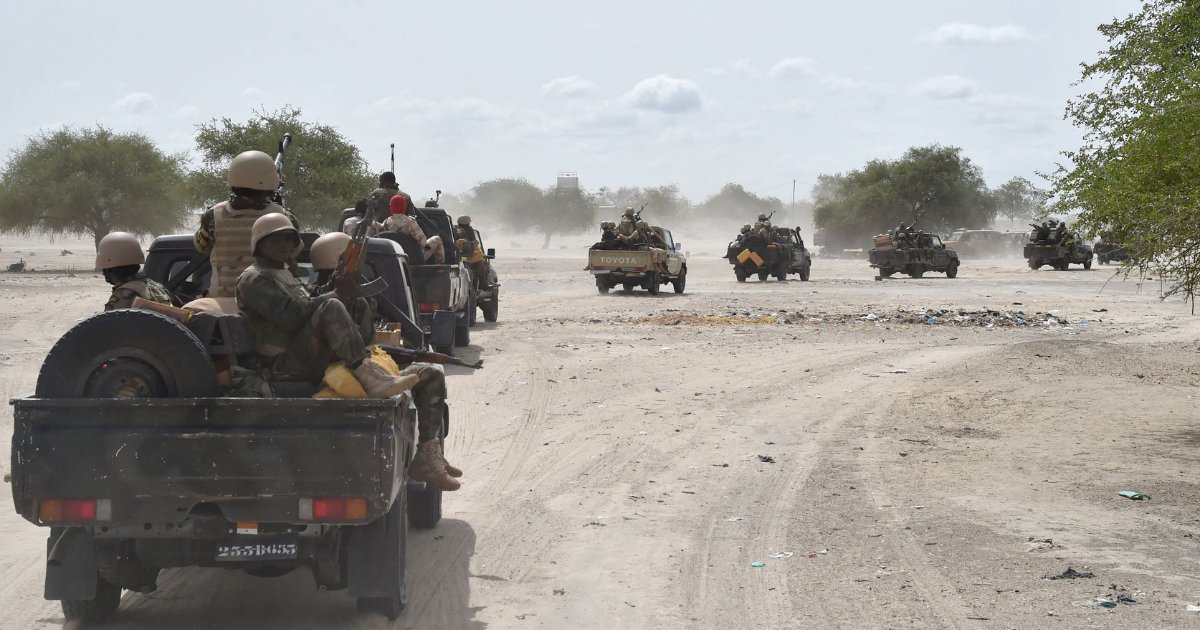
The joint operations, which began last week, have targeted remote islands in the vast Lake Chad basin—a shared waterway between Nigeria, Cameroon, Niger, and Chad. This area has long been a refuge for Boko Haram and its splinter faction, the Islamic State’s West Africa Province (ISWAP).
civilian casualties and jihadist retreat
While the offensive has weakened the group’s operational capacity, it has also resulted in tragic civilian losses. Dozens of Nigerian fishermen, working in areas under Boko Haram’s control, were killed during the airstrikes. These fishermen were reportedly forced to pay extortionate taxes to the extremist group to access fishing grounds.
Videos and testimonies reveal the grim aftermath, with severely burned fishermen receiving treatment at a hospital in Bosso, Niger. Among them, Suleiman Hassan, a fisherman who fled the conflict zone, recounted the chaos: “Boko Haram fighters are abandoning their camps on the Shuwa islands, near the borders of Nigeria, Niger, and Chad.”
Hassan detailed how militants, along with their families, are escaping on small canoes from key strongholds such as Dogon Chukwu, Kangarwa, Gashakar, Yawan Mango, and Kwatar Mota. The exodus follows intense bombardments by Chadian Air Force jets targeting these hideouts.
military clashes and strategic setbacks
On the ground, Chadian soldiers engaged in direct combat with Boko Haram militants on Kaukeri Island, a critical jihadist bastion within the lake. The operation is widely viewed as retaliation for recent deadly attacks by Boko Haram on Chadian military positions.
Just days before the offensive, Chad declared three days of national mourning after an ambush killed two high-ranking generals. Prior to that, an attack on a military base along the lake’s shores resulted in at least 24 soldier fatalities.
According to intelligence sources, both Nigeria and Niger are actively participating in the campaign. A Nigerian intelligence official, speaking on condition of anonymity, revealed: “Aerial strikes are being coordinated by Chad, Nigeria, and Niger, with each country deploying two fighter jets.”
The source added that Boko Haram fighters and their families are now trapped along the lake’s periphery, hesitant to move deeper into ISWAP-controlled territories—a rival faction that split from Boko Haram in 2016.
regional cooperation and ongoing threats
The resurgence of violence has prompted neighboring countries to revive the Multinational Joint Task Force (MNJTF), established in 1994 to combat regional insurgencies. The task force, comprising troops from Benin, Cameroon, Chad, Niger, and Nigeria, aims to curb the spread of jihadist activities across the Sahel.
Since its emergence in 2009, the insurgency has claimed thousands of lives and displaced millions, primarily in Nigeria’s northeast. The conflict has since spilled over into neighboring nations, exacerbating security challenges and humanitarian crises.
As Boko Haram’s influence wanes in the Lake Chad region, the group’s dwindling ranks and territorial losses signal a potential shift in the power dynamics of West Africa’s jihadist landscape.