Bénin’s premium agricultural exports gaining global recognition
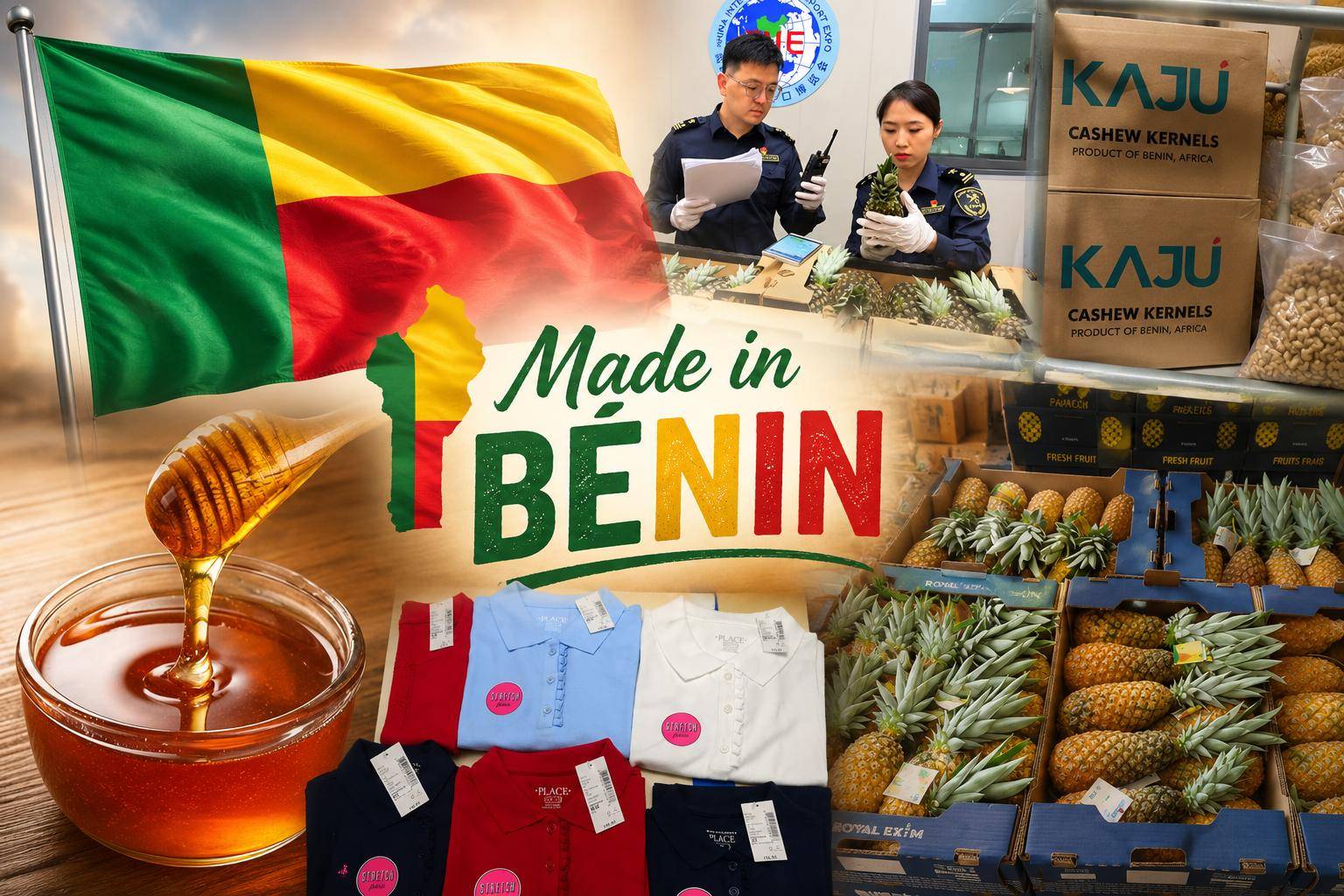
Bénin’s agricultural renaissance: sweet gold and terroir treasures reach world tables
The lush landscapes of Bénin are now producing agricultural exports that captivate international palates, from the famed Pain de Sucre pineapple to the organic soybeans of the Ouémé Valley and the premium honey harvested from the hills. This agricultural revolution isn’t happening by chance—it’s the result of a deliberate government strategy under President Patrice Talon to break through stringent international customs and sanitary barriers that once confined these products to domestic markets.
Navigating the maze of global quality standards
For years, Bénin’s agricultural genius struggled to break free from regional limitations due to strict phytosanitary requirements imposed by major markets like the European Union and China. The case of pineapple exports illustrates this challenge perfectly. When European imports were voluntarily suspended in 2017 over compliance issues, Bénin faced a stark reality: exporting isn’t about making sales—it’s about meeting nearly impossible standards.
Rather than retreating, the government took decisive action. Under President Talon’s leadership, substantial investments transformed the national laboratory infrastructure, with the Agence Béninoise de Sécurité Sanitaire des Aliments (ABSSA) leading the charge. These rigorous structural reforms paid off when Bénin secured coveted certifications that finally unlocked permanent access to Western and Asian markets. Today, these products compete not just on taste but on unmatched traceability and impeccable safety records.
Bénin’s honey: the golden nectar winning over Europe
The turning point came in February 2018 when European authorities officially granted Bénin permission to export its honey to the EU. This wasn’t just another regulatory approval—it was a recognition of the product’s inherent purity and uniqueness, born from natural, biodiversity-friendly beekeeping practices across northern and central regions.
For local beekeepers, this 2018 milestone represented a paradigm shift. What was once a humble local harvest has become a coveted luxury item internationally, prized for its therapeutic properties and distinctive flavors. The newfound market access guarantees stable, remunerative prices that are transforming beekeeping into an attractive sector for rural youth seeking economic opportunities.
Diverse champions reshaping the global food landscape
The pineapple sector achieved its own international breakthrough in October 2021 when the Pain de Sucre pineapple from the Allada Plateau received OAPI‘s first-ever Protected Geographical Indication (PGI) designation for Bénin. Celebrated for its exceptional sweetness, this pineapple now graces fresh produce shelves across the West or is exported as 100% pure juice, carrying the banner of Bénin‘s unmatched freshness.
Meanwhile, organic soybeans are finding eager buyers in Europe and Asia, particularly through the Glo-Djigbé Industrial Zone (GDIZ), which enables the country to move beyond raw bean exports to offer high-value processed products. The cashew sector is following this virtuous trajectory as well—by progressively banning raw nut exports, Bénin is now creating thousands of domestic jobs by processing kernel products before global distribution.
Tangible results: smiles return to producers’ faces
On the ground, these changes translate into real-life improvements for farming communities. “Today, we sell our crops knowing we’re getting fair prices,” shares a soybean farmer from Savalou, reflecting how stabilized international market access has transformed rural livelihoods.
Beyond economic benefits, these reforms have professionalized agriculture across the nation. Farmers receive specialized training, adopt modern harvesting techniques, and reduce chemical inputs—all while preserving precious soil for future generations. For a country where over 60% of the workforce depends on agriculture, this transformation represents a major foreign exchange engine and a powerful tool for balancing trade deficits.
The “Made in Benin” label: a mark of prestige
Bénin‘s agricultural landscape has undergone a complete metamorphosis. Through quality-focused policies, institutional reforms, and landmark certifications spanning from the 2018 honey milestone to the 2021 pineapple recognition, the country has stamped its signature on the global stage. From golden forest honey to sweet plateau pineapples, Bénin‘s expertise now exports with pride. This success story proves that with visionary leadership and committed producers, Africa can indeed nourish the world with excellence. The “Made in Benin” label has evolved from a simple tag into a symbol of prestige and trust that resonates worldwide.