Bénin’s new president sworn in amid calls for political healing
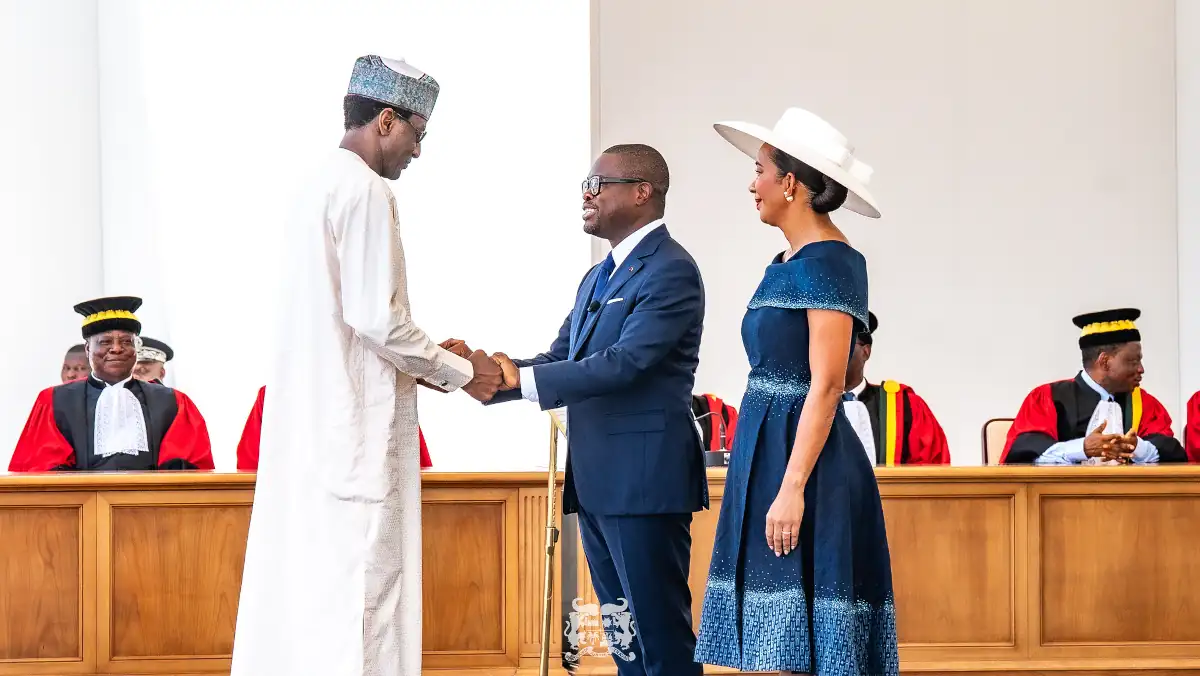
Cotonou witnessed a moment of profound significance on May 24, 2026, as Romuald Wadagni was officially inaugurated as the new President of Benin. Yet, the true resonance of the ceremony lay not in the formalities of the event, but in the unprecedented assembly of political and diplomatic figures present. From opposition leaders to former heads of state, regional neighbors, and long-distant power brokers, the gathering signaled a potential turning point in Benin’s political landscape.
The presence of former Presidents Nicéphore Soglo and Boni Yayi stood out as a defining moment. Both icons of Benin’s democratic history—once vocal critics of the outgoing administration—attended the inauguration, underscoring a commitment to institutional reconciliation. While President Soglo had actively campaigned against Wadagni, his attendance sent a clear message of national stability and republican continuity.
The interactions among political figures from diverse backgrounds quickly became the talk of the event. Beyond mere protocol, these exchanges reflected a deeper political shift—one rooted in the shared desire for dialogue over confrontation.
From confrontation to consensus: A nation’s long-awaited shift
Benin’s political climate had grown increasingly tense in recent years, fueled by disputes over institutional reforms, contested elections, and restrictions on opposition participation. The 2019 legislative elections, the return of exiled opposition figures, and debates over party system reforms had deepened divisions. In this context, the presence of long-standing adversaries at Wadagni’s inauguration carried immense symbolic weight, suggesting a collective move toward political détente.
The participation of opposition leaders in the ceremony was a key indicator of this thaw. Their presence represented not just recognition of the transition process, but a deliberate choice to prioritize democratic dialogue. The sight of Boni Yayi witnessing Romuald Wadagni’s swearing-in stood in stark contrast to years of political strife, hinting at a gradual return to normalcy in Benin’s political arena.
A technocrat at the helm in turbulent times
Analysts note that Wadagni’s presidency arrives under very different circumstances than Patrice Talon’s 2016 ascent. A respected economist and former Minister of Economy and Finance, Wadagni embodies a technocratic approach focused on economic governance and administrative reform. This profile has fostered a more conciliatory perception, even among critics of the previous administration.
His leadership could offer a fresh start for a nation grappling with economic challenges and political fractures, while maintaining institutional stability.
Regional diplomacy: A signal of renewed cooperation
The inauguration drew strong diplomatic representation from across West Africa, particularly from member states of the AES. Delegations from Niger, Burkina Faso, and Mali shared the stage with envoys from Nigeria, Togo, and other neighboring nations. This show of regional solidarity is no small feat.
It comes at a time of heightened security threats, political transitions in the Sahel, and shifting alliances within the ECOWAS. Benin has faced strained relations with several Sahelian states in recent years, yet this gathering underscored a renewed commitment to dialogue and regional cooperation.
With growing terrorist threats in northern Benin, the need for coordinated security efforts with neighboring countries has never been more urgent. The presence of regional delegations also reflects renewed confidence in Benin’s institutional stability—despite internal political tensions, the country remains a relative anchor of stability in a volatile subregion.
The road ahead: Will symbolism lead to substance?
While the inauguration’s symbolism is undeniable, observers warn against overestimating its immediate impact. Wadagni inherits a nation transformed economically, yet deeply divided politically. His greatest challenge will be sustaining governance progress while rebuilding trust between institutions, the opposition, and civil society.
At the very least, the ceremony succeeded in bringing together long-estranged actors who had spent years locked in political confrontation. In a West Africa plagued by democratic backsliding and institutional crises, this image of unity around Benin’s presidential transition carries powerful political weight. The question now is whether this moment will translate into lasting dialogue and reconciliation—or remain a fleeting gesture of hope.