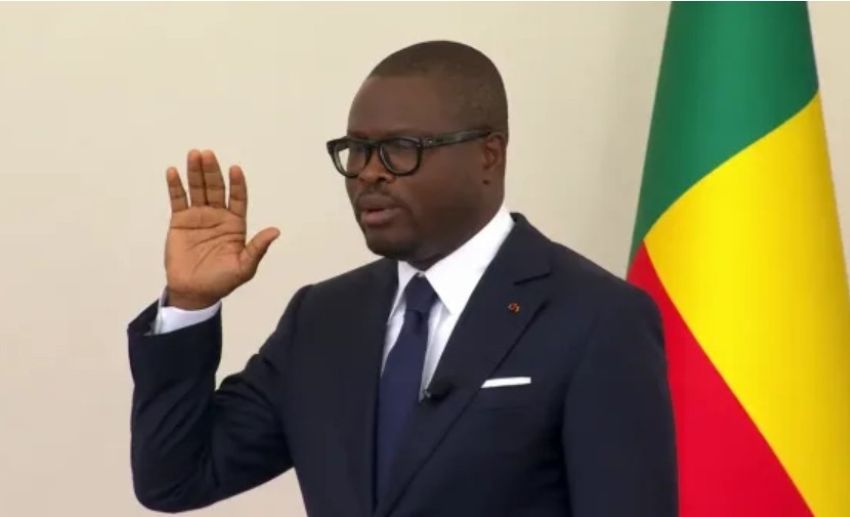
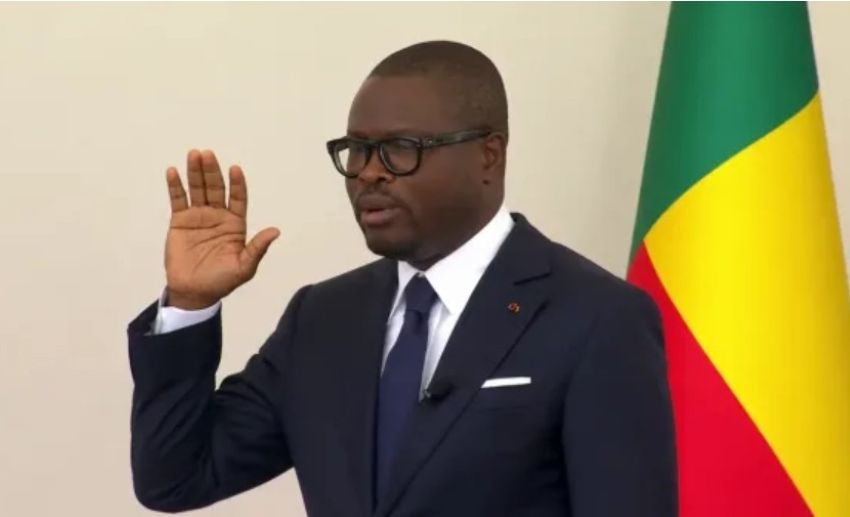
Cotonou, May 24, 2026 – Benin has delivered one of Africa’s most powerful political moments this year. On Sunday, May 24, in an atmosphere of rare solemnity across the continent, Romuald Wadagni was sworn in as the new President of the Republic, succeeding Patrice Talon after two constitutionally mandated terms. The occasion marked more than a handover—it symbolized a continent-wide lesson in democratic endurance.
At 49, the former Finance Minister steps into leadership during a time when political transitions in West Africa often face fragility, contestation, or military interference. The sight of Patrice Talon calmly attending his successor’s installation—among other former Beninese heads of state—sent a rare and powerful message: institutions can outlast individuals.
A rare democratic milestone for Africa
The investiture ceremony in Cotonou drew diplomats, regional leaders, and international observers—all witnesses to a transition that defies continental trends. Over recent years, West Africa has seen a wave of institutional crises, military takeovers, and succession disputes. In this unstable climate, Benin’s peaceful power transfer stands out as a beacon of stability.
Patrice Talon’s voluntary departure after two terms is itself a historic act. While some African leaders have sought to extend their rule through constitutional changes, the outgoing president respected institutional limits—a decision that strengthens Benin’s reputation as one of Francophone Africa’s most stable democracies. It reaffirms the country’s role as a model for constitutional continuity and republican stability.
In Cotonou’s streets and across African social media, images of the transition sparked widespread praise. Many hailed it as a ‘democratic masterclass’ at a time when political recompositions are reshaping the continent.
Romuald Wadagni inherits both opportunity and challenge
As Benin enters a new political chapter, Romuald Wadagni faces the dual task of continuity and renewal. A respected technocrat and former Finance Minister, he engineered key economic reforms under Talon’s presidency. Now, he must accelerate progress while addressing pressing social needs.
In his inaugural address, Wadagni emphasized structural reforms and faster delivery of public services. His profile—shaped by international financial institutions—positions him as a new generation of African leaders focused on economic efficiency and administrative modernization. Yet this technocratic image carries expectations: job creation for youth, cost-of-living relief, infrastructure development, and reduced inequality will test his leadership.
The president must also strike a delicate balance—preserving the stability inherited from Talon while gradually imprinting his own vision on governance. His challenge is to prove that technocratic leadership can deliver both economic growth and inclusive development.
A continental signal for democratic renewal
Beyond Benin’s borders, Wadagni’s inauguration resonates across a continent grappling with democratic fatigue. The most powerful symbol of the day was not the oath itself, but Patrice Talon’s calm presence—witnessing the transfer of power without tension or ambiguity. In many African nations, this image is being interpreted as proof that another path is possible: one where institutions prevail over individuals, and stability stems from rules, not personalities.
Benin has just reaffirmed a rare political singularity: an African state capable of orchestrating a presidential succession without crisis or institutional rupture. In an era when Africa seeks new democratic benchmarks, this moment may shape the continent’s political imagination for years to come.