Anié market fire: how years of state neglect turned a regional trading hub into a ruin for hundreds of Togolese families
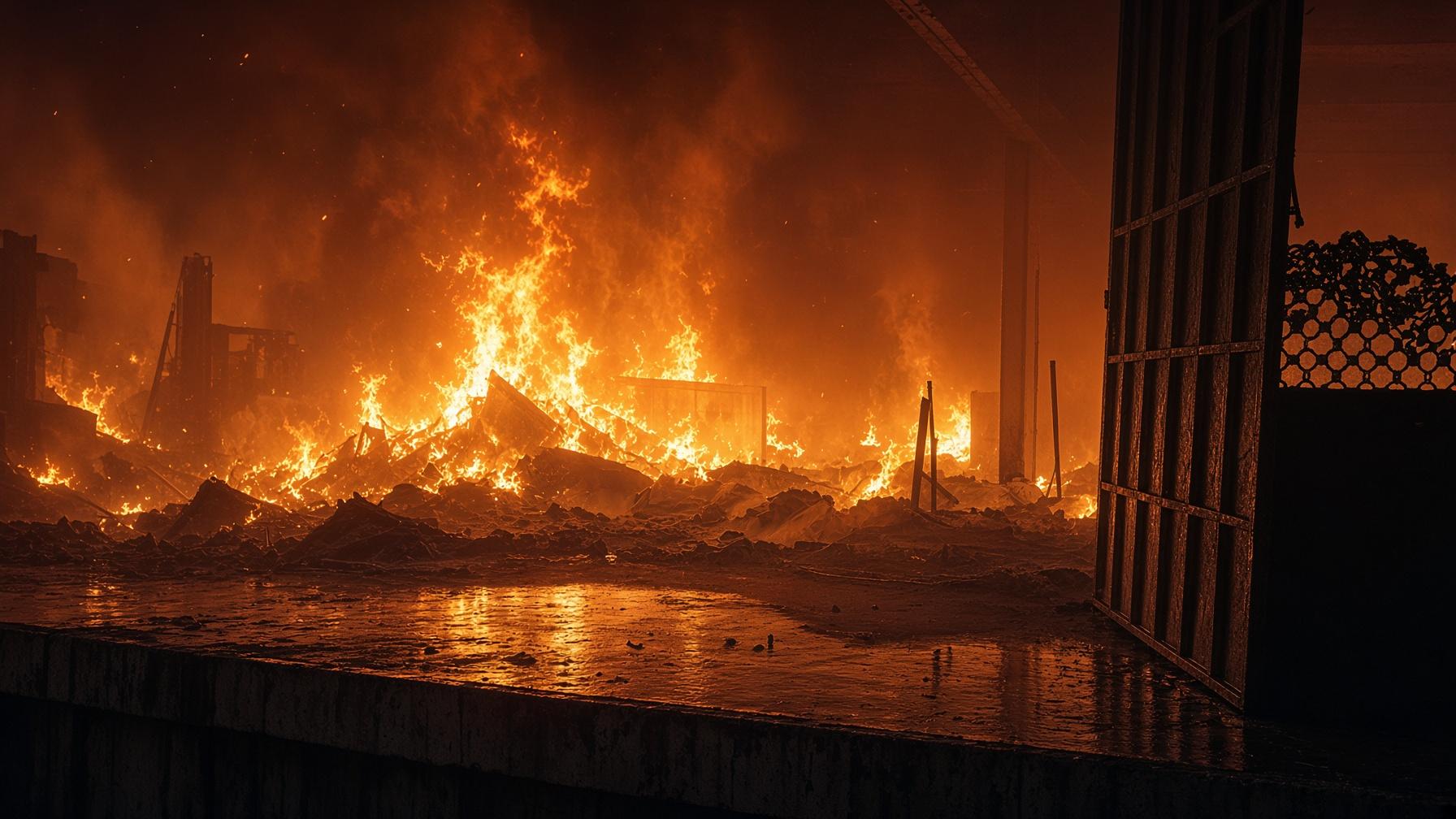
The night-time blaze that consumed the main building of Anié’s Grand Marché has left the economic heart of Togo’s Plateaux region in ashes — and with it, the livelihoods of hundreds of families who now face ruin. No lives were lost, but the material toll is staggering: merchandise, savings and entire stocks vanished in a single night, leaving traders with nothing to fall back on.
Beyond the immediate shock, this fire is the visible consequence of a governance model that has consistently failed to protect the country’s economic hubs. The lack of anticipation and the absence of basic safety standards are not accidents of fate; they are the direct result of years of public neglect.
An economic hub left defenceless for decades
How can a market of such strategic importance operate in 2026 without a modern fire-safety system, functional water points or clear access routes for emergency crews? The answer lies in the political record of the ruling administration. Since coming to power in 2005, the regime of Faure Gnassingbé has not delivered lasting modernisation of Togo’s local infrastructure. More than six decades after his father, the late Gnassingbé Eyadéma, took power, the current executive still relies on structures built in the last century, without deep investment to adapt them to today’s demographic and economic realities.
For traders in Anié, the consequences are immediate and brutal: no insurance, no safety net, and no guarantee that a similar disaster will not strike again. The informal economy, which sustains a large share of Togolese households, is left to absorb losses that no small business can survive.
Official promises versus the daily reality of Togolese citizens
While official speeches celebrate major projects, digital transformation and foreign investment, the situation on the ground remains dangerously outdated. The gap between the communication of “emerging Togo” and the lived experience of ordinary citizens has rarely been so stark.
- No prevention culture: Most major markets across the country — from Lomé to Kara, and now Anié — remain logistical powder kegs, lacking compliant electrical standards and risk-prevention plans.
- Under-equipped emergency services: Firefighters, often alerted late or hindered by a lack of adapted equipment in the regions, can only watch the damage unfold.
- Living off the past: The current leadership coasts on the security reputation and political foundations of the previous regime, without building a modern public policy to protect citizens and their property.
The economic ripple effects extend far beyond the traders themselves. Anié’s market serves as a supply hub for surrounding communities; its destruction disrupts local supply chains, pushes up prices and threatens the income of farmers and small producers who depend on it. In a region where formal employment is scarce, the loss of a single market can push dozens of families below the poverty line.
The cost of inaction: a repeat of past disasters
After the historic fires that destroyed major markets in Lomé and Kara in previous years, the Anié tragedy proves that no lessons were learned. The state cannot limit itself to sending ministerial delegations to distribute food or promise symbolic aid after each catastrophe. The true responsibility of a government is to protect its citizens before disaster strikes. By allowing informal-sector workers to operate in vulnerable, outdated infrastructure, the regime exposes the limits of a worn-out political model — one more focused on its own survival than on the safety and well-being of the Togolese people.
For the hundreds of traders now left with nothing, the question is not whether another fire will happen, but when — and who will pay the price next. Without a fundamental shift in how public infrastructure is planned, funded and maintained, Togo’s markets will remain what they are today: disasters waiting to happen, with citizens bearing the full cost.