Why Africa must urgently secure its pharmaceutical independence
For decades, most African nations have relied on imported medicines to meet their healthcare needs. Dr. Arnaud Kaboré, pharmacist and health engineer, outlines a clear roadmap for public leaders to achieve pharmaceutical sovereignty by 2045.
A dangerous reliance on foreign pharmaceuticals
Despite progress, fewer than five African countries operate manufacturing facilities capable of exporting beyond their borders. This leaves the continent importing 94% of its medicines at an annual cost exceeding $18 billion—a figure projected to surpass $30 billion by 2030. Beyond economic strain, this dependence exposes Africa to severe health risks.
More than 70% of public health facilities report at least one critical stockout every quarter. Is it acceptable for 1.4 billion Africans to depend entirely on industrial, logistical, and geopolitical decisions made outside the continent? The COVID-19 pandemic, recurring shortages of essential drugs like amoxicillin, insulin, and anesthetics, and chronic inaccessibility to cancer treatments and innovative therapies have exacted a heavy human toll: untreated illnesses, price surges during shortages, and paralyzed public health programs. Yet Africa possesses key advantages:
- A booming market: Africa’s pharmaceutical sector could exceed $70 billion by 2030;
- A rich biodiversity: over 5,400 medicinal plants, some already integrated into official therapeutic protocols;
- Strengthening regulatory frameworks: the African Medicines Agency (AMA), ratified by 27 countries, is standardizing norms;
- Political commitment: nations like Burkina Faso, Rwanda, Egypt, Morocco, Senegal, and South Africa have launched ambitious local production initiatives.
The path to sustainable pharmaceutical self-reliance
Attempting to replicate the models of international Big Pharma has been a historic misstep. Africa cannot build a pharmaceutical industry by importing equipment without developing local human capital, technical expertise, and industrial assets. This approach leads to higher production costs than imports, persistent dependencies on raw materials and technology, and the failure of sovereignty ambitions.
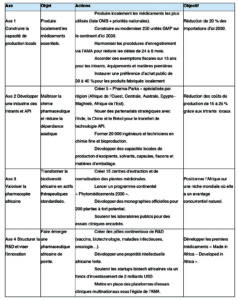
True pharmaceutical industrialization demands rigor, methodology, and long-term vision. Africa must leverage its strengths—growing market, medicinal biodiversity, regulatory momentum, and political will—to create a strategy rooted in endogenous needs. The goal? Achieve pharmaceutical sovereignty by 2045. This vision is not just about producing medicines locally—it’s about healing Africa first, and tomorrow, the world.
Dr. Arnaud Kaboré
Pharmacist and Health Sector Executive Leader