African union’s ebola solidarity mission brings cyril ramaphosa to Kinshasa
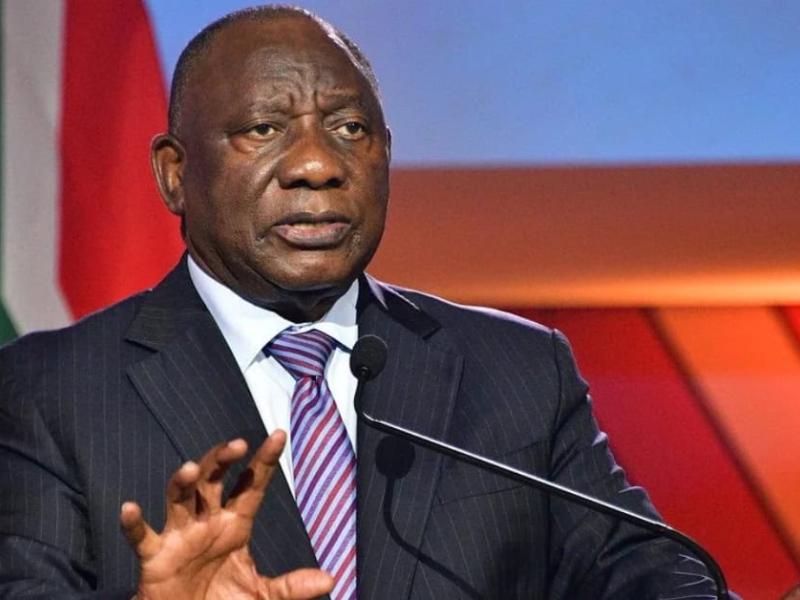
african union’s ebola solidarity mission brings cyril ramaphosa to Kinshasa
President Ramaphosa’s vital visit to combat Ebola in RDC
South African President Cyril Ramaphosa arrived in Kinshasa, the capital of the Democratic Republic of Congo, this Thursday, July 2nd, for an official solidarity visit. He undertakes this crucial mission in his capacity as the African Union’s Champion for Pandemic Preparedness, Prevention, and Response (PPPR). This high-level engagement occurs as the RDC grapples with its 17th resurgence of the Ebola epidemic.
The South African presidential office confirmed that President Ramaphosa, accompanied by Deputy Minister of International Relations and Cooperation Thandi Moraka, would meet with his Congolese counterpart, Félix-Antoine Tshisekedi. This meeting aims to affirm the African Union’s collective support for the government and people of the RDC in confronting the ongoing Ebola crisis, highlighting the importance of African politics and governance Africa in health emergencies.
Furthermore, the visit seeks to bolster the coordination of the continent’s response to this pressing health emergency. It is anticipated that this mission will provide high-level political guidance, strengthening a unified African response to the Ebola epidemic. The goal is to solidify regional cooperation, enhance cross-border preparedness, and secure political, technical, and financial commitments from African Union member states and their global partners.
The African Union emphasizes that these concerted efforts are vital not only for containing the current outbreak but also for sustainably fortifying African public health systems. This strategic approach aims to improve the continent’s resilience against future health crises, benefiting society Africa as a whole.
As the African Union’s Champion for Pandemic Preparedness, Prevention, and Response, President Ramaphosa’s role involves providing political leadership and oversight for the Ebola response. Concurrently, he champions solidarity with affected nations and frontline responders.
To date, African Union member states have pledged over $100 million to the African Epidemic Fund. Globally, financial commitments dedicated to the fight against Ebola have now surpassed $910 million. South Africa has notably contributed $13.5 million to these crucial efforts.
On May 17th, merely two days after the RDC officially declared the outbreak, the World Health Organization (WHO) designated the Ebola surge, caused by the Bundibugyo strain and subsequently extending to Uganda, as a Public Health Emergency of International Concern (PHEIC).
The epidemic has demonstrated geographical expansion, with its true scale potentially underestimated. This challenging situation is compounded by significant population mobility, vulnerable health systems, inadequate health infrastructure, and restricted access to conflict-affected regions. Furthermore, the absence of a specific vaccine or treatment for this particular viral strain exacerbates the crisis.
Despite this concerning backdrop, RDC authorities maintain a reassuring stance, dismissing any alarmist narratives. They highlight the robust efforts undertaken in collaboration with both national and international partners to contain the epidemic. Officials also underscore the nation’s extensive experience in managing health crises, pointing to sixteen previous Ebola outbreaks, each successfully brought under control through significant response operations.