Wedding trends in N’Djamena blending sudanese customs
Chadian weddings in N’Djamena adopt sudanese marriage customs
Wedding ceremonies in N’Djamena are undergoing a cultural shift that is reshaping how marriages are celebrated in Chad. Influences from Sudanese traditions are becoming increasingly visible in local nuptial practices, prompting both admiration and concern about the preservation of Chadian heritage.
Sudanese-inspired rituals gaining ground in N’Djamena weddings
Modern Chadian weddings now frequently incorporate elements borrowed from Sudanese marriage customs. Among the most noticeable changes are the application of henna on both the groom’s and bride’s hands and feet, a practice traditionally reserved for women in Chadian culture. The groom is also often paraded through the streets to the bride’s home, where he lifts her in his arms before carrying her to his residence. Days later, another ceremony takes place where the groom presents gifts, including jewelry, to his wife in front of their families.
Traditional Chadian weddings: a fading legacy
In contrast, traditional Chadian weddings were characterized by deeper community involvement and a strong emphasis on ancestral wisdom. Before the wedding, future spouses had limited interaction, and the bride would leave her family home accompanied by elder women who offered guidance on patience, household management, and marital responsibility. A week after the wedding, neighbors were entrusted with gently guiding the new bride, reinforcing bonds between families and reinforcing communal support systems.
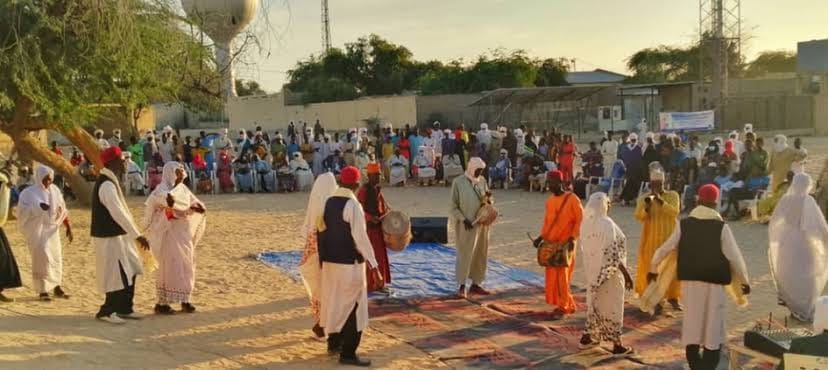
The entertainment at these ceremonies also reflected Chadian heritage, with griots reciting ancestral stories accompanied by traditional drumming and songs. Today, modern entertainment has largely replaced these performances, raising concerns about the loss of cultural narratives among younger generations.
Modern weddings blur the line between Chadian and Sudanese traditions
In many neighborhoods of N’Djamena, wedding ceremonies now mirror Sudanese styles in decoration, attire, henna application, music, and the staged presentation of the couple. Some guests struggle to distinguish between a Chadian and a Sudanese wedding, as the visual and ritual similarities grow more pronounced.
A local elder from the Bololo district shared, “A Chadian wedding used to be a school of life. Elders spoke, the youth listened, and everyone left with wisdom. Today, the focus is on spectacle rather than guidance.”
Maman Azma, a mother and director of the Lamy Fortain association, expressed her concern: “Our daughters now know foreign wedding customs, but many have forgotten the traditions their grandmothers once practiced. If we don’t pass them down, they will vanish.”
A young groom, however, offered a different perspective: “We adopt beautiful customs from other cultures without rejecting our own. The key is to preserve the core values of marriage.”
The challenge of balancing cultural openness and tradition
This cultural evolution raises a critical question: how can Chadian society preserve its identity while embracing external influences? Heritage specialists emphasize that the goal is not to reject outside traditions but to ensure that Chadian customs continue to be taught to future generations before they fade away.