Sky Dragon 30: the facts behind Burkina Faso’s air-defence purchase
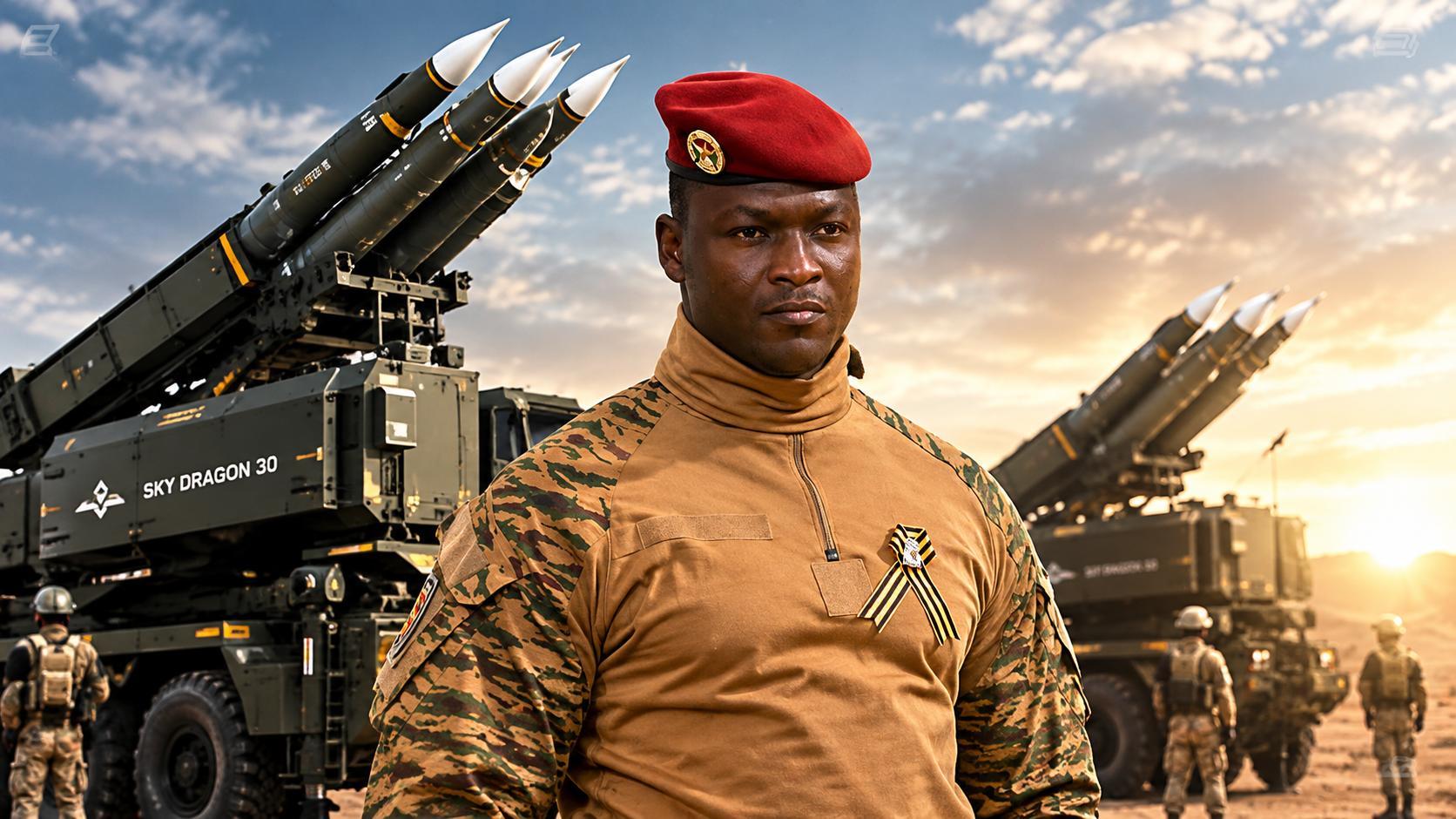
Burkina Faso has added the Chinese-made Sky Dragon 30 to its arsenal, and the facts are plain: this is a medium-range surface-to-air missile system designed to destroy aircraft, not to fight an insurgency. In a country where armed men on motorcycles empty entire villages, spending millions of dollars to intercept targets in the clouds is a question of priorities, not of technology.
What Burkina Faso has bought
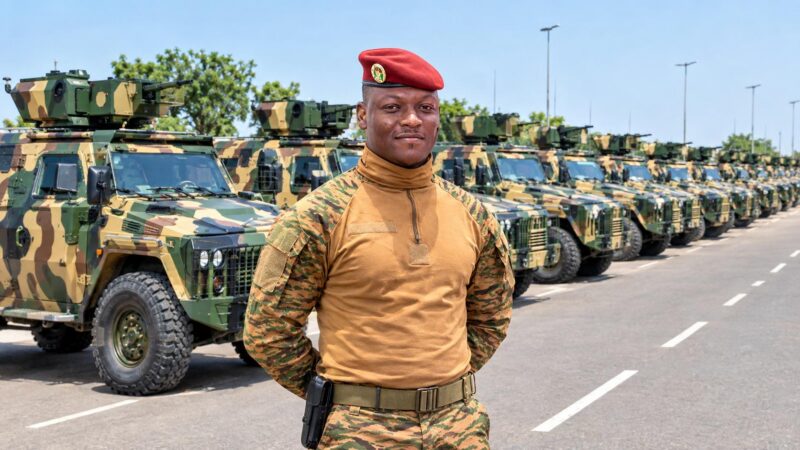
The system, built by the Chinese state defence group NORINCO and also designated DK-10A, was rolled out with the usual choreography: high-definition cameras, tight shots of polished armoured vehicles and martial speeches about the rising strength of the national armed forces. The hardware itself tells a different story, because its design brief has nothing to do with counter-insurgency.
Range, altitude and radar coverage
- Targets: conventional aircraft only — fighter-bombers, attack helicopters, large strike drones and cruise missiles.
- Reach: radar-guided missiles able to engage objects flying as high as 18,000 metres within a 30-kilometre radius.
- Eyes: a 3D search-and-track radar (IBIS 80) that can detect aircraft beyond 130 kilometres.
Those numbers describe an airspace-defence weapon. They also raise an obvious question: which air force is the transitional government in Ouagadougou preparing to confront?
The threat it faces travels on two wheels
The armed groups that have bled Burkina Faso for years, that besiege towns such as Djibo and push the residents of Boussouma into exile, own no jets, no combat helicopters and no cruise missiles. What they have is speed, terrain and surprise: columns of motorcycles, ambushes hidden in the bush, improvised explosive devices planted along dirt tracks, and night raids on villages.
There is no radar return for three men riding under the canopy of the Sahel. No missile can lock onto a column that never leaves the ground. Aiming an air-interception radar at that kind of enemy is the military equivalent of trying to stop a swarm of wasps with a whaling net.
Why a missile becomes a media asset
If the system offers no answer to the real threat, the purchase only makes sense when read as communication. The transitional authorities need symbols, and a launcher mounted on an armoured truck delivers exactly the images that state television and social networks can circulate. Those images sustain the story of an army modernising at speed and a nation reclaiming its sovereignty.
That story serves a second purpose as well. By hinting at an invisible enemy watching the country from the sky, it helps justify tighter security measures and a narrower space for political debate, even as the state’s territorial retreat continues across the countryside.
The bill: frontline shortages and public money
Millions of dollars have left the public treasury for a system that cannot fire on a single insurgent. At the same time, units at the front lack the basics: mine-clearance equipment, contact intelligence and fuel to keep supply roads open.
That is the contradiction at the heart of the Sky Dragon 30 deal. It is not a battlefield victory. It is a costly propaganda operation, and the price is paid by the people of Burkina Faso.