Burkina Faso: imams detained and mosques shut as terror fight widens its net
A security doctrine with an increasingly blurred line
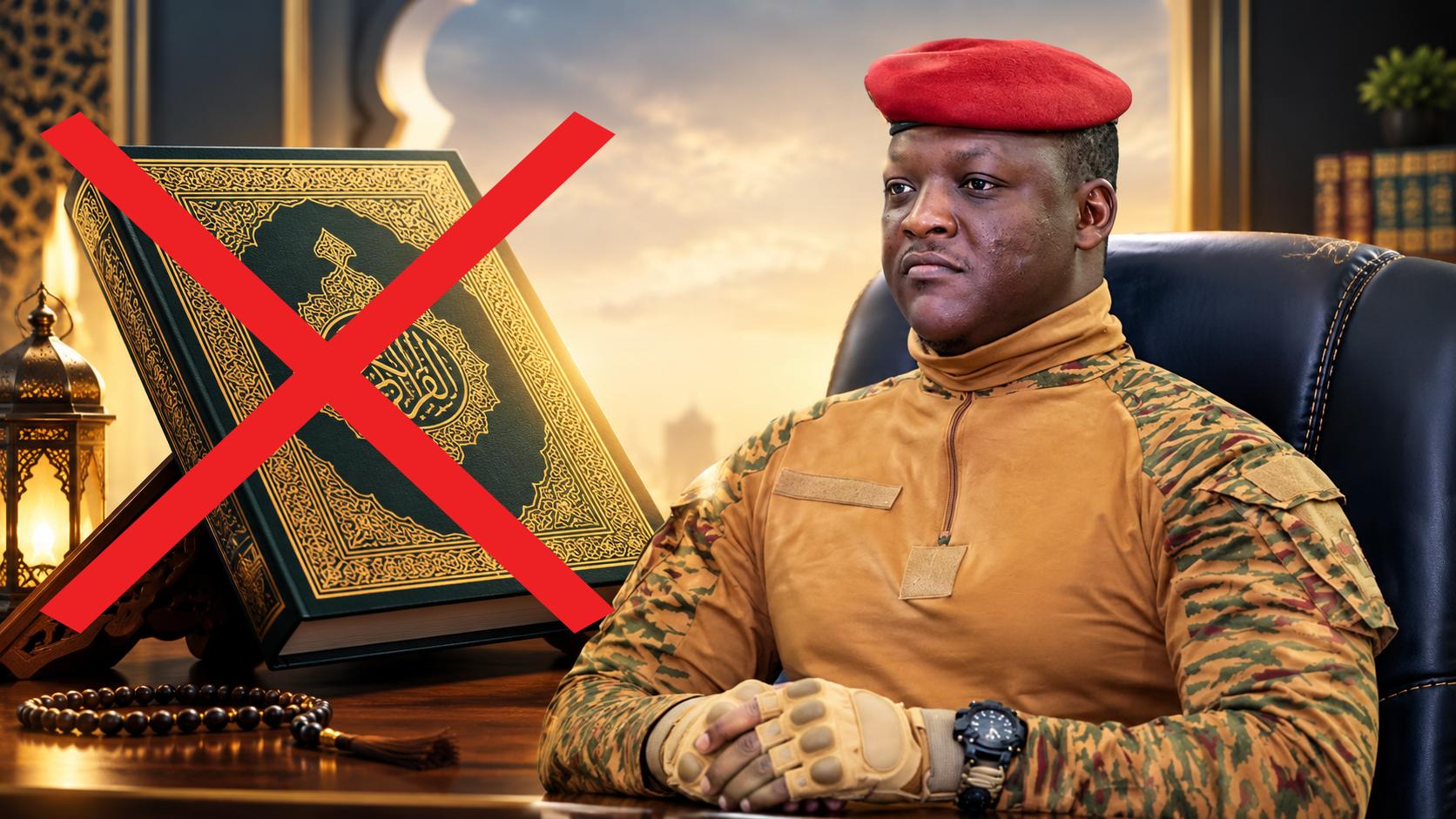
In Burkina Faso, the boundary separating the fight against armed extremism from restrictions on religious freedom has never looked thinner. Officially framed as a drive to eliminate the terrorist threat, the approach taken by the transitional government of Captain Ibrahim Traoré has translated into an unprecedented campaign of control and repression against the Muslim community — the country’s largest faith group. Beyond official statements about national security, what is taking shape in Ouagadougou is a system of oversight imposed on the figures and institutions of Burkinabè Islam.
Detentions, closures and forced enlistment
For months, security language has served as a convenient justification for pursuing independent religious voices. Moderate imams, influential preachers and officials of Muslim associations have faced arbitrary arrests, detention held away from any outside contact, or forced incorporation into the Volunteers for the Defense of the Homeland (VDP). Their offense: criticizing the junta’s methods, questioning how the security crisis is managed, or simply calling for civil rights to be preserved.
Quranic schools and mosques under scrutiny
At the same time, mosques and Quranic schools in areas facing serious security challenges are subjected to drastic inspections, arbitrary administrative closures or systematic accusations of collusion with armed groups. By labeling any religious discourse that is not aligned with the authorities as “subversive” or “complicit with the enemy,” the government has created a climate of fear inside a faith community long recognized for its role in mediation and social cohesion.
Political calculation and a ruptured social fabric
The hardline policy pursues a clear objective: neutralizing any social force capable of organizing structured opposition to military rule. By targeting the networks and leading figures of local Islam first, the transitional regime aims to impose a single line of thinking and to lock down public space.
Rather than weakening the jihadist groups that roam the region, this blunt offensive against religious practice risks producing the opposite result. By stigmatizing the Muslim community, breaking customary and spiritual intermediaries, and depriving worshippers of moderate points of reference, the authorities feed a sense of injustice and alienation. In turning religion into an internal enemy in the name of sovereignty and security, Ibrahim Traoré runs the significant risk of atomizing the social fabric of a country already stretched to its limits.