Sankara remembered, family sidelined: the fallout from Burkina Faso’s contested memorial
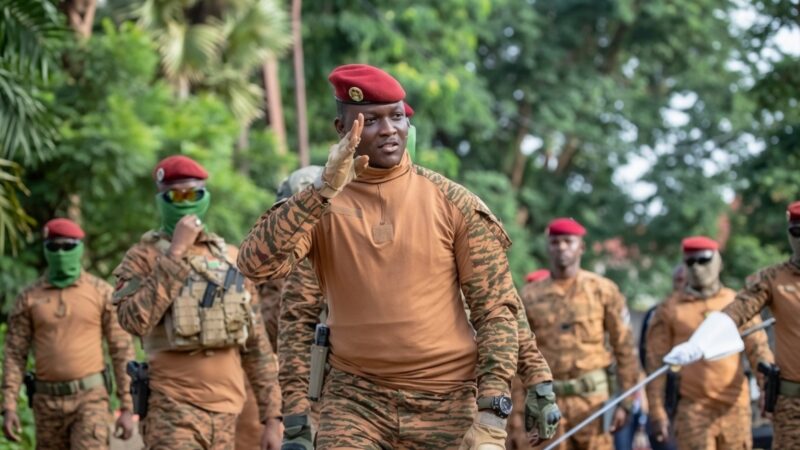
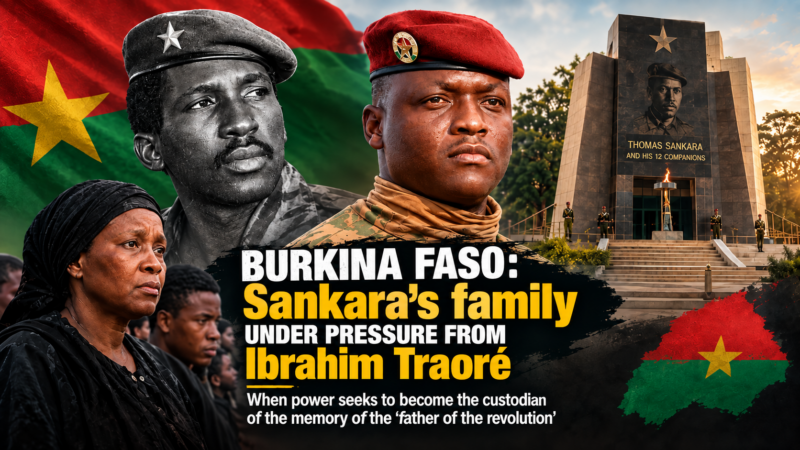
On 17 May 2025, Burkina Faso unveiled the Thomas Sankara Mausoleum in Ouagadougou with a state ceremony of striking scale and symbolism. Held at the former Conseil de l’Entente site, the event—overseen by Prime Minister Rimtalba Jean Emmanuel Ouédraogo under the patronage of Captain Ibrahim Traoré—attracted dignitaries including Senegal’s Ousmane Sonko, Chad’s Allah-Maye Halina, representatives from the Alliance of Sahel States, and pan-African figures from across the globe. Twenty-one cannon salutes echoed as revolutionary iconography and Francis Kéré’s eye-shaped architecture framed an occasion clearly designed to project international resonance.
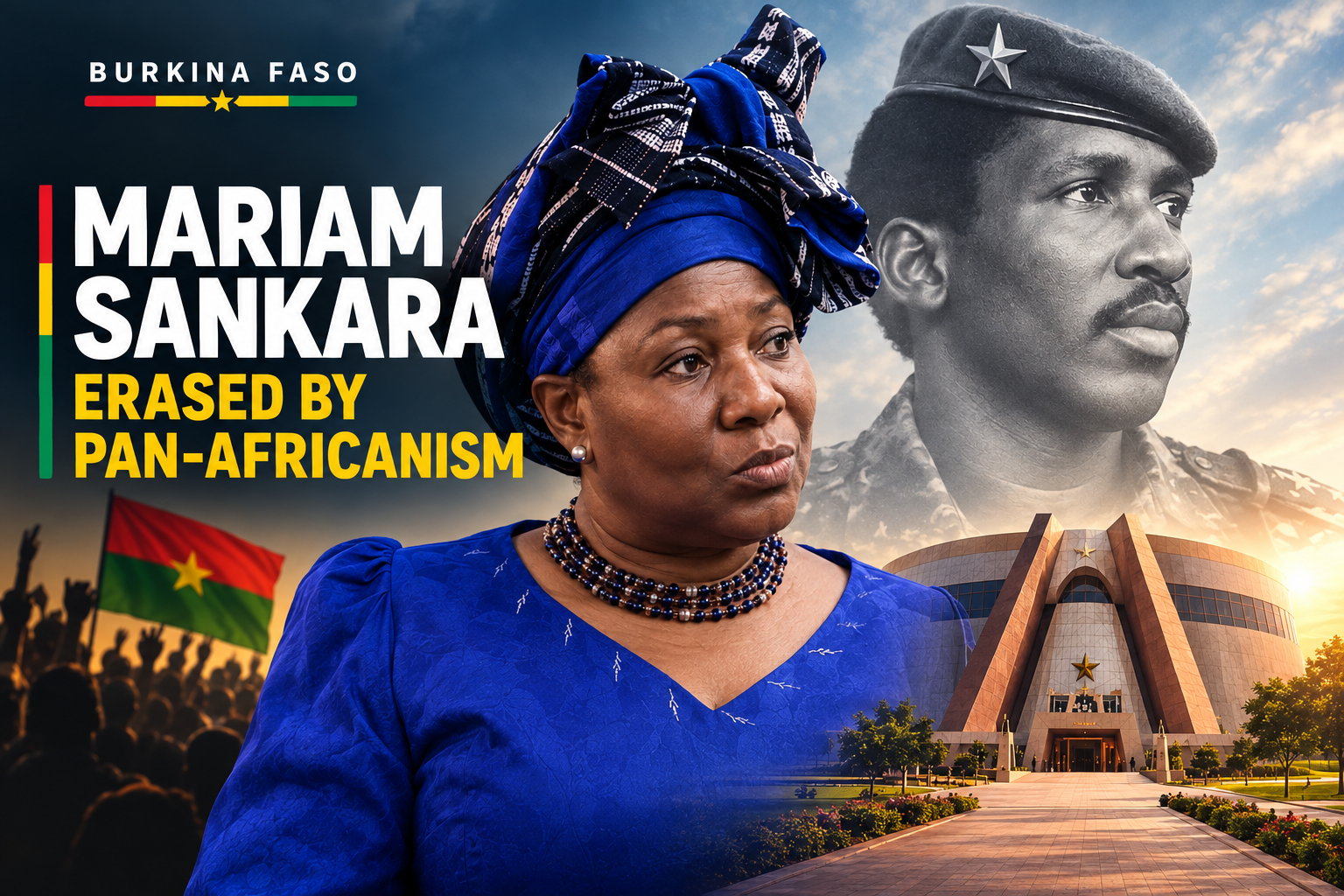
Yet amid the fanfare, one absence spoke volumes: Mariam Sankara, widow of the late revolutionary leader, was nowhere to be seen—and her name went unspoken throughout the proceedings. Not by the officials on stage, not by the honored guests, not even in passing. Her exclusion mirrored that of February 2023, when the reburial of Sankara’s remains took place without her presence or consent.
The widening rift between public tribute and private grief
This silence raises a pressing question now reverberating across political and civil society circles: who truly holds the right to steward Thomas Sankara’s legacy? Is it the Burkinabè state, which has enshrined him as a national monument? The transnational pan-African movement that claims him as an ideological forefather? Or his immediate family—particularly Mariam Sankara—who bore decades of exile, stigma, and legal battles to preserve his memory when doing so carried grave personal risk?
Under Blaise Compaoré, who seized power after Sankara’s assassination on 15 October 1987, Mariam Sankara was forced into exile in Montpellier, France, for over twenty years. Denied recognition as a former first lady and barred from openly honoring her husband, she became one of the few direct links to Sankara’s personal life and political journey. Only after Compaoré’s ouster in 2014 could she return—and only in 2021 did the long-delayed trial of those accused in Sankara’s killing finally commence.
From suppression to sanctification: three regimes, one contested memory
Sankara’s transformation—from silenced victim to national hero to continental symbol—has unfolded unevenly across successive governments. Under Roch Marc Christian Kaboré, official rehabilitation accelerated with the launch of the memorial project on 2 October 2016, though critics note this occurred alongside overtures to Compaoré loyalists, suggesting instrumentalization rather than genuine reckoning.
Under Captain Traoré, the memorial evolved into a mausoleum and Sankara’s image was elevated to state doctrine—initially invoked to legitimize a coup-born regime, then gradually distanced once authority solidified. The shift is telling: early rhetoric embraced Sankara as a model; later statements urged citizens to stop comparing the current leadership to him.
Critically, the memorial initiative predates Traoré’s rule. Its multi-administration trajectory reveals a broader societal and institutional momentum—but also underscores how each regime adapted Sankara’s legacy to its own ends, consistently sidelining his family in the process.
A family’s plea ignored, a symbolic fracture deepened
In February 2023, the Sankara family issued a formal statement declaring they felt “crushed by the force of public authority.” They opposed burying Thomas Sankara at the very site of his murder, arguing it was too charged with trauma to serve as a place of peace. Instead, they proposed alternatives like Dagnoën Cemetery, Jardin de l’Amitié, or Jardin Yennenga—locations that might foster unity rather than division.
They further requested that the assassination site remain a preserved historical landmark, not a burial ground. Despite repeated attempts to negotiate, their appeals went unanswered. The state proceeded with reinterment on 23 February 2023, and local media noted Mariam Sankara’s conspicuous absence—a detail that crystallized a growing chasm between state-managed commemoration and familial mourning.
Pan-Africanism without inclusion?
The irony is profound. Thomas Sankara championed sovereignty, dignity, and resistance to domination. Yet on the matter of his own remembrance, his closest kin describe being overruled by state fiat. As pan-African leaders invoke his name in speeches and ceremonies, they rarely engage with the family’s objections to how his memory is curated.
True pan-African solidarity should extend beyond symbols and slogans—it must include those most intimately connected to the histories being honored. Without that inclusion, there is a real danger: the living man fades behind the myth. The husband vanishes beneath the revolutionary. The father dissolves into the national icon. And with him recedes Mariam Sankara—the woman who safeguarded his legacy through decades of erasure.
What comes next for a nation wrestling with memory
The core issue is no longer whether Burkina Faso honors Thomas Sankara—it clearly does, with monuments, rituals, and international fanfare. The deeper test lies in whether the state can listen to those whose grief preceded the glory.
A genuinely reconciled memory is not measured by cannon fire or VIP attendance lists, but by the willingness to incorporate dissenting voices—especially those who kept a flame alive when others sought to extinguish it. On this front, the Sankara case remains unresolved, its tensions echoing far beyond Ouagadougou into the very meaning of collective remembrance in post-colonial Africa.