Gabon and France forge a new era of partnership
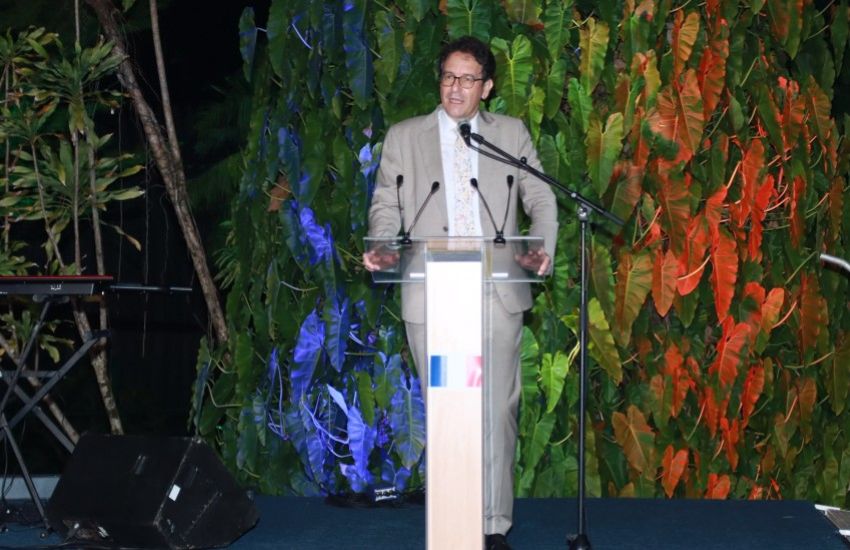
Libreville, July 16, 2026 — The French National Day in Gabon on July 14 was not merely a celebration of France’s national heritage. Through the address delivered by French Ambassador to Gabon Fabrice Mauriès, a clear snapshot of the evolving dynamics between Paris and Libreville was unveiled.
Three landmark decisions emerged from this diplomatic engagement: an imminent state visit by President Brice Clotaire Oligui Nguema to France, the definitive transformation of Camp De Gaulle, and the establishment of a Gabonese national financial prosecution office. Though distinct in scope, these initiatives collectively signal a recalibrated Franco-Gabonese partnership.
Amid a global landscape marked by great power competition, rising African sovereignty demands, and shifting strategic alliances, Gabon is emerging as one of the most scrutinized testing grounds for a new generation of Europe-Africa relations.
State visit signals a new chapter
The announcement of President Oligui Nguema’s upcoming state visit to Paris represents the most significant political signal exchanged between the two capitals since Gabon’s political transition began in 2023. In French diplomatic protocol, a state visit is the highest form of recognition extended to a foreign leader.
This move underscores France’s commitment to supporting Gabon’s institutional trajectory while acknowledging the country’s return to constitutional order following last year’s presidential election. Ambassador Mauriès emphasized a crucial distinction: Gabon’s transition belongs to the Gabonese people. France played no role in shaping it. Yet Paris remains determined to partner with Gabon in ensuring the process’s success.
This nuance carries particular weight across Africa, where former colonial powers are often accused of political interference. France now appears to favor accompaniment over direct influence, cooperation over oversight.
End of an era at Camp De Gaulle
The future of Camp De Gaulle stands as the most visible emblem of this transformation. For decades, this French military base symbolized France’s strategic presence in Central Africa. Its announced transformation marks the close of a historical chapter opened in the aftermath of African independence movements.
The new military framework will prioritize operational partnerships, joint training, coordinated exercises, and maritime security over a sustained permanent French troop presence. This shift aligns with France’s revised doctrine in Africa, now favoring targeted collaborations tailored to partner nations’ priorities.
For Gabon, this evolution offers a chance to bolster its own defense capabilities and solidify strategic sovereignty while preserving historical ties with France. Future joint maritime initiatives, including efforts to secure the Gulf of Guinea—one of the continent’s most critical maritime zones—reflect this shared ambition to build a partnership rooted in mutual interests.
Financial justice and institutional renewal
The third announcement may prove the most consequential in the long term. The creation of a Gabonese national financial prosecution office responds to a global imperative: strengthening mechanisms to combat corruption, illicit financial flows, and economic crime.
The issue holds particular significance for a hydrocarbon and mineral-rich nation like Gabon, where resource governance is pivotal to sustainable development. Ambassador Mauriès noted that this judicial cooperation will operate reciprocally, underscoring a commitment to balanced relations between the two legal systems.
This initiative aligns with Gabon’s stated goals of enhancing transparency, economic governance, and modernization of public institutions. Beyond financial justice, collaboration spans counter-narcotics efforts, border surveillance, domestic security, and capacity-building for Gabonese security forces.
Together, these developments outline a bilateral relationship now grounded in shared governance, collective security, and economic development—rather than historical legacies alone. The July 14 address in Libreville may well be remembered as the moment when France and Gabon officially inaugurated a new phase in their shared history.
It is neither a rupture nor blind continuity. Instead, it marks the gradual construction of a partnership that is more balanced, pragmatic, and aligned with 21st-century geopolitical realities. The true challenge now lies in translating these diplomatic pledges into tangible outcomes for the citizens of both nations and for the stability of Central Africa.