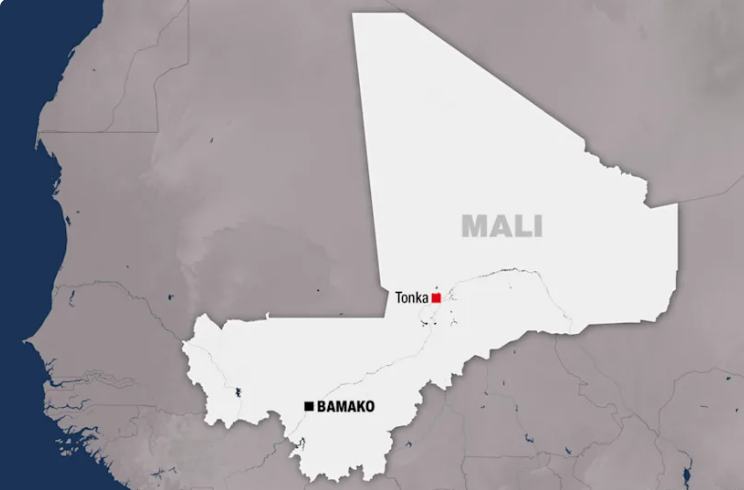
Mali is grappling with a fresh wave of insecurity as a new attack, reportedly carried out by the Group for the Support of Islam and Muslims (JNIM), has once again shaken the nation. Armed assailants targeted a remote Malian village, leaving civilians dead and forcing residents to flee their homes in a desperate bid for safety.
The assault underscores the relentless threat posed by armed groups, which continue to operate even in areas far from major urban centers. Despite intensified military operations in recent months, these groups retain their ability to strike with alarming frequency, exposing the persistent challenges faced by authorities in securing the entire country.
The violence has now expanded beyond traditional battle zones. The killing of Mariam Cissé, a prominent Malian blogger and social media influencer, has sent shockwaves through the nation. While widely known for her vocal support of the Malian Armed Forces online, she was reportedly abducted before being executed by jihadist fighters. This targeted assassination highlights a deliberate strategy by extremist groups to instill fear, not only among security forces but also among civilians and public figures whose views challenge their ideology.
Military efforts vs. long-term security
Since seizing power, Mali’s military leadership has prioritized bolstering national defense capabilities. Investments in advanced weaponry, international security partnerships, and intensified ground operations reflect a clear determination to regain the upper hand against jihadist factions. Yet the recurrence of such attacks—and the targeted killings like that of Mariam Cissé—raises critical questions about whether a purely military response can ever be fully effective.
Beyond the battlefield: addressing root causes
Experts argue that countering extremism requires more than just firepower. While military measures are essential for protecting communities and reclaiming lost territories, they do little to tackle the underlying drivers of instability. Poverty, youth unemployment, and limited access to quality education are frequently cited as factors that make young people vulnerable to recruitment by armed groups. Strengthening local education systems, particularly for the youngest children, is seen by many specialists as a powerful tool to weaken extremist influence over time.
The Malian government now faces a dual challenge: sustaining its military efforts while implementing public policies that address the needs and aspirations of its people. A comprehensive strategy—combining security, education, economic development, and good governance—could provide a more sustainable path forward in a conflict that has plagued the country—and the broader Sahel—for over a decade.
A shifting threat landscape
The recent spate of civilian massacres and targeted killings paints a troubling picture: the threat is no longer confined to armed clashes but now extends to anyone perceived as opposing extremist ideologies. For many observers, Mali’s long-term stability will depend not only on its military’s ability to contain jihadist groups but also on the state’s capacity to rebuild institutions, restore public trust, and offer young citizens real opportunities through education, employment, and civic engagement.